Wheelchair-friendly kitchen design starts with one person and one routine. Can they get into the kitchen, move between the important zones, prepare food, wash up, reach storage and leave without fighting the layout every day?

Wheelchair friendly kitchen checklist
| Area | What to check | Common mistake |
|---|---|---|
| Approach | Door width, threshold, handle side, corridor angle and how the wheelchair enters the room. | Measuring only the kitchen doorway and ignoring the hall or turn into the room. |
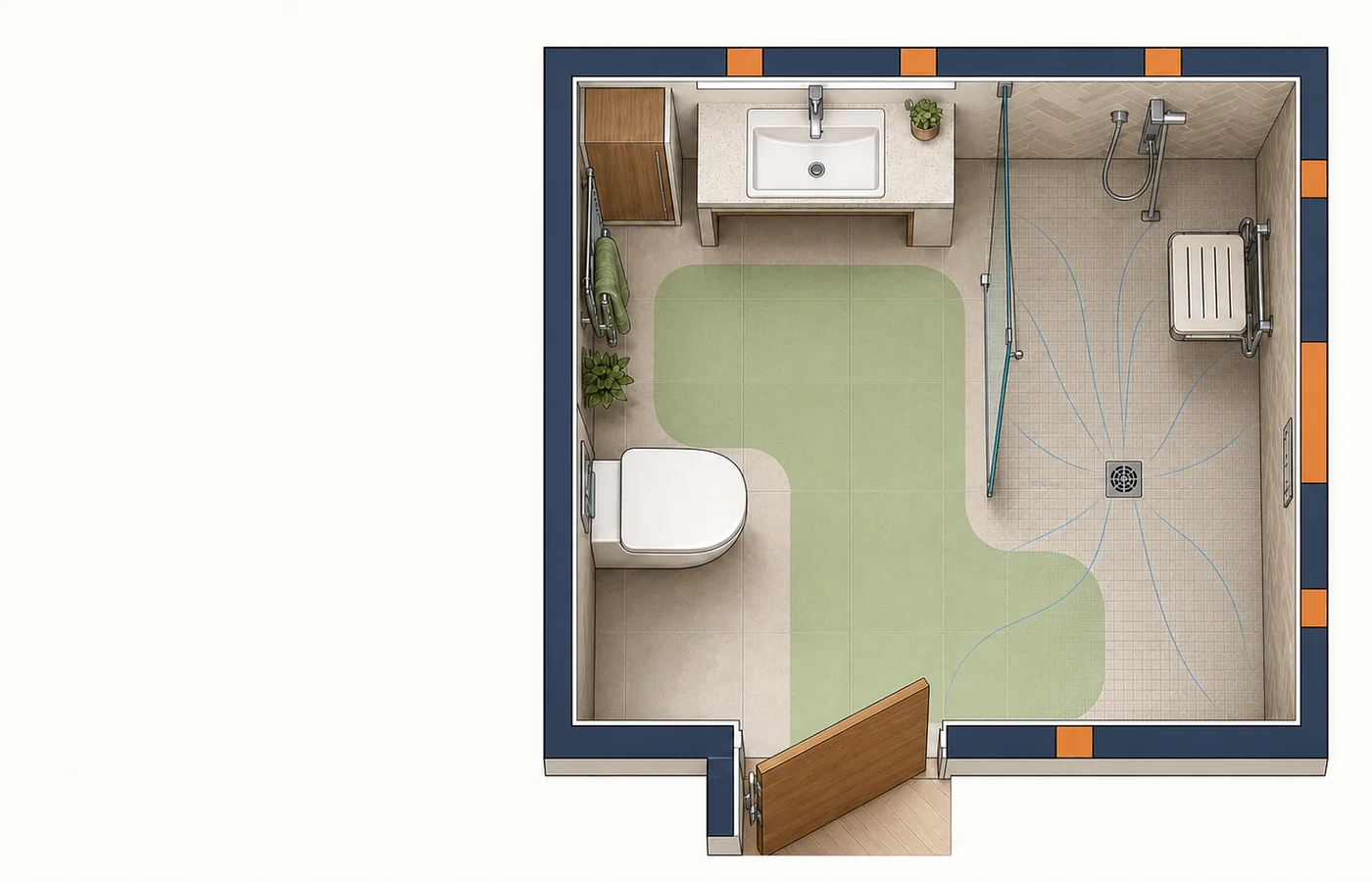
| Turning space | The open floor area with cabinet doors, fridge, dishwasher or oven open. | Planning a good clear space on paper that disappears when appliance doors open. |
| Worktop use | Seated prep, standing prep, knee space, edge detail and surface height. | Lowering everything without checking how the person actually cooks. |
| Sink and tap | Reach to tap, bowl depth, pipe protection, knee clearance and splash control. | Choosing a deep sink that works against seated use. |
| Storage | Everyday items, pull-out shelves, wall cabinet height, pan drawers and handle grip. | Leaving important storage above comfortable reach. |
| Controls | Sockets, switches, appliance displays, isolators and extractor controls. | Putting controls behind appliances or above shoulder height. |
Accessible kitchen route checker
Use this as an early layout check before ordering cabinets. It is not a substitute for measuring the room with the person who will use it.
What should be decided before the kitchen is ordered?
- Measure the route from the nearest door, not only the clear space between base units.
- Mark the wheelchair turn, fridge door, dishwasher door, oven door and pull-out storage on the same plan.
- Decide which tasks need seated work space and which can stay at normal worktop height.
- Choose handle style, tap type and socket positions before the wall finish and cabinet order.
- Plan future changes while the room is open: stronger fixing zones, easier plumbing access and appliance replacement space.
Layout options that usually work better
| Need | Better option | Why |
|---|---|---|
| Seated prep | A clear knee-space worktop zone with nearby drawers. | The user should not have to move across the whole room for basic prep tools. |
| Easy storage | Wide drawers, pull-out shelves and lower everyday storage. | Deep base cupboards can be difficult to reach from a chair. |
| Safer sink use | Lever tap, shallow bowl where suitable and protected pipework. | Reach and knee clearance matter more than a showroom-style sink. |
| Appliance access | Side-opening oven where appropriate, accessible controls and landing space. | Hot dishes are harder to handle when the oven or microwave is too high. |
Sources and checks used
- Scottish Government domestic technical handbook: the Scottish building standards reference route for domestic work.
- GOV.UK Approved Document M: a useful accessibility design reference, especially for the principle of access and use.
- Care and Repair Scotland: shows the practical link between home adaptations, older users and safer everyday housing.
Wheelchair kitchen checks beyond cabinet height
A wheelchair-friendly kitchen needs clear movement, reach, transfer and appliance-use checks working together. BS 8300 is a useful inclusive-design reference, and the Disabled Living Foundation / Living Made Easy resource helps connect the plan to real equipment and daily routines.
- BS 8300 inclusive built environment code of practice: accessibility design reference.
- Disabled Living Foundation / Living Made Easy: daily-use equipment and adaptation reference.
FAQ
What makes a kitchen wheelchair friendly?
The useful test is whether the person can enter, turn, reach the main work zones, use the sink and appliances, and leave safely. A wider doorway alone does not make the kitchen accessible.
Do wheelchair friendly kitchens always need lower worktops?
Not always. Some users need seated prep space, some need mixed height surfaces, and some prefer standard height worktops with better route and storage planning.
Is this only for permanent wheelchair users?
No. The same checks help older users, people using walkers, people recovering from injury, and households that want the kitchen to remain usable for longer.