As an experienced home extension consultant, I’m often asked about the best ways to make home improvements more eco-friendly and energy-efficient. One of the key areas that can have a significant impact is the integration of sustainable home appliances into your home extension project.
Sustainable Building Materials
When planning a home extension, it’s important to consider the environmental impact of the construction materials used. Look for building products with strong sustainability credentials, such as those certified under schemes like BREEAM or the Living Building Challenge.
Structural insulated panels (SIPs), for example, are an excellent choice as they offer excellent thermal performance and can dramatically reduce the energy needs of a home. Similarly, bamboo and recycled plastic lumber make durable, eco-friendly alternatives to traditional building materials.
By carefully selecting sustainable materials, you can create a home extension that not only looks great, but also minimises its environmental footprint from the outset.
Energy-Efficient Design
Alongside sustainable building materials, the design of your home extension plays a crucial role in its overall energy efficiency. Passive design principles like optimising window placement, incorporating thermal mass, and using high-performance insulation can dramatically reduce the heating and cooling demands of your home.
Consider also integrating renewable energy sources, such as solar panels or a heat pump, to power your new extension. This not only reduces your carbon emissions, but can also lower your long-term energy bills. Modern smart home technologies can further enhance efficiency by automating lighting, heating, and cooling based on occupancy and weather conditions.
By focusing on energy-efficient design from the start, you can create a comfortable, low-impact home extension that will serve you well for years to come.
Sustainable Home Appliances
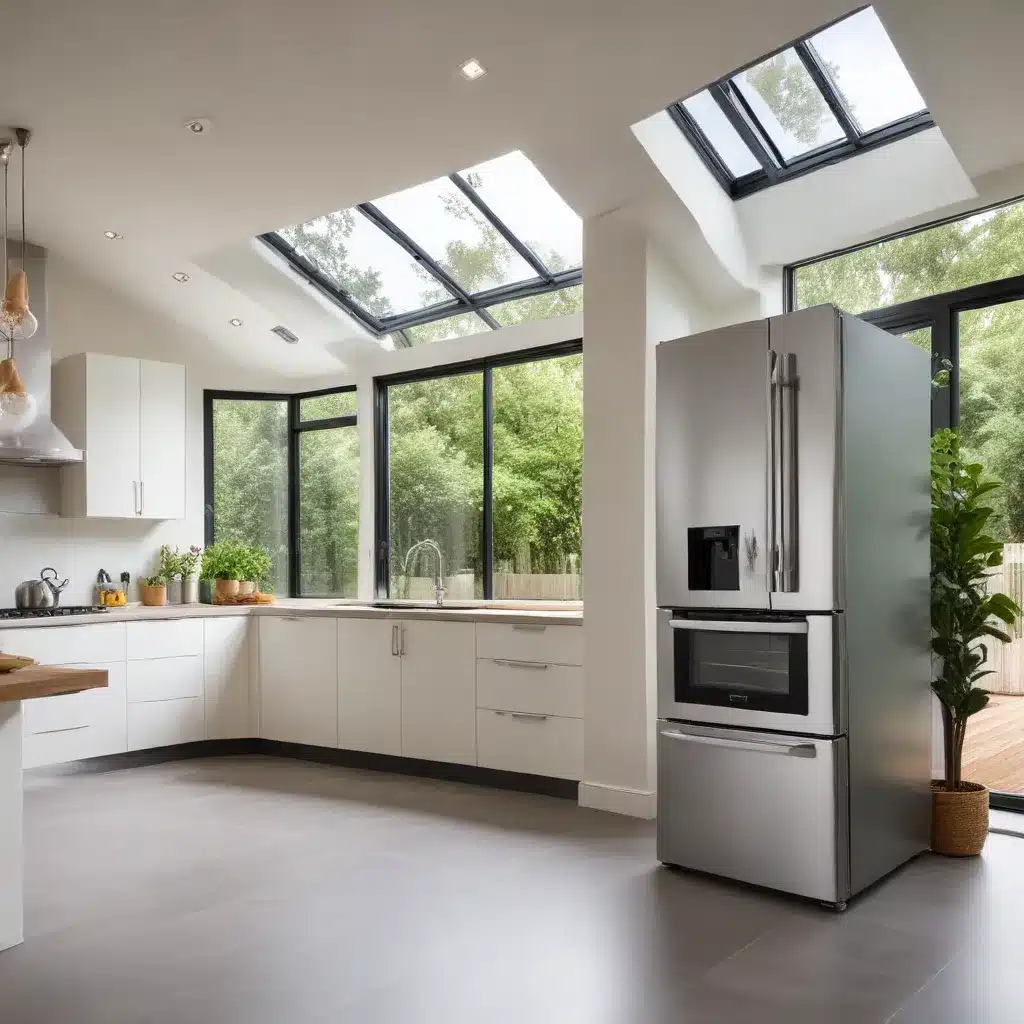
Of course, the home appliances you choose for your extension will also have a significant impact on its environmental performance. When selecting new appliances, look for those with high energy efficiency ratings and low water consumption.
Energy-Efficient Appliances
Appliances that carry the ENERGY STAR® certification are a great place to start. These are rigorously tested to ensure they meet strict energy-saving criteria, helping to lower your extension’s overall energy usage. Look for ENERGY STAR-rated refrigerators, washing machines, dishwashers, and other major appliances.
Renewable Energy-Powered Appliances
For an even more sustainable approach, consider appliances that can be powered by renewable energy sources, such as solar panels. These include induction cooktops, heat pump water heaters, and even clothes dryers that use heat pump technology. By integrating these types of appliances, you can further reduce your reliance on the grid and your carbon footprint.
Appliance Recycling and Disposal
When it’s time to replace old appliances in your home extension, be sure to dispose of them responsibly. Many local authorities and retailers offer recycling services to ensure hazardous materials are handled properly and reusable components are recovered. This helps to keep valuable resources in circulation and out of landfills.
Environmental Impact of Home Extensions
The decisions you make throughout your home extension project can have a significant impact on the environment. By focusing on sustainability, you can minimise the carbon footprint, resource consumption, and waste associated with your improvements.
Reducing Carbon Footprint
From the materials used in construction to the energy-efficiency of your new appliances, every aspect of your home extension contributes to its overall carbon footprint. By making sustainable choices, you can dramatically reduce the greenhouse gas emissions associated with your project.
Minimizing Resource Consumption
Home extensions have the potential to consume large quantities of natural resources, from timber and concrete to water and electricity. Sustainable design and the use of recycled/renewable materials can help to minimise this resource usage, preserving our precious natural assets for the future.
Promoting Circular Economy
The concept of a circular economy – where waste is designed out and resources are kept in use for as long as possible – is particularly relevant to home improvement projects. By choosing durable, repairable, and recyclable products, you can support a more sustainable model of consumption and production.
Integration of Sustainable Elements
To truly maximise the sustainability of your home extension, it’s important to take an integrated approach that coordinates all of the various eco-friendly elements.
Coordinating Appliances and Design
When planning your home extension, work closely with your designer to ensure the layout, lighting, and other features are optimised to work seamlessly with your chosen sustainable appliances. This will help you achieve the best possible efficiency and performance.
Optimizing Energy Usage
By combining energy-efficient design, renewable power generation, and smart home technologies, you can create a home extension that minimises its overall energy consumption. Monitor your usage and make adjustments as needed to further optimise performance.
Maintenance and Upgrades
To maintain the sustainability of your home extension over time, be diligent about maintaining your appliances and systems. Replace worn-out items with the latest energy-efficient models, and consider upgrades like solar panel additions or battery storage as your needs evolve.
Sustainable home extensions don’t happen by accident – they require careful planning and integration of various eco-friendly elements. But by taking this holistic approach, you can create a beautiful, low-impact addition to your home that will serve you and the environment well for years to come.
If you’d like assistance planning your sustainable home extension, be sure to visit our website or reach out to our team of experienced consultants. We’re here to help you make the most of your project.