Quick answer: Part P, Scotland and bathroom electrics
Part P is an England and Wales building-regulation term, but the practical safety checks still matter for Aberdeen bathrooms: bathroom zones, IP-rated fittings, RCD protection, safe cable routes and competent electrical work. In Scotland, also check whether the wider bathroom project needs a building warrant under the building standards system.
- Do not buy fittings first: confirm the bathroom zone and IP rating before choosing lights, fans, mirrors or shaver points.
- Separate design from installation: product position, cable route and access for future maintenance all matter.
- Use a qualified electrician: bathroom electrics are not a place to guess, especially near showers and baths.
For practical project planning, see electrical services in Aberdeen, bathroom fitting and bathroom light switch locations.
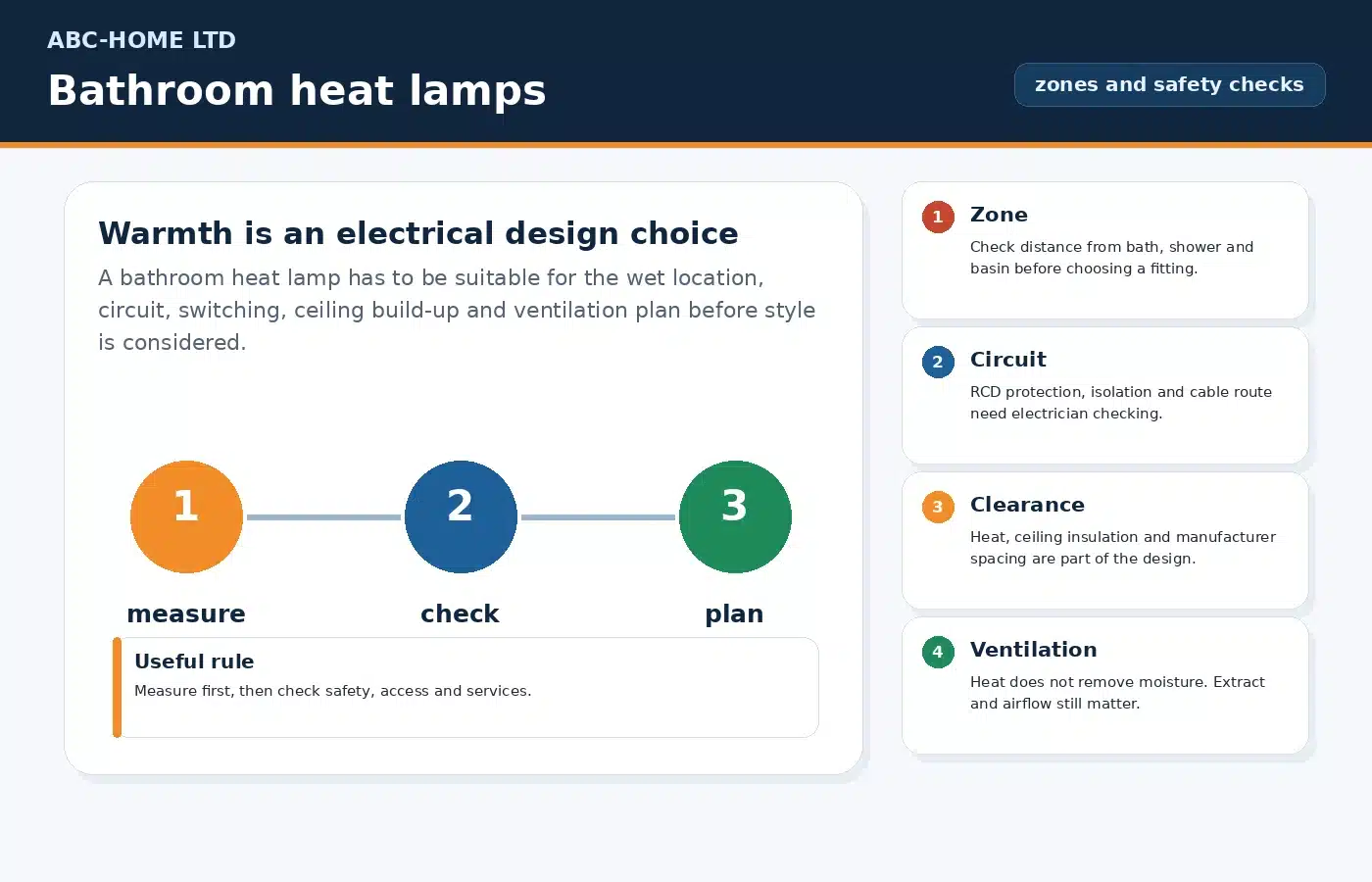
Bathroom lighting zones, IP ratings and Part P style safety checks belong together. The useful way to read them is simple: do not choose bathroom lights, fans, mirrors or shaver points by style first. Mark the wet zones, check the rating needed for that position, then let the electrical design and installation method decide what can safely be fitted.

Bathroom electrical zones in plain English
| Area | Where it is | What to check before fitting anything |
|---|---|---|
| Zone 0 | Inside the bath or shower tray, where water immersion is possible | Use only equipment specifically designed for this location. Immersion protection and low voltage rules need professional checking. |
| Zone 1 | Above the bath or shower area up to the relevant height boundary | Check IP rating, product approval for bathroom use, RCD protection, circuit route and safe isolation. |
| Zone 2 | The splash area around a bath, shower or basin | Use bathroom-rated fittings. IPX4 is a common minimum reference, and stronger protection may be needed where water jets or heavy spray are expected. |
| Outside zones | Areas beyond the formal wet zones | This is not a free-for-all. Fixed electrical work still needs safe wiring, correct protection and suitable accessories. |
Bathroom lighting zones and IP ratings
IP ratings describe how well a product casing resists solids and water. Bathroom shoppers usually notice IP44, IP65 or IP67 labels, but the label alone is not the whole design. The product also needs to be suitable for the voltage, position, circuit, fixing method and environment.
| Fitting type | Common bathroom risk | Planning note |
|---|---|---|
| Ceiling downlights | Steam, spray, insulation above the ceiling and fire/acoustic separation | Use bathroom-suitable fittings and check the ceiling build-up, not only the front trim. |
| Mirror lights and cabinets | Close to basins, shaving sockets, demister pads and hidden cable entries | Check the zone around the basin, manufacturer instructions and how the cable will be isolated. |
| Extractor fans | Moist air, bathroom zones and maintenance isolation | Electrical Safety First notes that fixed fans need a readily accessible means of isolation and that bathrooms are divided into zones. |
| Shaver sockets | Transformer rating, position and water contact risk | Use the right product for the location and keep it away from direct spray. |
| Switches and controls | Wet hands and accidental contact | Pull cords or correctly located switches are often safer than placing a normal switch inside the bathroom. |
Bathroom electrical risk checker
Use this as an early design check before buying lights, fans or illuminated mirrors. It is not an electrical certificate.
Jobs that usually need an electrician
- Adding new bathroom lights or moving existing fixed fittings.
- Fitting an extractor fan or changing its isolation arrangement.
- Installing an illuminated mirror, cabinet, demister pad or shaver point.
- Adding sockets, fused spurs or controls near a bathroom.
- Changing circuits where RCD protection or bonding needs checking.
- Any job where cables run through hidden bathroom walls or ceilings.
Part P and Scotland note
Approved Document P is guidance for electrical safety in dwellings in England. ABC Home works from Aberdeen, so Scottish projects also need the Scottish building standards route considered. The practical point for homeowners is the same: fixed bathroom electrical work needs competent design, safe installation, testing and the right paperwork where required.
Electrical work for bathrooms and kitchens
Bathroom ventilation standards guide
Accessible wet room design in Aberdeen
Questions to ask before buying bathroom lights
- Which bathroom zone will this exact fitting sit in?
- What IP rating and voltage does the product data sheet specify for that location?
- Does the room have RCD protection and safe isolation for the circuit?
- Will the fitting be exposed to spray, steam, ceiling insulation or water jets?
- Who will test and sign off the work if the circuit is altered?
Sources and checks used
- GOV.UK Approved Document P covers electrical safety guidance for dwellings in England.
- Electrical Safety First bathroom safety gives homeowner safety advice for electrical risks in bathrooms.
- Electrical Safety First extractor fan safety discusses fan isolation and bathroom zones.
- Scottish Government domestic technical handbook is the reference route for Scottish building standards guidance.
Part P, competent persons and the wiring rules
Part P is often discussed online because it applies in England and Wales, but bathroom electrical work still needs a competent design route, safe zones, suitable equipment and proper certification. Use BS 7671 and the IET Wiring Regulations for the technical standard, and read the Competent Person Scheme guidance when comparing UK compliance routes.
- IET BS 7671 Wiring Regulations: technical reference for design, protection, inspection and testing.
- GOV.UK Competent Person Scheme guidance: background for England and Wales compliance routes.
- Electrical Safety First bathroom safety: safety context for electrical work in bathrooms.
FAQ
Is IP44 enough for bathroom lights?
IP44 or IPX4 is often discussed for splash protection, but it is not a universal permission. The zone, fitting type, water jet risk and manufacturer instructions still need checking.
Can normal light switches go inside a bathroom?
Often they should not be placed where wet hands can operate them. Pull cords or correctly located switches are common safer approaches, but the electrician should confirm the arrangement.
Does Part P apply in Scotland?
Approved Document P is for England. Scotland has its own building standards system, so Aberdeen bathroom electrical work should be checked through the Scottish route and by a competent electrician.
Why merge bathroom lighting zones into this Part P guide?
Because homeowners should not separate the style choice from the electrical safety decision. Zones, IP ratings, RCDs, isolation and product suitability belong in one planning check.