The Sustainable Saga: Securing Your Home’s Future
As a homeowner, the prospect of future-proofing your abode can feel like a daunting task, akin to staring down a crystal ball and attempting to divine the ever-shifting tides of time. But fear not, my fellow dwellers of the built environment! Today, I’m here to embark on a sustainable odyssey, guiding you through the wonders of future-proofing your home with the very materials that seem to hold the key to our collective destiny.
You see, the world we inhabit is in a constant state of flux, with the spectre of climate change looming large over our lives. But rather than shrinking from this challenge, we must embrace it, wielding the power of sustainable design and construction to create a legacy that will echo through the ages. And it all begins with the very foundations of our homes – the materials we choose to build them with.
Unveiling the Sustainable Superstars
As I delve into the realm of sustainable materials, I’m reminded of a conversation I had with the unflappable Emma, the driving force behind ABC Home, a renowned building and renovation company in Aberdeen, UK. “The future is ours to shape,” she declared, her eyes alight with a passion that could ignite the very walls around us. “And it starts with the materials we select – the building blocks that will define the lifespan and resilience of our homes.”
Emma’s words struck a chord, for they echoed the very ethos that has guided my own journey towards a more sustainable future. And so, with her expert insights as my compass, let’s embark on a exploration of the sustainable superstars that can future-proof your home.
Timber: The Timeless Titan
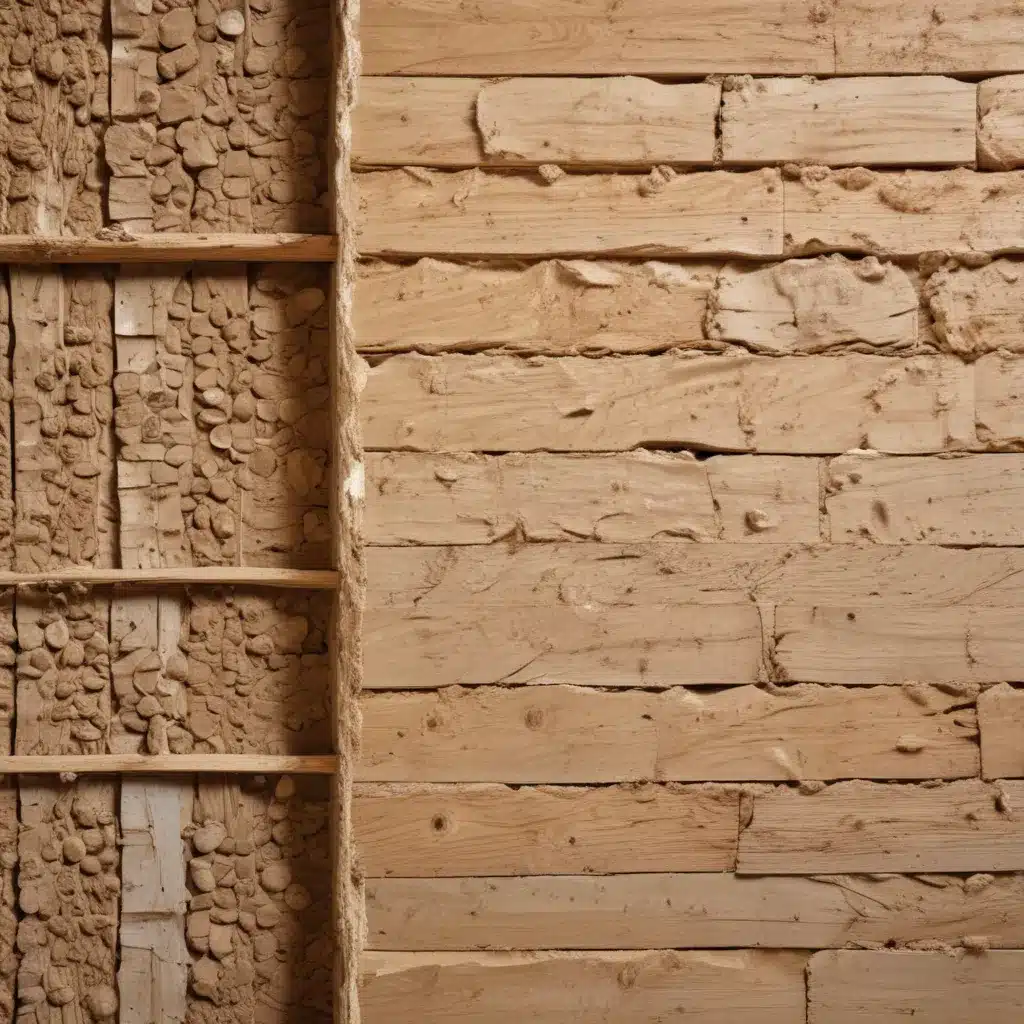
When it comes to sustainable materials, timber stands tall as a veritable titan of the construction industry. Its innate strength, versatility, and renewable nature make it a natural choice for those seeking to create a more eco-friendly living environment. “Timber is a renewable resource,” Emma explained, her voice brimming with enthusiasm, “and when sourced responsibly, it can provide a long-lasting foundation for your home.”
But the benefits of timber extend far beyond its environmental credentials. “It’s a remarkable insulator,” Emma continued, “helping to regulate the temperature within your home and reducing your energy consumption.” This, in turn, translates to lower utility bills and a smaller carbon footprint – a win-win scenario for both your wallet and the planet.
As I listened to Emma’s eloquent exposition, I couldn’t help but wonder: “How does timber stack up against other popular building materials in terms of longevity and durability?” Emma’s response was as measured as it was insightful. “Properly maintained, a timber-framed home can easily last for centuries,” she noted. “With the right care and attention, your timber-based abode can become a true family heirloom, passing down from generation to generation.”
The Concrete Conundrum: Seeking Sustainable Solutions
While timber may be the golden child of the sustainable construction world, it’s not the only material worthy of our attention. Emma’s keen eye then turned to the ubiquitous presence of concrete in modern architecture. “Concrete is a staple in the building industry,” she acknowledged, “but its environmental impact is a growing cause for concern.”
The production of concrete, you see, is a notoriously energy-intensive and carbon-emitting process. “The cement used in concrete is responsible for a significant portion of global greenhouse gas emissions,” Emma explained, her brow furrowed with a touch of concern. “As such, we must explore innovative ways to make this essential material more sustainable.”
Enter the realm of supplementary cementitious materials (SCMs) – alternative ingredients that can be blended with traditional cement to create a more eco-friendly concrete mixture. “SCMs like fly ash, slag, and silica fume can significantly reduce the carbon footprint of concrete,” Emma revealed, her eyes alight with the possibilities. “By incorporating these sustainable alternatives, we can build structures that are just as strong and durable, but with a far gentler environmental impact.”
As I contemplated the implications of this concrete conundrum, a question bubbled up in my mind: “How do these sustainable concrete solutions measure up in terms of long-term performance and resilience?” Emma’s response was a testament to her expertise. “The latest advancements in sustainable concrete technology have demonstrated remarkable durability and longevity,” she assured me. “With proper installation and maintenance, these eco-friendly concrete formulations can stand the test of time, just like their traditional counterparts.”
Insulation: The Unsung Hero of Sustainability
While the grand structures we build capture our attention, it’s often the unsung heroes – the quiet, unseen elements – that truly make the difference in future-proofing our homes. And when it comes to sustainability, insulation is undoubtedly one of those unsung heroes.
“Insulation is the linchpin of any energy-efficient home,” Emma declared, her passion for the subject evident in every word. “It’s the silent guardian that regulates temperature, minimizes heat loss, and ultimately, reduces your carbon footprint.”
But it’s not just any insulation that will do. Emma’s keen eye has identified a new generation of sustainable insulation materials that are raising the bar. “Materials like sheep’s wool, cellulose, and hemp-based insulation are quickly becoming the go-to choices for homeowners who want to future-proof their abodes,” she explained, her enthusiasm palpable.
These eco-friendly insulation alternatives not only boast impressive thermal performance, but they also possess a distinct advantage over traditional options. “They’re often made from renewable, biodegradable sources,” Emma noted, “which means they can be easily recycled or even composted at the end of their lifespan.”
As I listened, a thought struck me: “How do these sustainable insulation materials compare to their conventional counterparts in terms of longevity and durability?” Emma’s response was a testament to the advancements in the field. “The latest sustainable insulation products are designed to last for decades, providing long-term performance and reliability,” she assured me. “And their natural composition makes them remarkably resistant to mold, mildew, and other common issues that can plague traditional insulation.”
Glazing: Shedding Light on Sustainability
As we delved deeper into the sustainable materials landscape, Emma’s attention turned to a seemingly innocuous, yet profoundly important, element of any home – the windows. “Glazing is a crucial component of future-proofing your home,” she declared, her eyes sparkling with the conviction of someone who has seen the transformative power of this unsung hero.
“Windows play a vital role in regulating the temperature and energy efficiency of your home,” Emma explained, her voice imbued with a sense of urgency. “And with the advent of cutting-edge sustainable glazing solutions, homeowners have an unprecedented opportunity to maximize their energy savings and minimize their environmental impact.”
Emma’s enthusiasm was palpable as she delved into the specifics of these sustainable glazing options. “Double-glazed, low-E windows with argon gas fill-ups can significantly reduce heat transfer, keeping your home warmer in the winter and cooler in the summer,” she revealed. “And the latest advancements in solar control coatings can even help to mitigate the impact of solar gain, further enhancing your home’s energy efficiency.”
But the benefits of sustainable glazing go beyond mere numbers and statistics. “These solutions are also designed to be incredibly durable and long-lasting,” Emma added, her words underscored by a hint of pride. “With proper care and maintenance, your energy-efficient windows can continue to perform at the highest level for decades, ensuring that your home remains future-proof for years to come.”
As I contemplated the implications of Emma’s insights, a question bubbled up in my mind: “How do these sustainable glazing solutions compare to their conventional counterparts in terms of longevity and overall performance?” Emma’s response was a testament to the rapid advancements in the field. “The latest sustainable glazing products are engineered to withstand the test of time,” she assured me. “Their robust construction, combined with innovative coatings and gas-filled chambers, make them remarkably resilient and long-lasting. In fact, many of these solutions come with extended warranty periods, further cementing their status as future-proof investments for your home.”
The Sustainable Synthesis: Weaving a Future-Proof Tapestry
As I listened to Emma’s captivating insights, I couldn’t help but feel a sense of wonder at the transformation taking place in the world of sustainable building materials. Gone are the days when eco-friendly choices were limited and uninspiring. Today, we stand at the cusp of a sustainable revolution, where innovative solutions are redefining the very foundations of our homes.
But the true power of these sustainable materials lies not in their individual prowess, but in the way they can be seamlessly woven together to create a future-proof tapestry for our homes. “It’s all about finding the right balance and synergy between these different elements,” Emma explained, her gaze fixed on a distant horizon. “By carefully selecting and integrating sustainable materials – from timber and concrete to insulation and glazing – we can create living spaces that are not only environmentally responsible, but also built to withstand the test of time.”
As I contemplated the implications of Emma’s words, a sense of optimism began to take root within me. For in the face of an ever-changing world, the promise of a future-proofed home – one that stands tall, resilient, and in harmony with the natural world – felt like a beacon of hope, guiding us towards a more sustainable tomorrow.
Embracing the Sustainable Future: Your Home, Your Legacy
And so, my fellow homeowners, the time has come to seize the reins of sustainability and steer your abode towards a brighter, more resilient future. By embracing the wonders of timber, concrete, insulation, and glazing – the sustainable superstars that can future-proof your home – you have the power to create a living legacy that will echo through the ages.
The path may not be an easy one, but with the guidance of experts like Emma and the unwavering commitment to a sustainable future, the rewards will be boundless. Imagine a home that not only nurtures your family’s well-being but also serves as a shining example of environmental stewardship – a beacon of hope in an ever-changing world.
So, let us embark on this sustainable odyssey together, my friends. For in the words of the inimitable Emma, “The future is ours to shape.” And with the right materials, the right vision, and the right determination, we can build a home that will stand the test of time, a testament to our commitment to a brighter, more sustainable world.