It is easy to start with the finished look. For disabled users, older users or anyone planning ahead, the better order is different: first map how the person enters, turns, washes, transfers and leaves the room. Then choose the tray former, drainage, waterproofing, screen and finishes around that movement.

Accessible wet room design checklist
| Check | Why it matters | Practical note |
|---|---|---|
| Step-free entry | A raised tray edge or awkward threshold can make the room unusable for a wheelchair, frame or shower chair | Plan a level access former or a very low transition, with the door and floor build-up checked together. |
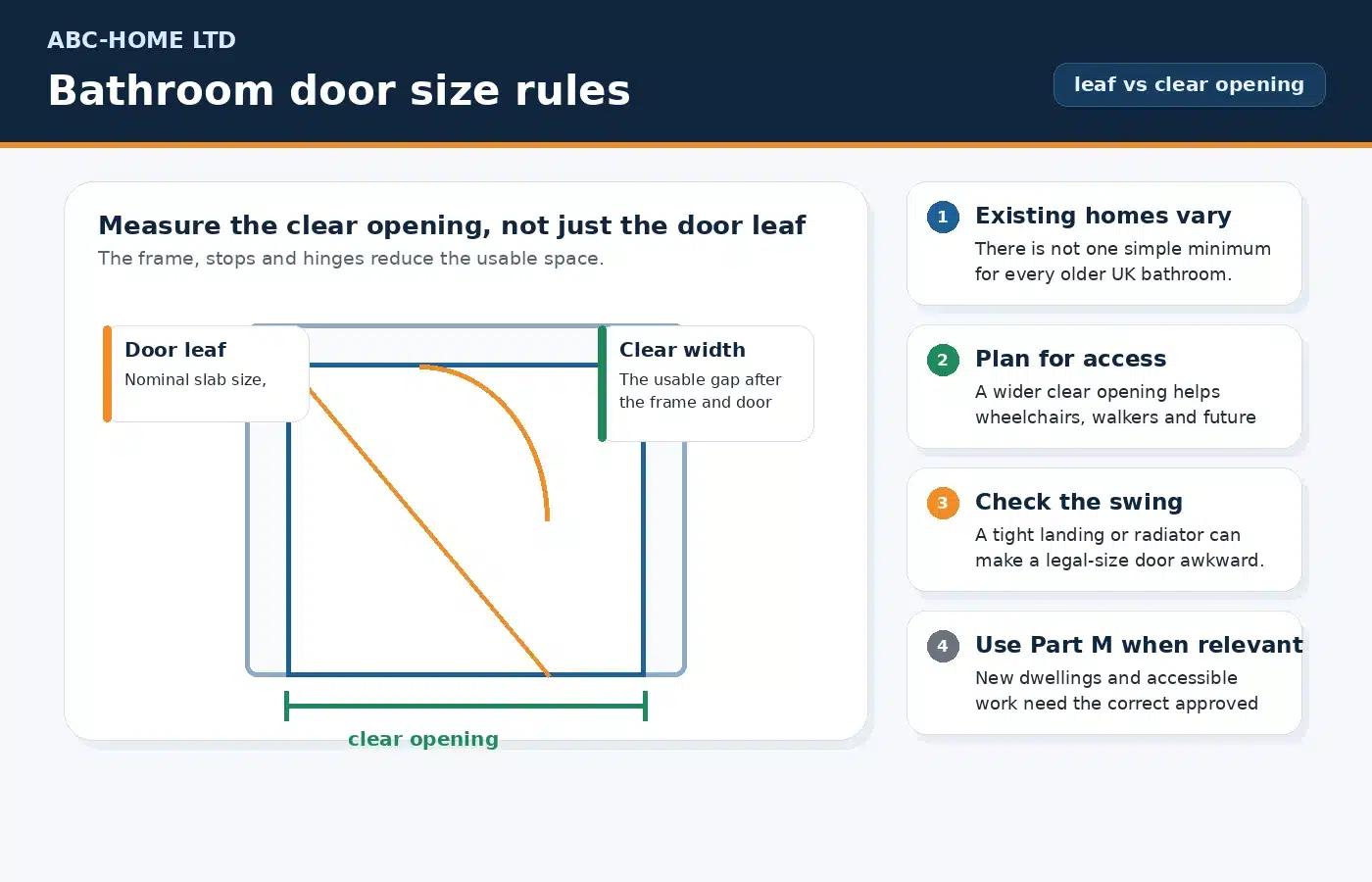
| Clear door and approach | The user may need to enter with a frame, wheelchair or helper beside them | Check the real clear opening after door stops, handles and tiles, not only the nominal door size. |
| Turning and transfer space | The room must work when someone turns, parks a chair or transfers to a seat | Keep the central floor clear. Avoid placing a vanity, towel rail or WC where it blocks the turning route. |
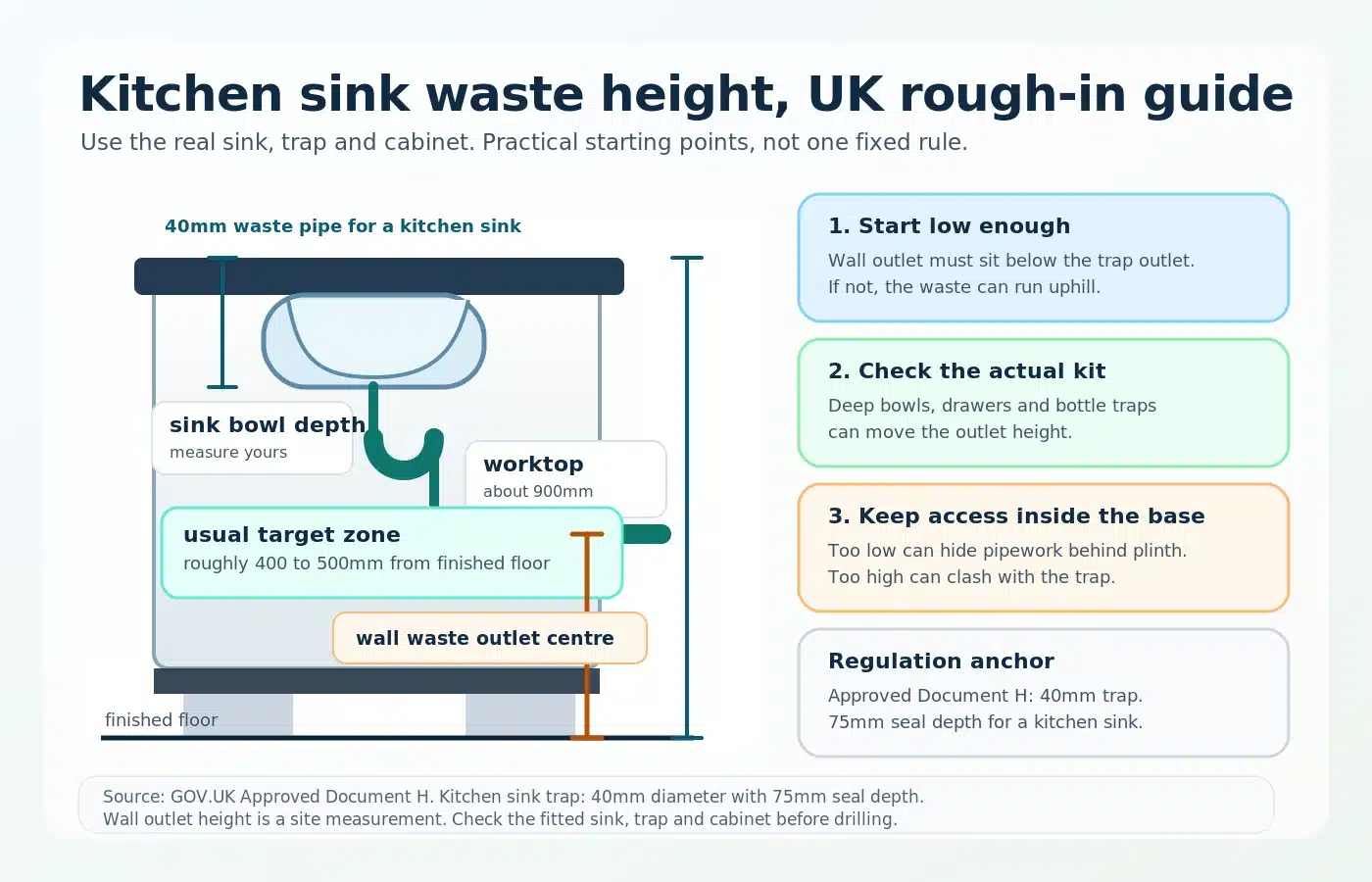
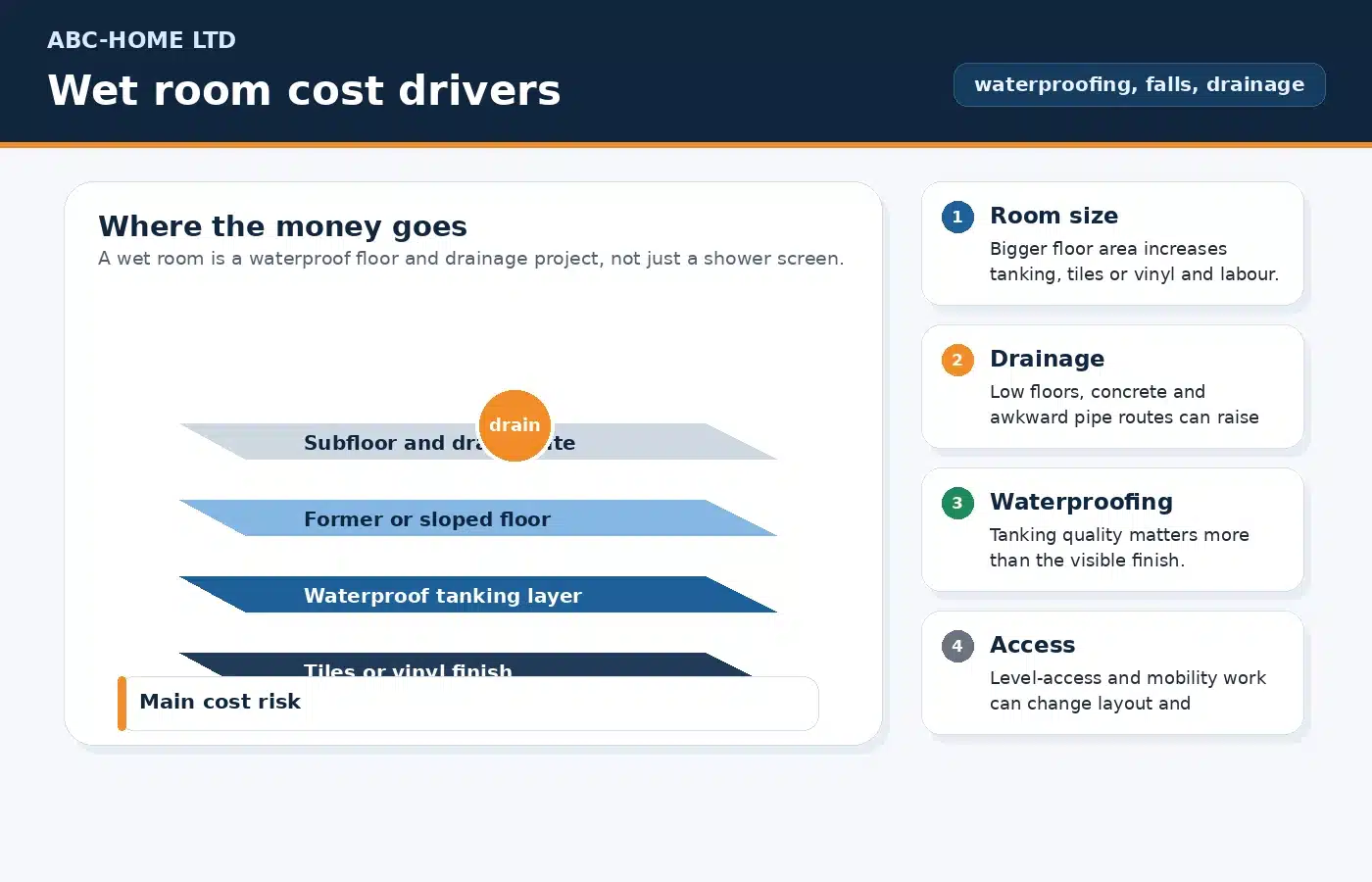
| Drainage fall | A level access shower still needs water to reach the drain without flooding the doorway | Use the correct former, waste position and falls. Long narrow rooms often need extra care at the entrance. |
| Wall strength | Grab rails, seats and shower controls need solid fixing points | Add plywood or proprietary support zones before boarding and tanking. Do not rely on tiles alone. |
| Slip resistance and comfort | The floor must be safe when wet and manageable for bare feet, wheels and walking aids | Choose wet-rated flooring or tiles with the installer, then check cleaning and grout maintenance. |
Accessible wet room layout checker
Use this to spot layout risks before a bathroom refit. It is a planning check, not an occupational therapist assessment.
Optional condition checks
What to decide before choosing finishes
Where the user moves
Draw the route from the bedroom or hallway into the bathroom, then mark where the user turns, reaches the controls and towels, and leaves the room. This catches tight corners before the floor is built.
How water is contained
A bigger open shower can feel easier, but water still needs a controlled path to the waste. Screens, curtains, falls and drain position should be decided as one system.
Where support can be fixed
Grab rails and folding seats need strong backing. Retrofitting them later can damage tanking or force weak fixings if the wall was not prepared.
How care needs may change
A room that works today may need a seat, extra rails, different controls or more helper space later. Future-proof the wall structure and pipe positions where possible.
Wet room features by user need
| User need | High-priority features | Watch out for |
|---|---|---|
| Reduced step height | Level or very low entry, anti-slip floor, reachable controls, good lighting | A tiny lip at the door can still be a trip point. |
| Wheelchair or shower chair | Clear approach, turning room, strong seat fixing position, side transfer space, reachable shower controls | Vanity units and towel rails often block the turning route. |
| Older user planning ahead | Strong fixing zones, simple controls, easy cleaning, contrast between floor and walls | Glossy tiles and dark grout lines can be difficult for some users. |
| Carer support | More space beside the shower and WC, outward-opening or sliding door, simple emergency access | Doors that open inward can trap access if someone falls behind them. |
Accessible wet rooms in Aberdeen
Bathroom door size guide
Shower base slope guide
Questions to ask the installer
- What clear door opening will be left after the frame, stops and flooring are finished?
- Where will the drain sit and what fall will take water away from the doorway?
- Which wall zones will be reinforced for grab rails, a folding seat and shower controls?
- How will the floor and wall tanking be protected around fixings and pipe penetrations?
- Can the room still work if a shower chair, frame or helper is needed later?
Sources and checks used
- Approved Document M gives statutory guidance for access to and use of buildings in England. It is a useful reference point, but Scottish projects use Scottish building standards.
- Scottish Government domestic technical handbook gives guidance for domestic building standards in Scotland.
- Disabled Facilities Grants information explains the kind of home adaptations that may be supported in England and Wales. Local Scottish support routes differ, so check the local council and OT route.
FAQ
What makes a wet room accessible?
An accessible wet room usually needs step-free entry, enough movement space, safe wet flooring, reachable controls, strong fixing zones for support, and drainage that keeps water away from the doorway.
Does an accessible wet room need a shower screen?
Not always. Some rooms use a curtain or open layout, but water control still matters. A screen, curtain, drain position and floor fall should be planned together.
Can grab rails be added later?
They can be added later only if the wall can take the load and the fixings do not damage waterproofing. It is better to add support zones before boarding and tanking.
Do Scottish bathrooms follow Approved Document M?
No. Approved Document M applies to England. Scottish work should be checked against Scottish building standards and any building warrant requirements, although the access principles can still help with planning.