Quick answer: a shower base needs enough fall to move water to the outlet without leaving flat spots. For many trays and wet room formers the practical check is the run to the drain, the total fall, the drain capacity and the manufacturer’s instructions. This Shower base slope rules guide explains shower drain slope checks before bathroom fitting in Aberdeen.
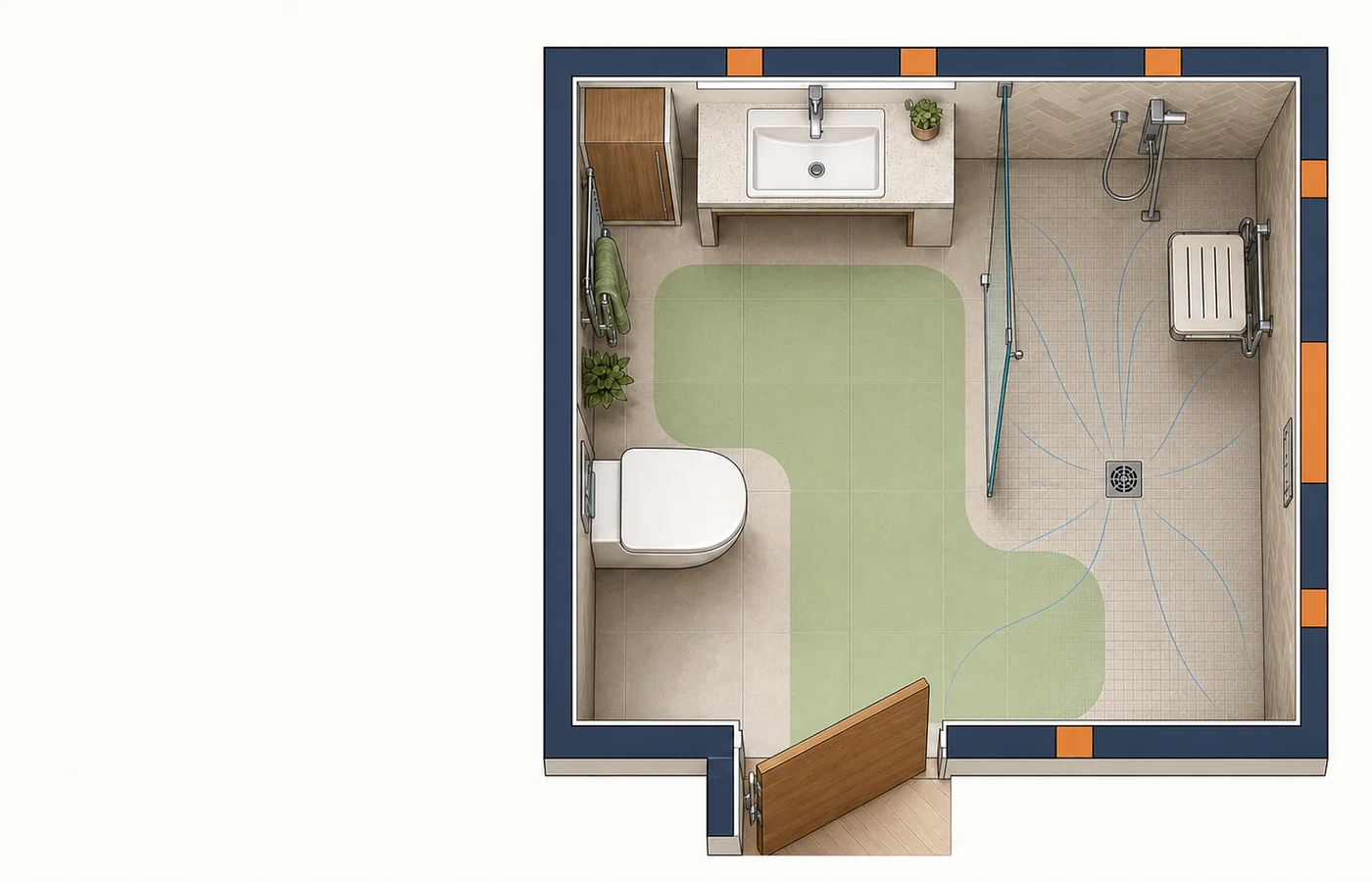
A good shower floor is planned before tiles are chosen. The subfloor, former, tray, waste route, waterproofing, tile size and grout lines all affect whether water drains properly. A base that looks almost level can pond. A base that is too steep can feel awkward and make the tile cuts untidy.

Shower base slope planning table
| Item to check | Why it matters | Fitting note |
|---|---|---|
| Run to the drain | Longer runs need more total fall to avoid standing water | Measure the finished surface distance, not only the subfloor distance. |
| Total fall | Too little fall can leave water behind | Check the former or tray instructions before setting levels. |
| Drain position | Central, corner and linear drains behave differently | Linear drains need a straight and consistent finished edge along the channel. |
| Tile size | Large tiles can bridge slopes or create awkward cuts | Mosaics or smaller tiles are often easier on multi-fall wet room floors. |
| Waste pipe route | The drain still needs a working pipe gradient and trap access | Plan joist notches, boxing, ceiling voids and future maintenance. |
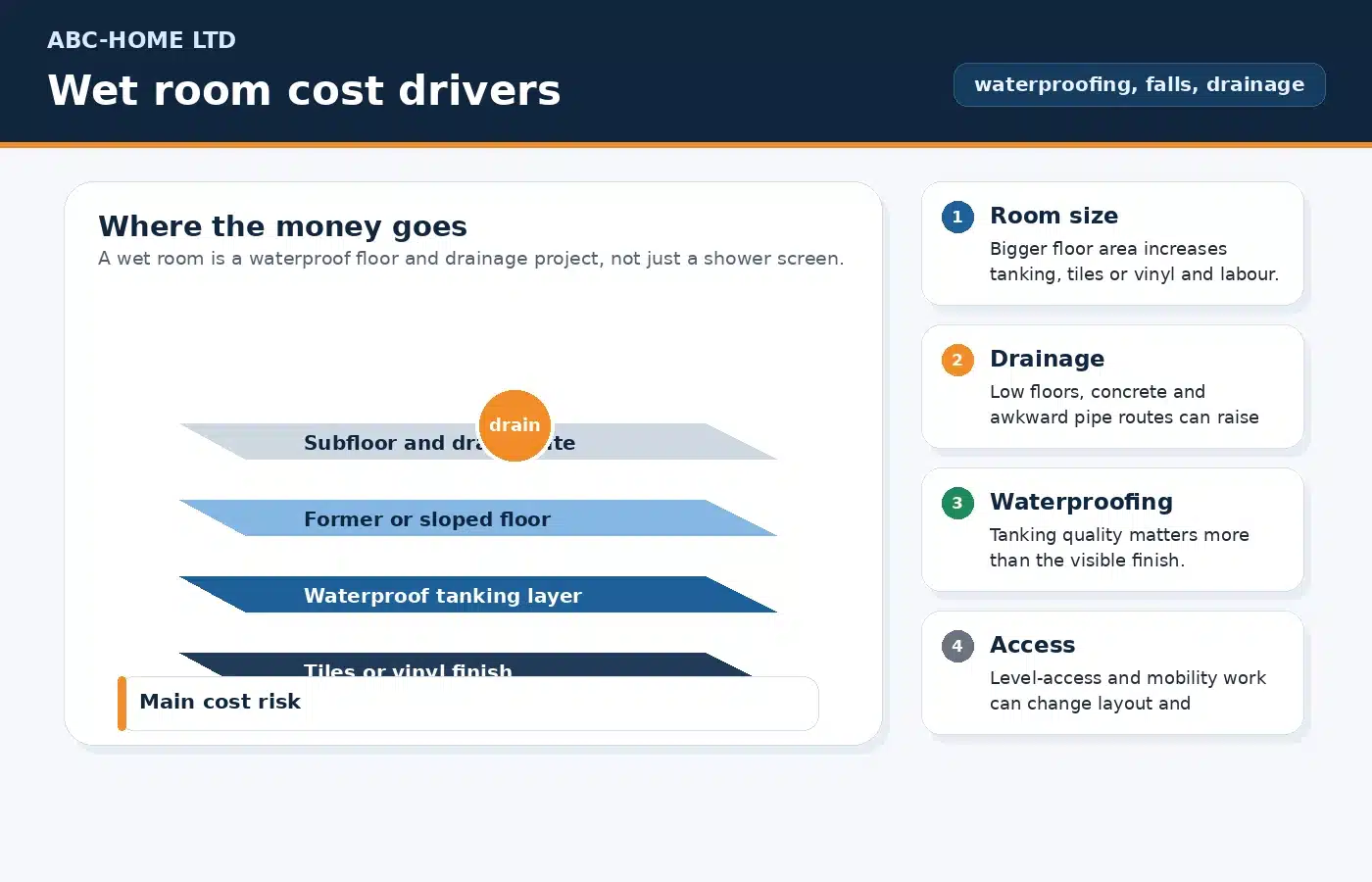
| Waterproofing | A slope does not replace tanking or correct seals | Follow the full wet room system, including corners and penetrations. |
Shower drain slope checker
Use this quick checker to estimate whether the entered run and fall sound sensible. It does not approve a design, and it does not replace the tray, former or drain manufacturer instructions.
Practical fitting checklist
- Start with the product sheet. Tray and former instructions set the first rule for that system.
- Measure finished levels. Include tile adhesive, tile thickness, matting and tanking build-up.
- Check the waste route early. A good top surface still fails if the trap or waste pipe cannot drain properly.
- Avoid flat edges. Door thresholds, screens and wall junctions should not trap water.
- Match tile size to the floor. Large tiles are harder to fit neatly on compound falls.
- Test before sealing up. Check drainage and access before final trims and screens hide the work.
Approved Document H and manufacturer instructions
Approved Document H covers drainage and waste disposal in England. Use it cautiously as a drainage reference, not as a complete shower tray or wet room fitting manual. The final shower base slope, drain capacity and waterproofing method should follow the tray, former, drain and tanking manufacturer instructions, plus competent site assessment.
Common slope problems
Standing water usually comes from a flat spot, a lip at the drain, a tiled area that falls away from the outlet, or an outlet that cannot accept the shower flow. Slow drainage can also be a trap or waste pipe problem rather than a floor slope problem.
Leaks are different from slow drainage. A shower base can drain well and still leak if the waterproofing, screen seal, wall junction or waste connection is wrong. Treat slope, drainage and waterproofing as separate checks.
FAQ
What fall should a shower base have?
The correct fall depends on the tray, former, drain and tile layout. Many wet room plans use a gentle fall range, but the manufacturer’s instructions and site conditions control the final answer.
What is shower drain slope?
Shower drain slope is the drop from the shower floor to the outlet over a measured run. It is often described as a ratio, such as 1 in 60, but the product instructions matter more than a generic ratio.
Does Approved Document H set shower tray falls?
Approved Document H is a drainage and waste disposal reference. It is useful context, but it does not replace the tray, former, drain or waterproofing instructions for a specific shower.
Why does water pool on my wet room floor?
Water can pool because the floor is too flat, the tiles bridge the fall, the drain edge is high, the waste is slow, or the screen threshold holds water back.
If you want the fall, waste and wet room build-up checked before fitting, ABC Home can help with bathroom fitting in Aberdeen.