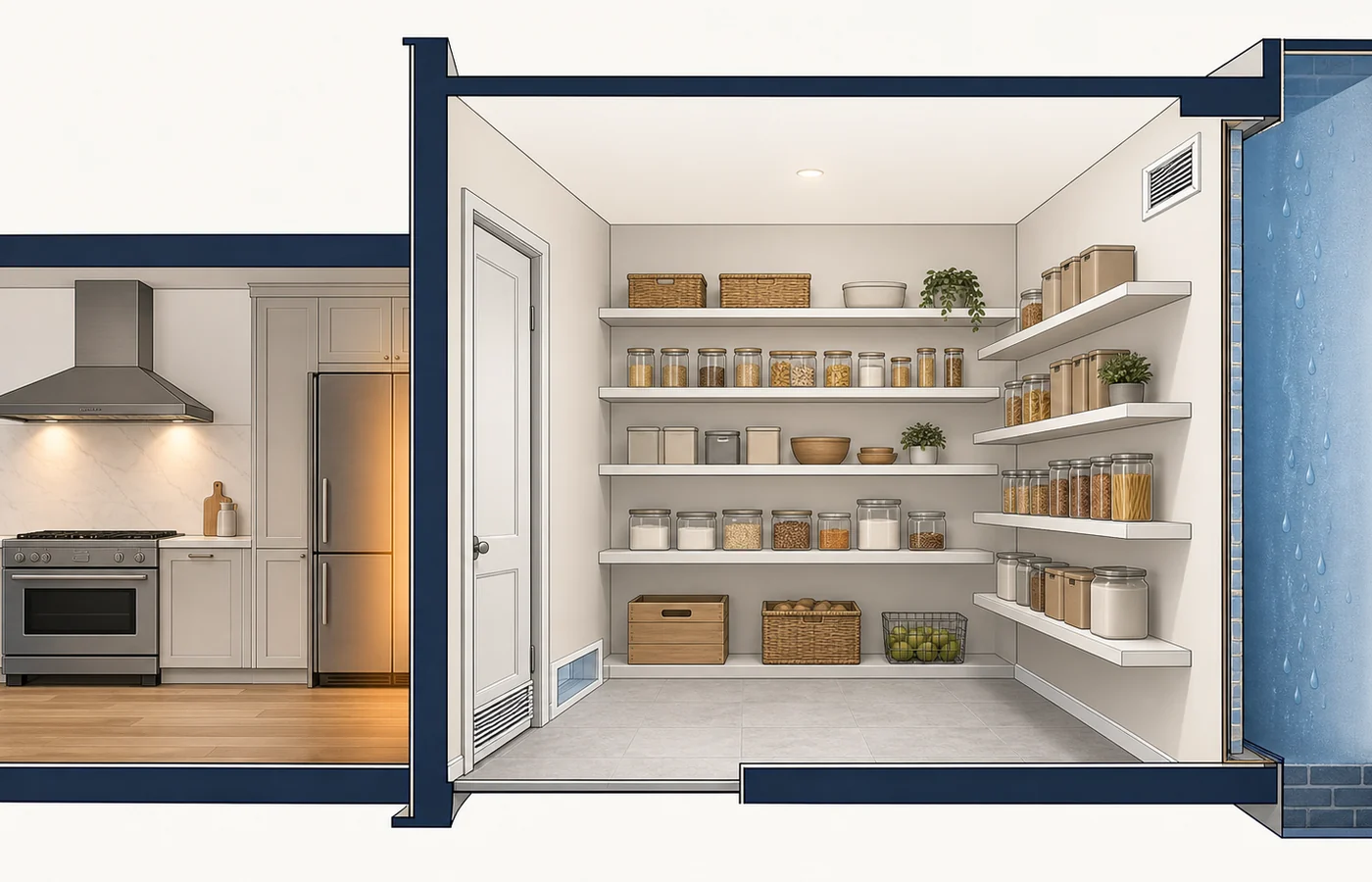
Kitchen extractor fan regulations are easy to misunderstand because cooker hoods, recirculating filters and proper extract ventilation are often mixed together. A charcoal recirculating hood can reduce smell and grease, but it does not remove water vapour from the room. In a real kitchen refit, the duct route and outside terminal can matter as much as the fan label.

Kitchen extractor fan regulation table
| Topic | What it means in a kitchen | Practical check |
|---|---|---|
| Extract to outside | Ventilation removes moist air from cooking. Recirculating filters do not remove moisture. | Where possible, plan a duct to an outside wall or roof terminal. |
| Extract rate | For England, Approved Document F gives example intermittent extract rates for kitchens. | Check the current document and the fan data, not only a marketplace listing. |
| Scottish standards | Scottish domestic building standards use their own ventilation guidance. | For Aberdeen work, check the Scottish technical handbook and building warrant route where relevant. |
| Duct route | Long runs, flexible duct, sharp bends and dirty filters reduce real airflow. | Use a short, smooth and accessible route where possible. |
| Fire and weather | Ducts through walls, ceilings or roofs need safe penetrations, suitable terminals and weather protection. | Do not route ducting through hidden spaces without considering fire stopping, condensation and access. |
| Make-up air | A fan cannot extract well if no replacement air can enter the room or dwelling. | Check background ventilation, door undercuts and whole-house ventilation design. |
Kitchen extractor route checker
Use this before ordering a cooker hood or cutting a duct route. It is a planning guide, not a commissioning certificate.
Cooker hood, extractor fan or recirculating hood?
Ducted cooker hood
This is usually the strongest option when the hob has a sensible external route. It removes steam and smells outside, but the duct needs to be sized and routed properly.
Wall or ceiling fan
A fan away from the hob can still ventilate the kitchen, but it may need a higher rate and may not capture grease or steam as well as a hood over the cooking area.
Recirculating hood
This can help with grease and odour through filters, but it sends moisture back into the room. It should not be treated as the same thing as extract ventilation.
Whole-house ventilation
In airtight homes or major refurbishments, the kitchen extract should fit the wider ventilation plan rather than fighting it.
Common kitchen extractor mistakes
| Mistake | What happens | Better approach |
|---|---|---|
| Using only a recirculating hood in a damp kitchen | Smells may improve but condensation remains | Plan external extract or a wider ventilation solution. |
| Long flexible duct over cabinets | Airflow drops, grease collects and noise rises | Use short, smooth ducting with gentle bends and access for cleaning. |
| Fan too far from the hob | Steam spreads through the room before extraction | Use a hood where practical, or size the fan and route carefully. |
| No thought for make-up air | The fan sounds loud and extracts poorly | Check background ventilation and door gaps as part of the room plan. |
| Terminal too close to openings | Extracted air can be drawn back in or cause nuisance | Check terminal position and local site conditions before drilling. |
Electrical work for kitchen refits
Kitchen window placement guide
Kitchen appliance height guide
Questions to ask before ordering
- Will this unit extract to outside, or is it only recirculating through filters?
- How long is the duct route and how many bends are needed?
- Can the duct be cleaned or inspected after the kitchen is finished?
- Does the fan rate make sense for the kitchen and the building standards route?
- Where will replacement air come from when the fan is running?
- Will the terminal position avoid weather, nuisance, and air being drawn back inside?
Sources and checks used
- Approved Document F Volume 1 gives ventilation guidance for dwellings in England, including minimum intermittent extract rates for kitchens.
- Scottish Government domestic technical handbook gives domestic building standards guidance for Scotland, including ventilation guidance.
- Fan manufacturer installation instructions should be checked for duct diameter, maximum duct length, bends, terminal type and cleaning access.
FAQ
Does a kitchen extractor have to vent outside?
For moisture control, extraction to outside is the useful standard. A recirculating cooker hood can help with grease and odour, but it does not remove water vapour from the kitchen.
What size extractor fan does a kitchen need?
The answer depends on the standards route, fan type and duct route. In England, Approved Document F gives kitchen intermittent extract rates such as 30 litres per second next to the hob or 60 litres per second elsewhere. Scottish work should be checked against Scottish standards.
Can a cooker hood use flexible duct?
It can in some installations, but long flexible duct and tight bends reduce airflow and collect grease. Short, smooth, accessible ducting is usually better.
Is a recirculating hood enough for building regulations?
Do not assume that. Recirculating hoods do not remove moisture. Check the building standards route and whether another extract ventilation method is needed.