The Pruning Predicament: Conquering the Chaos of Cutting Back
Ah, the joys of home ownership – a never-ending symphony of maintenance, upgrades, and the occasional landscaping nightmare. And when it comes to the art of pruning, let me tell you, I’ve been there, done that, and collected a few scraped knuckles along the way. But fear not, my fellow green-thumbed warriors, for I’ve learned a thing or two about taming those unruly branches and sculpting our outdoor oasis to perfection.
You see, I’m the proud owner of a cozy little abode in the heart of Aberdeen, UK, and let me tell you, my garden is a veritable jungle. Trees and shrubs everywhere, each one vying for dominance like a pack of ravenous wolves. And every spring, when the first buds start to appear, I find myself in a frantic race against time, scrambling to get my pruning shears in order before the new growth takes over.
But hold on, let’s back up a bit. Why is pruning so darn important, you ask? Well, my friends, it’s all about promoting healthy growth, controlling the shape and size of our plants, and preventing those pesky diseases and pests from taking over. You see, by strategically snipping away the dead, damaged, or overgrown parts, we’re essentially giving our beloved greenery a new lease on life.
The Pruning Playbook: Mastering the Art of Timing
Now, the key to successful pruning is all about timing. You don’t want to go hacking away at your trees and shrubs willy-nilly, no sir! That would be a recipe for disaster, trust me. Instead, we need to time our pruning efforts with the natural cycles of our plants.
The Spring Switcheroo
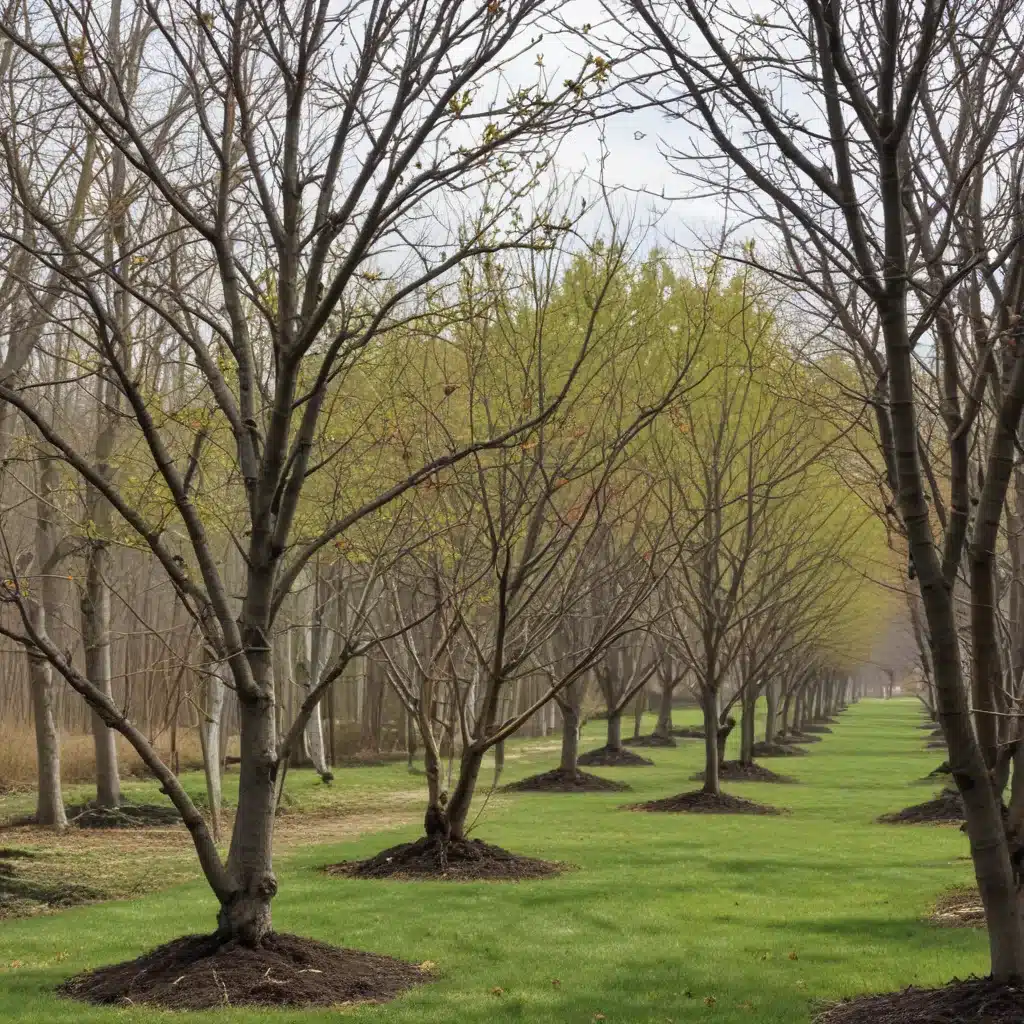
The prime time for pruning is typically in late winter or early spring, just before the new growth starts to emerge. This is the sweet spot, my friends, when the plants are still in their dormant state and the fresh buds haven’t yet burst forth. By pruning during this time, we’re essentially giving our greenery a clean slate, a fresh start to the growing season.
But hold on, there’s a catch. Not all plants are created equal when it comes to pruning. Some, like your deciduous trees and shrubs, are best pruned before the new growth appears. But others, like your evergreens, might do better with a little post-growth trim. It’s all about knowing your plant’s specific needs and preferences.
The Evergreen Enigma
Now, when it comes to our evergreen friends, the pruning game plan is a bit different. These lush, verdant beauties thrive best when we prune them after the new growth has emerged. This way, we can shape and sculpt them to our heart’s content without risking any damage to the delicate new foliage.
Imagine trying to trim a freshly-sprouted Christmas tree – it’s a recipe for disaster, my friends. The poor thing would be left looking like a mangled mess. No, with our evergreens, we want to wait patiently until the new growth has had a chance to establish itself before we start snipping away.
The Pruning Prowess: Techniques for a Tidy Triumph
Alright, now that we’ve got the timing down, let’s dive into the nitty-gritty of pruning techniques. Because, let’s be honest, it’s not just about when you prune, but how you prune that really makes all the difference.
The Thinning Technique
One of the most important pruning techniques to master is the art of thinning. This involves selectively removing the oldest, weakest, or most crowded branches from our trees and shrubs. By letting in more light and air circulation, we’re promoting healthier growth and preventing those pesky disease-causing issues from taking hold.
But here’s the catch – you can’t just start hacking away willy-nilly. Nope, this takes a delicate touch and a keen eye. You want to remove the branches that are rubbing against each other, the ones that are crossing over, and the ones that are just generally looking a little sad and dejected. Trust me, your plants will thank you for the extra TLC.
The Heading Cut
Now, if thinning is the subtle art of pruning, then heading cuts are the bold, dramatic statements. These are the cuts that shape and sculpt our plants, giving them that perfect, manicured look that makes the neighbors green with envy (pun intended).
With a heading cut, we’re essentially removing the terminal bud of a branch, forcing the plant to sprout new growth from the remaining buds. This can be used to control the overall size and shape of our trees and shrubs, keeping them from getting too unruly and overgrown.
But be warned, my friends – heading cuts are not to be taken lightly. You’ve got to have a clear vision in mind and a steady hand. Otherwise, you might end up with a lopsided, misshapen mess on your hands. And trust me, trying to fix a botched heading cut is no easy feat.
The Pruning Payoff: Reaping the Rewards of a Well-Tended Garden
Alright, so we’ve covered the when and the how of pruning, but what about the why? What’s the real payoff for all this hard work, you ask?
Well, my friends, the benefits of proper pruning are manifold. For starters, it helps to maintain the overall health and vigor of our plants. By removing the dead, damaged, or diseased parts, we’re allowing the healthy growth to thrive and flourish. And let’s not forget about the aesthetic appeal – a well-pruned garden is a sight to behold, a true oasis of natural beauty.
But the real magic happens when we consider the long-term implications of our pruning efforts. You see, by keeping our trees and shrubs in tip-top shape, we’re actually helping to extend their lifespan. That’s right, a little strategic snipping can add years, even decades, to the life of our beloved greenery.
And let’s not forget about the practical benefits, either. Properly pruned plants are less likely to pose a safety hazard, with their branches neatly trimmed and their growth contained. And let’s not forget about those all-important curb appeal points – a well-manicured garden is the ultimate calling card for any homeowner.
The Pruning Pros: Calling in the Experts
Now, I know what you’re thinking – “But I’m no green-thumbed genius! How on earth am I supposed to pull off all this pruning wizardry?” Well, fear not, my friends, because there’s help available.
Enter the pruning pros – the arborists, the landscapers, the garden gurus who have made it their life’s work to tame the wild and untamed. These are the folks who can spot a diseased branch from a mile away, who can wield a pair of pruning shears like a true artist.
And let me tell you, when it comes to the care and keeping of our beloved trees and shrubs, there’s no substitute for a little professional expertise. These folks have seen it all, from the most stubborn of hedges to the most unruly of fruit trees. And they know just what to do to get our gardens back in tip-top shape.
So, if you’re feeling a little overwhelmed by the prospect of pruning, or if you’re just not quite sure you’ve got the chops to pull it off, don’t hesitate to call in the pros. Trust me, it’s worth every penny to have the experts take care of your pruning needs, leaving you free to sit back and enjoy the fruits of their labor (pun very much intended).
The Pruning Practicality: Incorporating Renovations and Upgrades
Now, as a proud homeowner in Aberdeen, UK, I know all too well the importance of keeping our gardens and landscapes in pristine condition. But, let’s be honest, sometimes our pruning needs go beyond just the basic maintenance.
That’s where the magic of home renovations and upgrades comes into play. You see, by incorporating strategic pruning into our larger landscaping projects, we can unlock a whole new world of possibilities. Imagine transforming a drab, overgrown backyard into a stunning outdoor oasis, complete with meticulously pruned trees and shrubs that provide the perfect backdrop for a dreamy patio or a cozy fire pit.
And let’s not forget about the practical benefits of pruning in the context of home renovations. By keeping our plants well-trimmed and under control, we can make way for new additions, like that gorgeous glass-enclosed sunroom you’ve been dreaming about. Or, perhaps, a sprawling deck that’s the envy of the entire neighborhood.
The key, my friends, is to think of pruning as a essential component of any home renovation project. It’s not just about making things look pretty – it’s about creating a cohesive, functional outdoor space that seamlessly integrates with the rest of your living areas. And let me tell you, when you get that balance right, the results are nothing short of magical.
The Pruning Passion: A Lifelong Journey of Learning and Exploration
Now, as I sit here, sipping my morning coffee and gazing out at my ever-evolving garden, I can’t help but reflect on the journey that brought me to this point. You see, pruning hasn’t always been my forte – in fact, there was a time when the mere thought of wielding a pair of shears sent shivers down my spine.
But, over the years, as I’ve tended to my little plot of land here in Aberdeen, I’ve come to truly appreciate the art and science of pruning. It’s become a passion, a lifelong pursuit of learning and exploration, a never-ending quest to unlock the secrets of the natural world.
And let me tell you, the more I delve into the intricacies of pruning, the more I realize just how much there is to discover. It’s not just about snipping away the overgrown bits – it’s about understanding the unique needs and characteristics of each and every plant. It’s about finding the perfect balance between form and function, between aesthetics and practicality.
So, if you’re like me, and you find yourself feeling a little overwhelmed by the pruning process, fear not. Because, my friends, this is a journey that never ends. There’s always more to learn, more techniques to master, more gardens to transform. And, trust me, the rewards of this pursuit are well worth the effort.
So, grab those pruning shears, take a deep breath, and get ready to embark on your own pruning odyssey. Who knows, maybe one day you’ll be the one sharing your hard-earned wisdom with the next generation of green-thumbed enthusiasts. After all, the secret to a truly magnificent garden is all in the pruning.