The Perils of Floppy Flooring
I’ll never forget the day I discovered the dreaded “floppy floor” phenomenon in my own home. It was a quiet Tuesday evening when my cat, Mittens, decided to go on a mad sprint through the hallway. As she dashed past, I watched in horror as the rug beneath her paws slid across the smooth cement floor like a hockey puck on ice.
Mittens may have been the catalyst, but the problem had been brewing for some time. You see, the previous owners of my apartment had opted for a sleek, contemporary cement flooring rather than the more traditional tile or hardwood. And while it looked fantastic, this slippery surface presented a unique challenge when it came to keeping rugs in place.
I’d tried everything – the classic rubbery anti-slip mats, double-sided tape, even that sneaky IKEA trick that worked for a little while (before the dust ruined it, of course). But no matter what I did, those pesky rugs would just not stay put. It was driving me up the wall!
The Dangers of Drifting Decor
Now, you might be thinking, “So what? It’s just a rug, what’s the big deal?” Well, my friend, let me tell you – those floppy floor coverings can pose some serious risks, especially in high-traffic areas.
For starters, there’s the tripping hazard. Imagine coming down the stairs in a hurry, only to catch your foot on a bunched-up rug and take a tumble. Ouch! And it’s not just you who’s at risk – your guests, family members, and even your beloved pets could fall victim to these slippery situations.
But the dangers don’t stop there. Over time, those constantly shifting rugs can also wreak havoc on your floors. The constant friction and pressure can wear down even the toughest surfaces, leading to unsightly damage and costly repairs down the line.
And if you’ve got a concrete slab foundation like me, you’ve got an even bigger problem to contend with. As the folks over at RugRunnerBiz explained, those non-breathable plastic or rubber mats can actually draw moisture up through the concrete, leading to all sorts of nasty issues like mildew, mold, and even structural damage.
Yikes! It’s enough to make your head spin (or your rug, for that matter).
The Power of Patterned Protection
So, what’s the solution? How can you keep your floors safe and sound while still enjoying the aesthetic appeal of rugs and runners? Well, my friends, it all comes down to finding the right rug for the job.
Now, I know what you’re thinking – “But won’t any old rug do the trick?” – and to that, I say, “Oh, sweet summer child, if only it were that simple.” You see, not all rugs are created equal when it comes to staying put on slippery surfaces.
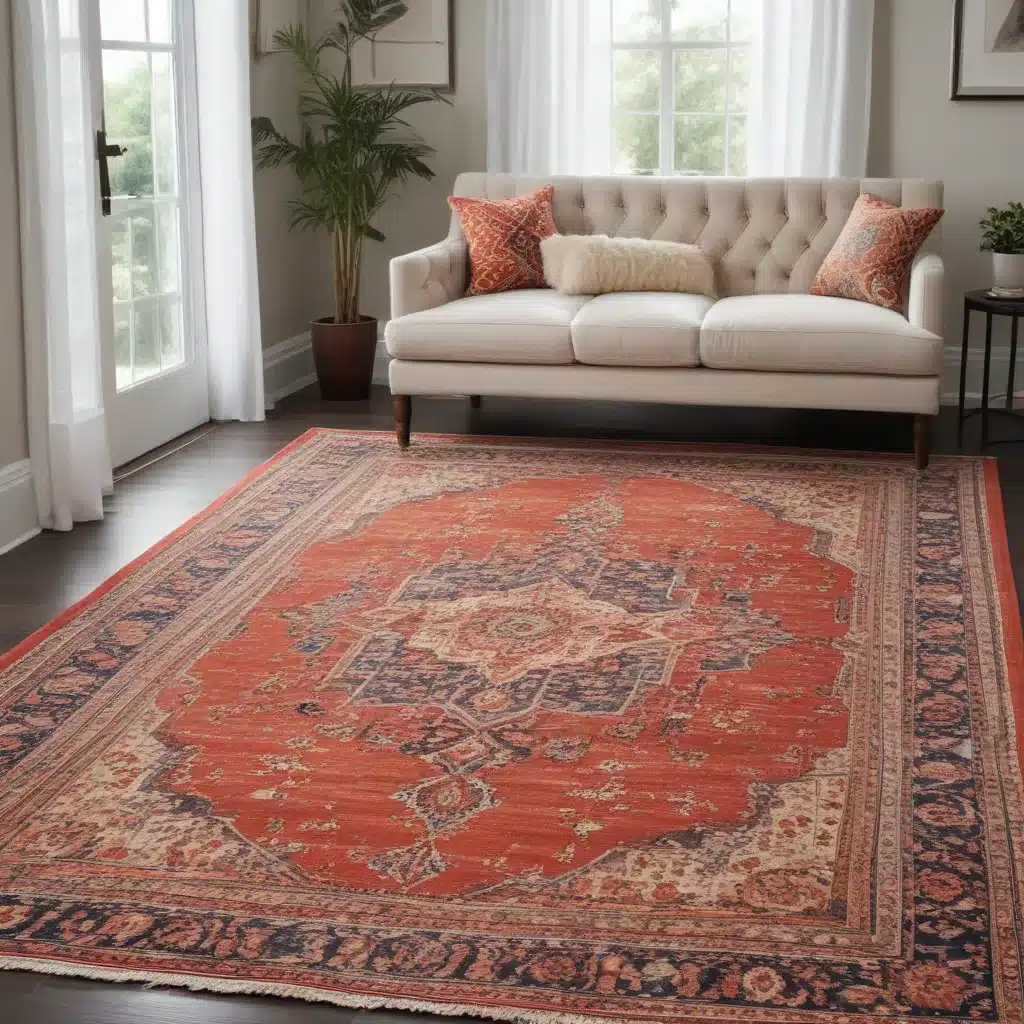
The key is to look for rugs with a tight, flat weave and a sturdy, non-slip backing. As the kind folks over at Reddit pointed out, those plush, fluffy rugs may look cozy, but they’re simply no match for the constant shuffling and scuffing of high-traffic areas.
Instead, opt for a rug with a low pile height and a dense, tightly-woven construction. Natural fibers like wool or cotton tend to work best, as they provide just enough grip to keep the rug in place without feeling like you’re walking on a bed of quicksand.
And don’t forget about that all-important backing! Look for rugs with a non-slip or rubberized underside, as these can help anchor the rug to your floors and prevent those pesky slips and slides.
Designing with Durability in Mind
Of course, finding the perfect rug isn’t just about functionality – it’s about finding a design that complements your space and your personal style. And let me tell you, there are some seriously stylish options out there that can withstand the rigors of high-traffic living.
Take, for example, the classic striped runner. Not only does it add a timeless touch of elegance to any hallway or entryway, but the tight weave and low profile make it an ideal choice for keeping floors safe and slip-free. Or perhaps you’re more of a geometric pattern person – in that case, check out those bold, graphic rugs that are both eye-catching and engineered to stay put.
And let’s not forget about the versatility of solid-colored rugs. These understated beauties come in a wide range of hues, from rich jewel tones to soothing neutrals, and their simple design means they’ll effortlessly blend with any decor. Plus, the dense construction and non-slip backings make them a practical choice for high-traffic areas.
No matter your style, there’s a rug out there that can both protect your floors and elevate your home’s aesthetic. The key is to do your research, measure your space, and choose wisely. Trust me, your feet (and your wallet) will thank you in the long run.
Maintenance Matters
Of course, finding the perfect rug is only half the battle – you’ve also got to keep it in tip-top shape to ensure it continues to do its job. And let me tell you, proper rug maintenance is no walk in the park.
First and foremost, you’ll want to make sure you give your rugs a thorough cleaning on a regular basis. Dirt, dust, and debris can all contribute to a rug’s loss of grip, so a good vacuum (or even a professional cleaning every so often) is an absolute must.
And speaking of grip, don’t be afraid to get a little creative with your rug-anchoring techniques. The folks at RugPadUSA had some great suggestions, like using double-sided tape or even a DIY rug pad made from masonite or laminate.
But perhaps the most important piece of advice I can give you is this: avoid those pesky plastic or rubber mats at all costs! As the experts at RugRunnerBiz warned, these non-breathable materials can actually draw moisture up through your floors, leading to all sorts of nasty problems down the line.
Instead, opt for natural, breathable materials that will let your floors (and your rugs) do their thing without any unwanted interference. Your home – and your wallet – will thank you.
Putting it All Together
So, there you have it, folks – the ultimate guide to protecting your floors with rugs during high-traffic times. From choosing the right rug to maintaining it like a pro, we’ve covered it all.
Remember, the key is to find a rug that’s both stylish and functional, with a tight weave, low pile, and non-slip backing. And don’t forget to keep up with regular cleaning and anchoring to ensure your floors stay safe and sound.
Oh, and one last piece of advice? Ditch those plastic mats for good – your floors (and your wallet) will thank you. Trust me, it’s a game-changer.
Now, if you’ll excuse me, I’ve got to go make sure Mittens hasn’t tried to wrap herself in the hallway rug again. Wish me luck!