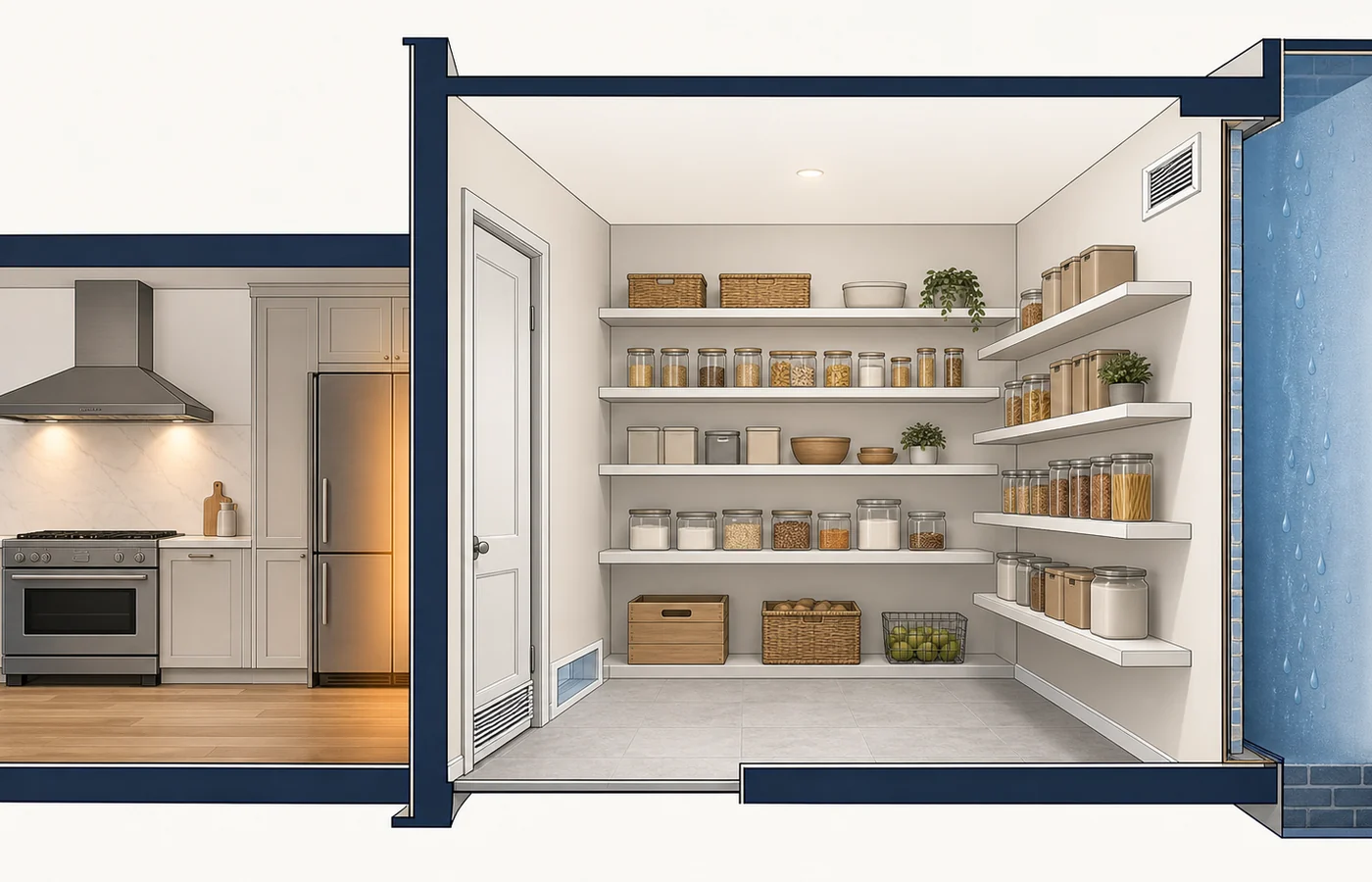
A good kitchen switch plan is simple to use when your hands are full, when the room is dark and when someone is cooking, cleaning or walking through the space.
The common mistake is choosing switches after cabinets, splashbacks and tiles are already fixed. Plan the switching before the wall finish and kitchen layout are locked.
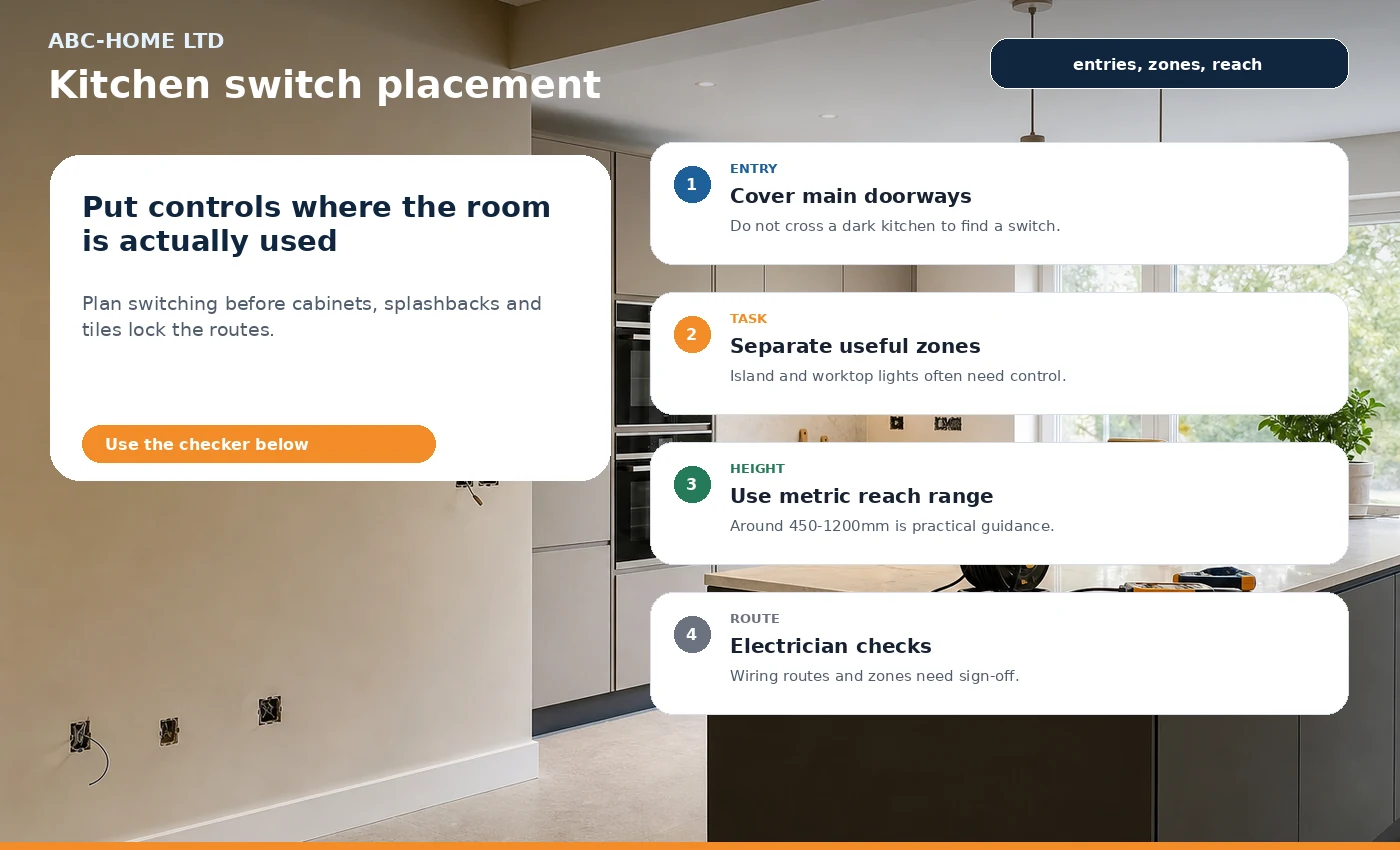
Kitchen switch placement checks
| Check | Useful planning question | Why it matters |
|---|---|---|
| Main entry | Can you turn lights on before entering the dark room? | This is the basic safety and convenience check. |
| Through route | Would two-way switching help at another doorway? | Open-plan or utility routes often need more than one control point. |
| Task lighting | Are worktop, island and dining lights controlled separately? | One switch for every light can make the kitchen awkward to use. |
| Height | Is the switch within a sensible reachable range? | Avoid awkward high positions and clashes with cabinets or tiles. |
| Wet or hot zones | Is it away from sink, hob and steam risk? | Location and product choice need electrician judgement. |
Kitchen switch placement checker
Use this as a planning checklist before the electrician or kitchen fitter finalises routes.
Do not use US terms
This page uses UK language: switch, socket, RCD and consumer unit.
Height is guidance
Reachable height is a planning decision, not a single magic number for every kitchen.
Think before splashbacks
Switch and socket positions should be known before splashback cuts are made.
Keep controls logical
Users should know what a switch does without trial and error.
Sources and checks used
- Electrical Safety First kitchen safety: safety context for kitchens
- IET Wiring Regulations: UK wiring-regulation reference
- Scottish Government Building Standards: Scotland building-work context
- NICEIC find a contractor: route to check registered electricians
FAQ
What height should a kitchen light switch be?
A common accessible planning range is around 450–1200mm, but the final position depends on the room, user needs and wiring route.
Should kitchen lights have separate switches?
Often yes. Task, island and dining lighting can be easier to use when they are not all tied to one switch.
Can a kitchen switch be moved during a refit?
Usually it can be planned, but the wiring alteration should be checked and completed by a qualified electrician.
Planning work in Aberdeen? ABC Home can coordinate the practical kitchen, renovation and electrical route through electrical services and kitchen fitting where the project overlaps.