Carving Out a Cozy Nook in the Open Abyss
As a homeowner with an affinity for open floor plans, I’ve often found myself staring into the vast, boundless expanse of my living area, wondering how on earth I’m supposed to carve out a distinct eating space. It’s like trying to find a four-leaf clover in a field of dandelions – the challenge seems almost insurmountable. But fear not, my fellow open-concept dwellers, for I have traversed this culinary conundrum and emerged victorious, armed with a treasure trove of insights to share.
The Perils of the Open Abyss
Picture this: you’ve just hosted a lively dinner party, the remnants of a sumptuous feast laid out before you. As your guests depart, you’re left with a nagging feeling that something is…off. The empty expanse of your open floor plan looms large, making the dining table feel like a small, lonely island in a sea of nothingness. It’s enough to make even the most seasoned host shudder.
You see, the open floor plan is a double-edged sword. On one hand, it offers a tantalizing sense of spaciousness and seamless flow, but on the other, it can make it surprisingly tricky to define distinct zones within the same space. And let’s be honest, trying to eat a meal in the middle of a vast, undifferentated living area can feel a bit like picnicking in the Sahara Desert – it just doesn’t quite hit the spot.
Overcoming the Challenges
But fear not, my friends, for there are ways to overcome the challenges of defining an eating space in an open floor plan. It’s all about leveraging the power of strategic design and creative thinking.
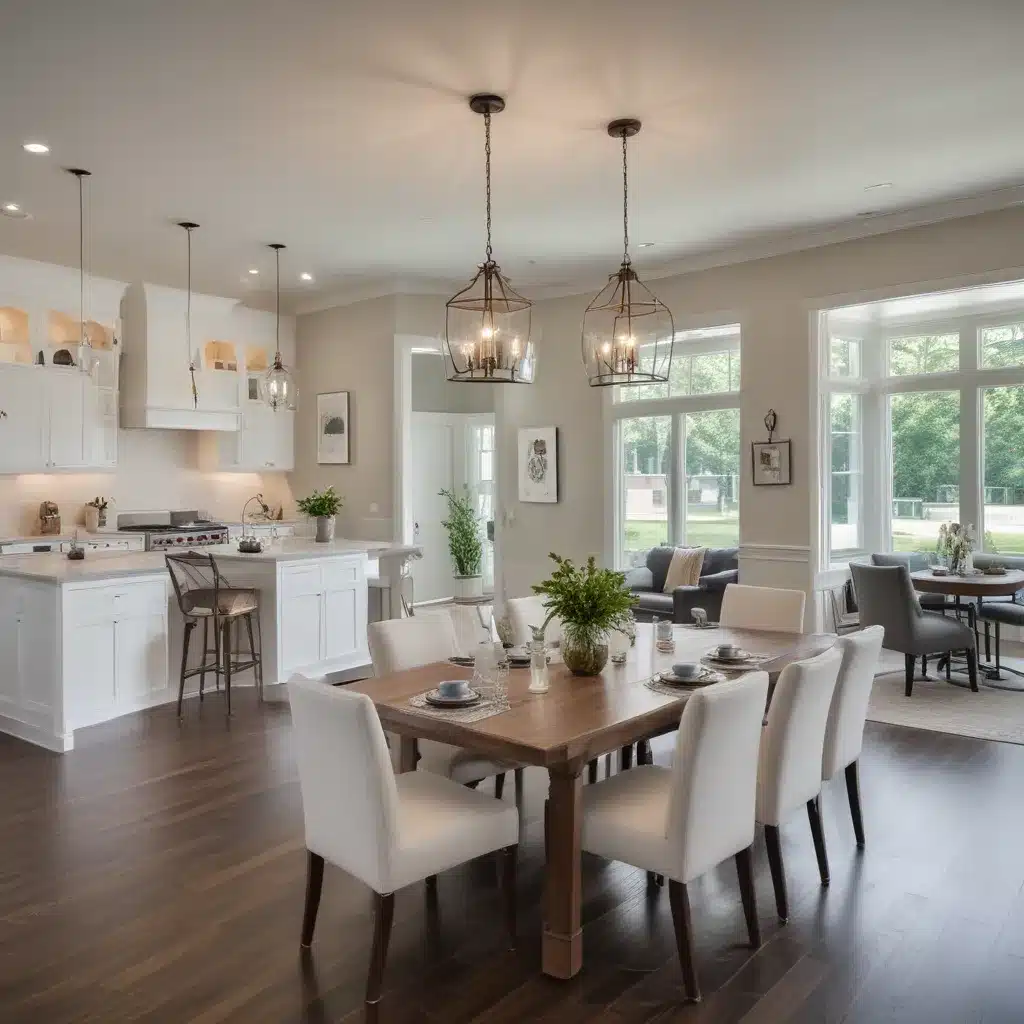
First and foremost, let’s talk about the importance of zoning. By carefully delineating different areas within your open floor plan, you can create a sense of separation and cohesion. Think about using area rugs, furniture placement, and even architectural elements like columns or beams to establish the boundaries of your dining zone.
And let’s not forget the power of visual cues. Pendant lights, a striking chandelier, or even a bold area rug can all serve as anchors for your dining space, drawing the eye and helping to create a sense of intentionality.
But the real magic happens when you start to layer these design elements. By combining strategic zoning with eye-catching visual cues, you can transform your open floor plan into a harmonious symphony of distinct, yet seamlessly connected spaces.
Inspiration from the Experts
Of course, I’d be remiss if I didn’t share some real-world examples to inspire your own culinary haven. Take, for instance, the stunning renovation undertaken by the team at ABC Home Renovations in Aberdeen, UK. By cleverly employing a mix of pendant lighting, area rugs, and thoughtful furniture placement, they were able to carve out a cozy, inviting dining nook that effortlessly blends with the surrounding living area.
And let’s not forget the power of personal touch. In a recent interview, one of our clients shared how she infused her own unique style into the design of her open-concept dining space. “I wanted it to feel like a little oasis,” she explained, “so I incorporated some of my favorite vintage pieces, like an heirloom sideboard and a quirky pendant light that I found at a local antique shop.”
The key, it seems, is to strike the perfect balance between form and function – to create a dining space that not only looks the part, but also feels like a natural extension of your living area.
Putting it All Together
So, my fellow open-plan enthusiasts, take heart! Defining an eating space in an open floor plan may seem like a daunting task, but with a little creativity and a whole lot of determination, you can transform your vast expanse into a cozy, welcoming haven.
Remember, it’s all about strategic zoning, eye-catching visual cues, and a generous dose of personal flair. And who knows, maybe you’ll even discover a hidden talent for interior design along the way. After all, what’s the point of having an open floor plan if you can’t make it your own?
So, go forth, my friends, and conquer that culinary conundrum! With a little bit of elbow grease and a whole lot of imagination, you’ll be dining in style in no time.