Cultivating a Cozy Coexistence
Years ago, a colleague was relaxing in his backyard when he heard a strange noise. To his surprise, he discovered a stranger climbing through an open window and making his way toward the couch. This wasn’t your typical home invasion, though. The uninvited guest had taken one look at the property and assumed it was abandoned – after all, the yard was “overgrown” with wild plants.
This certainly wasn’t the scenario I had envisioned when my workmate first asked for wildlife gardening advice. I had assured him that by incorporating the right plants, he’d soon see butterflies, birds, and other animals taking up residence. What I didn’t anticipate was that his efforts would also entice fellow humans seeking a place to crash.
The problem, it turned out, was that my colleague had only implemented half of my suggestions. He had planted the native flora directly into the old, sloping lawn leading up to the busy sidewalk, but he skipped the crucial second step: digging out the turf around the new plantings or smothering it with newspaper and mulch. Instead, he let that neglected lawn grow high. The result was not the layered, intentional native plant garden I had envisioned, but rather a smattering of wildflowers engulfed in out-of-place fescues and invasive species gone to seed.
Adding to the abandoned-home vibe was an ascetic, almost bare-bones approach indoors, where all the walls, tables, and shelves were devoid of any personal touches. Without those “cues to care” – a phrase coined by landscape architect Joan Iverson Nassauer to describe visual hints of human stewardship – the property resembled more of an overgrown lot or roadside ditch than a well-tended habitat.
Bridging the Gap Between Nature and Neighbors
As an environmentalist and wildlife advocate, I often find myself alternating between pushing for the world as it should be and accepting modest improvements to the one we’ve already created. I know firsthand how vital those “messy” gardens are for animals large and small, and I’m tempted to simply disregard the mass appeal of homogenized landscapes entirely.
But if my quest to help nature doesn’t also account for human nature, I risk something far greater than the occasional trespasser seeking a place to crash. I risk losing the chance to influence the broader community and inspire the creation of more oases for our wild neighbors.
After all, research shows that neighborhood norms play a powerful role in shaping landscape choices. If well-maintained ecological gardens become more prevalent, they may have a positive ripple effect across an entire community. And when it comes to supporting wildlife and meeting community standards, the two goals aren’t necessarily mutually exclusive.
“For way too long, I’ve heard from plenty of gardeners that the reason they don’t want to use native plants is that they’re messy-looking, and that’s just not true,” says James Faupel, the restoration ecology coordinator at Missouri Botanical Garden’s Litzsinger Road Ecology Center. “The wildlife will still use all these native plants, even if we design the plantings in a more traditional fashion.”
Blending Beauty and Biodiversity
Most of my own 2-acre habitat is less of a garden now and more of a nature preserve. But in the areas of the front yard that are visible to neighbors, I put a bit of thought into appealing to the senses of the human animal as well.
I know there will always be some people who are impossible to please, like the couple in the cul-de-sac who cut down all their trees. But many more neighbors have shown openness and at least mild curiosity about this little wildlife paradise, stopping to inquire about the flowers, admire the bees and butterflies, and even ask if I have any extra plants they can take home to their own yards.
By incorporating the following visual signals of intentionality and care that I’ve learned from landscape designers and artistic friends over the years, I’ve been able to ensure we can fit in with our neighbors, both wild and otherwise, as well as inspire the creation of more oases for animals.
Crowd-Pleasing Natives
When a highway planting of winterberry hollies bore beautiful red fruit, excited homeowners called the Delaware Center for Horticulture for more information about the stunning shrub. The response surprised University of Delaware professor Sue Barton. “By planting something on the roadside,” she marvels, “I could make a bigger impact on people than anything I could ever write or lecture about.”
Adding native plants with colorful fruit or flowers to your own front yard can produce similar results, providing priceless PR for wildlife gardens while also nourishing their visitors. Those winterberries burn bright through much of the cold season because they become more palatable after a few freeze-thaw cycles; in late winter when other food is scarce, the fruits are emergency rations for birds and mammals.
In the summer and fall garden, plants that serve as both wildlife feeders and people pleasers include mountain mints, Joe Pye weeds, milkweeds, bonesets, coneflowers and many other native wildflowers.
Intentional Design
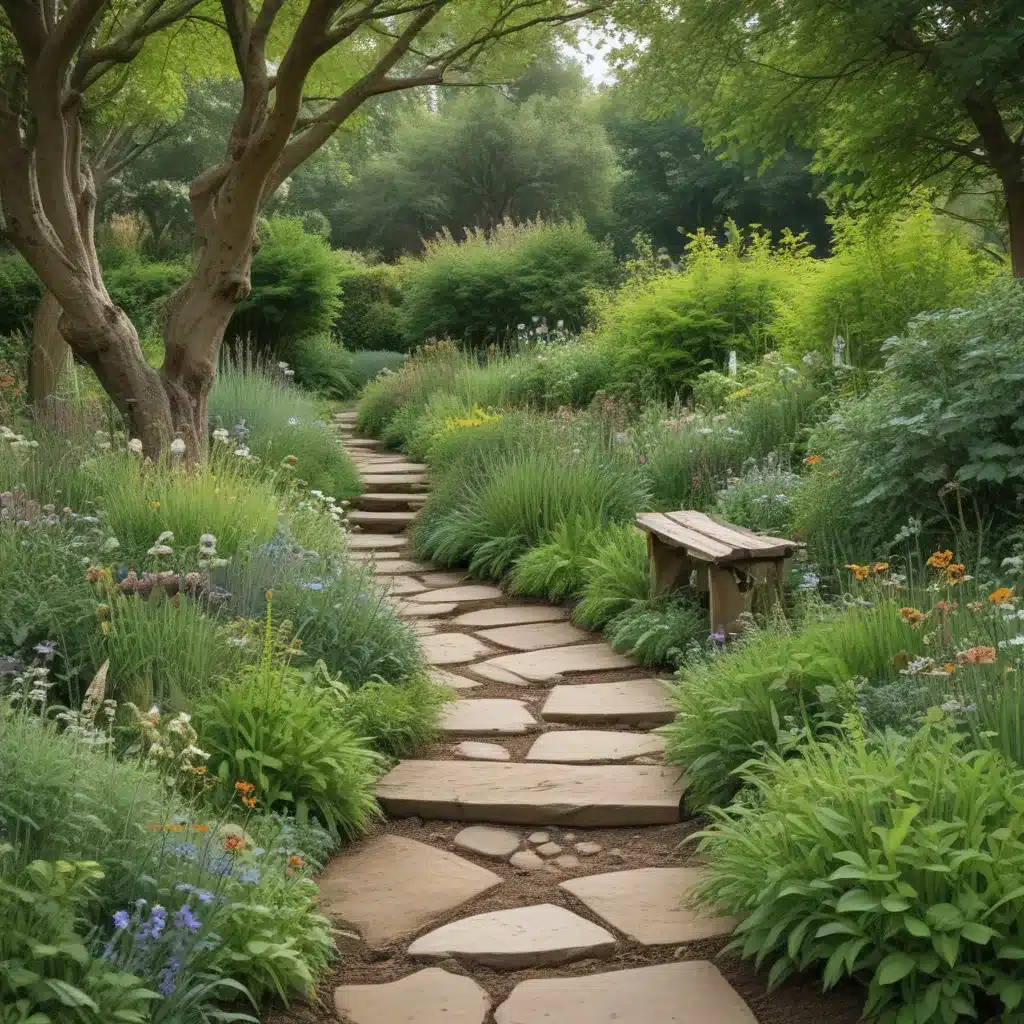
Think about how you and your family might use the space, and design your wildlife plantings accordingly, suggests Faupel. Look out the window to see the garden from another perspective, and consider where you’ll need pathways for walking and access to beds.
“It doesn’t have to be this big, beautiful blueprint kind of drawing. It can be a lot simpler,” says Faupel. “But if you start with that design element from the get-go, it’s going to look a lot more intentional to people. They will see that you are trying; they will see a more layered effect.”
Mulling over plant choices and layout also helps ensure you have enough food and shelter for different types of wildlife throughout the seasons. Habitat hedgerows, for instance, provide winter shelter and summer nesting sites for birds and small mammals while conveying neatness and order – traits considered desirable in the landscape since ancient Roman times.
Rows of low-growing native flowers, grasses, sedges and ferns help define the edges while nourishing bees, butterflies, and many other animals. A mowed strip along the road in front of all these plants “frames patches of greater biodiversity with clear signs of human intention,” Nassaeur wrote, and makes unconventional plantings seem familiar.
Thoughtful Plant Selection
Too often gardeners treat a trip to the nurseries or native plant sales like a run on Filene’s Basement and fill their cars with anything that catches their fancy, only to get home and wonder where the heck they’ll put everything. (I’m guilty as charged.)
Avoid the “collector mentality,” advises Faupel, because it almost always results in a hodgepodge that’s confusing not just to human eyes but also to pollinators. Many native bees spend their time gathering pollen only from certain species, and even those who are less discriminating can’t afford to expend too much energy flying around in search of more flowers.
To create a planting that’s readable and functional for both human and wild neighbors, aim to start with a dozen plants, recommends Faupel: three that bloom in early spring, three in late spring/early summer, three in mid-summer, and three in fall. As a longtime home gardener before I started working in ecological landscaping, I know how expensive it can be to buy multiples of a single plant at retail prices. Many native wildflowers are easy to grow from seed, and I also encourage gardeners to allow as many plants as possible to spread naturally in their gardens; you can always transplant or give away extras if your space fills up.
An increasing number of companies – from Izel Plants to Missouri Wildflowers Nursery – offer small plants or plugs that can be much more affordable; check with your state native plant or botanical society for regional recommendations.
Inviting Interaction
Though I’ve spent my whole life yearning to be surrounded by plants whenever possible, some people have a more claustrophobic reaction to lush vegetation. Impenetrable plantings can exacerbate fears of nature and feelings of separation from the natural world. Walkways winding through gardens have the opposite effect, inviting interaction with the landscape.
When my niece was 7 years old and spotted a mowed path through our meadow, she fired up her wheelchair and took off by herself to explore, finding a new favorite spot under a tree all on her own. Paths are just as well-trodden by wildlife, including deer. You can use this knowledge to help design a space where you and the herbivores can more easily coexist.
When staghorn sumacs, ticktrefoils and goldenrods volunteer along pathways, I leave them, knowing they’ll get browsed soon enough. If certain plants are growing near a path that I want to protect from browsing (such as tasty Joe Pye weed, whose flowers will later feed butterflies and bees), I often add scented native plants in front of them – mountain mints, monardas, blue mistflowers, bonesets – to create an effective deterrent.
Lining pathways and beds with rocks or branches creates navigational cues as well as hiding places for amphibians and other small animals. “I’m a huge fan of using found objects within the property,” says ecological landscape designer Jesse Elwert Peters of Jessecology, based in Saratoga Springs, N.Y. “The land that we live on is really rocky. Whenever we’re gardening, we dig up huge boulders.” Peters artfully arranges these unearthed treasures among plants.
At the Litzsinger Road Ecology Center, a fallen log provided a home this summer for broad-headed skinks, and Faupel also watched a mason bee checking out a tree snag as a nesting site. “It was just going around to every single little hole, stopping and seeing if it could fit, trying to find the perfect-sized hole,” he says. “These things are incredibly important, and it just goes to show you how many things wildlife are using. … A lot of people complain about carpenter bees in their home, going into porches and thing like that. Well, it’s because they don’t have anywhere else to go. We remove any kind of habitat for them.”
By placing a bat house atop a tree snag, Maryland artist Melinda Byrd created a sculptural habitat. Though bats have yet to roost, woodpeckers have excavated holes in the dead trunk, building homes for nesting chickadees and bluebirds.
Signaling Stewardship
Arbors and trellises not only provide support for climbing native vines, but they also suggest a planned landscape. Birdbaths and water dishes on the ground are other recognizable cues of human influence. “It looks really nice, and it’s really a kind thing to do for wildlife,” Peters says.
Even the mere suggestion of human habitation can ground a garden and help people feel more in their element. Adding chairs and tables near unconventional plantings lets them know that they, too, have an open invitation.
“Pollinator Habitat,” “Monarch Waystation,” “Humane Backyard,” “Bat Friendly” – at my house I refer to these signs as my 37 pieces of flair, but they’re more meaningful than the tacky pins Jennifer Aniston’s waitressing character is forced to wear in the film Office Space. Habitat signs from organizations like the Xerces Society, the Humane Society of the United States, the Audubon Society, the National Wildlife Federation, and the Save Lucy Campaign let your neighbors know your property is in transition to a more life-sustaining landscape.
It even helped Texas master gardener Mary Karish fend off misguided demands to replace her garden with grass, “making it very difficult for the HOA to overturn what the city thought was a great thing,” she says. You can contextualize your efforts by posting explanations of the importance of dead wood, available from the Cavity Conservation Initiative, and signs declaring your yard “pesticide-free.” These visual anchors can also help you spread the seeds of an idea – along with the seeds of your milkweed and other wildlife-friendly plants – far beyond your own habitat.
As I continue to cultivate my 2-acre sanctuary here at the ABC Home & Renovation headquarters in Aberdeen, UK, I’m reminded that it’s not just the wild creatures who need a welcoming space. Our human neighbors do, too. By blending beauty and biodiversity, we can create gardens that invite nature in while also helping our communities feel right at home.