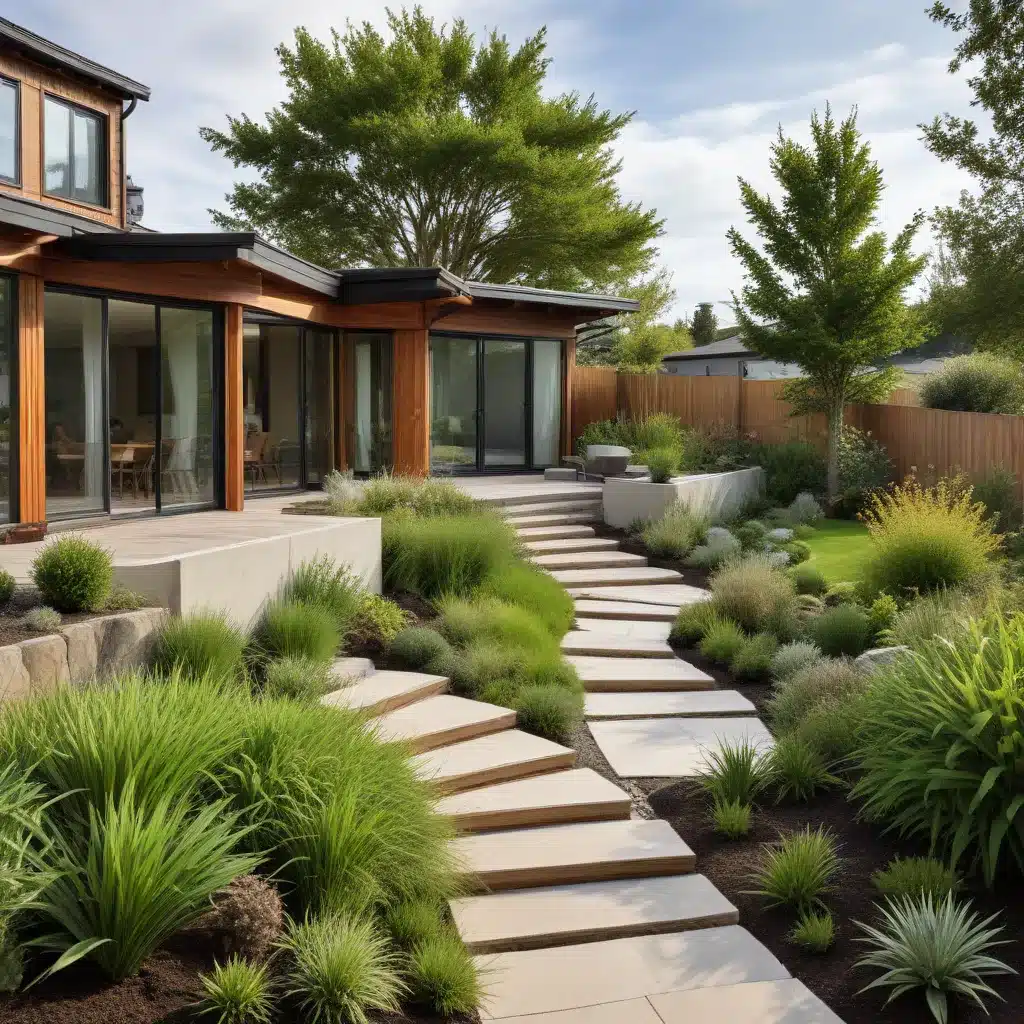
Sustainable Home Extensions: Embracing Sustainable Landscape Design
As an experienced home extension consultant, I’ve witnessed a growing shift in homeowners’ mindsets – a shift towards embracing sustainable practices in their home improvement projects. One particularly exciting area of sustainable home design is the integration of eco-friendly landscaping. In this comprehensive article, we’ll explore the principles of sustainable landscape design, delve into water conservation strategies, and discuss the importance of native plant selection.
Principles of Sustainable Landscaping
The concept of “right plant, right place” is at the heart of sustainable landscaping. This approach involves selecting plants that are well-suited to the local climate, soil conditions, and available resources, minimizing the need for excessive irrigation, fertilizers, and maintenance.
As Yellowstone Landscape points out, sustainable landscaping is no longer just about creating a prairie-like scene with tall grasses and pollinator gardens. Today’s homeowners are demanding visually appealing, yet eco-friendly, designs that seamlessly integrate with their homes.
The key is to work with nature, rather than against it. By understanding the unique characteristics of your local environment and selecting appropriate plant species, you can create a thriving, low-maintenance landscape that not only enhances your home’s curb appeal but also supports biodiversity and reduces your carbon footprint.
Water Conservation Strategies
Water conservation is a crucial aspect of sustainable landscape design, particularly in areas where water scarcity is a concern. Homeowners can implement a variety of strategies to reduce their water usage while maintaining a beautiful and healthy outdoor space.
One effective approach is to incorporate drought-tolerant and native plant species into your landscape. These plants are adapted to the local climate and require significantly less water than traditional ornamental plants. By focusing on native plants, you can create a visually appealing landscape that is in harmony with the surrounding ecosystem.
Another water-saving tactic is to implement efficient irrigation systems, such as drip irrigation or smart controllers that adjust watering schedules based on weather conditions and plant needs. These systems can significantly reduce water waste and ensure your plants receive the right amount of hydration.
Rainwater harvesting is another excellent way to conserve water. By installing rain barrels or cisterns, you can collect and store rainwater for later use in your landscape, reducing the demand on municipal water supplies.
Native Plant Selection
The selection of native plant species is a crucial component of sustainable landscape design. Native plants are well-adapted to the local climate, soil, and wildlife, making them more resilient and requiring fewer resources to thrive.
By incorporating native plants into your home extension project, you can create a landscape that is not only beautiful but also supports local ecosystems. Native plants provide food and habitat for pollinators, birds, and other beneficial wildlife, contributing to the overall biodiversity of your property.
When selecting native plants, it’s important to research the specific species that are indigenous to your region. Extension Architecture recommends working with your local cooperative extension service or a knowledgeable landscape designer to ensure you choose the right plants for your location.
Remember, the days of the “one-size-fits-all” landscaping approach are long gone. By embracing the principles of sustainable landscaping, you can create a unique and visually stunning outdoor space that reflects the character of your home and the surrounding environment.
Eco-Friendly Building Materials
Sustainable home extensions go beyond just the landscape design; they also incorporate the use of eco-friendly building materials. By carefully selecting renewable, recycled, and energy-efficient materials, you can minimize the environmental impact of your home improvement project.
Renewable Construction Materials
Renewable materials, such as bamboo, cork, and reclaimed wood, are excellent choices for sustainable home extensions. These materials are grown or harvested in a way that allows for their continuous replenishment, reducing the strain on natural resources.
Bamboo, in particular, has gained popularity in recent years due to its impressive strength, durability, and rapid growth rate. It can be used for flooring, cabinetry, and even structural elements, making it a versatile and eco-friendly option.
Recycled and Repurposed Elements
Incorporating recycled and repurposed materials into your home extension can also contribute to a more sustainable design. This can include using salvaged wood, reclaimed bricks, or even repurposed furniture and fixtures.
Not only does this approach reduce waste and conserve natural resources, but it can also add unique character and charm to your home. German Village has long been a champion of this philosophy, showcasing historic homes that seamlessly blend old-world charm with modern design.
Energy-Efficient Design
Sustainable home extensions also prioritize energy-efficient design, which can significantly reduce your home’s environmental impact. This can include features like high-performance windows, insulation, and energy-efficient appliances.
By minimizing energy consumption, you can lower your carbon footprint and save on utility costs in the long run. Additionally, the integration of renewable energy sources, such as solar panels or geothermal systems, can further enhance the eco-friendliness of your home extension.
Embracing eco-friendly building materials and energy-efficient design is a crucial aspect of creating a truly sustainable home extension. By making informed choices, you can not only reduce your environmental impact but also enjoy long-term cost savings and a more comfortable, energy-efficient living space.
Remember, as an experienced home extension consultant, I’m here to guide you through the process of creating a sustainable and beautiful home extension that reflects your personal style and environmental values. Whether you’re looking to incorporate native plants, implement water conservation strategies, or explore eco-friendly building materials, ABC Home is ready to assist you every step of the way.