Diving into the Watery World of Wet Room Waterproofing
As a proud member of the Aberdeen building and renovation community, I’ve seen my fair share of wet rooms – from opulent spa-like sanctuaries to budget-friendly en-suites. And let me tell you, when it comes to waterproofing these wet wonders, there’s a lot more to it than meets the eye.
You see, creating a waterproof wet room isn’t just about slapping on some sealant and calling it a day. Oh no, my friends. It’s a delicate dance between materials, techniques, and of course, those all-important British standards. Get it wrong, and you could be dealing with leaks, mold, and a whole host of other watery woes.
But fear not! In this in-depth article, I’m going to take you on a deep dive (pun intended) into the world of wet room waterproofing. We’ll explore the essential British standards you need to know, the materials and methods that’ll keep your wet room bone-dry, and even share some real-life case studies to illustrate just how crucial proper waterproofing can be.
Understanding the British Standards for Wet Room Waterproofing
Let’s start with the basics, shall we? When it comes to wet rooms in the UK, there are a few key British standards that you absolutely must be aware of. These guidelines are designed to ensure that your wet room is not only waterproof, but also safe, durable, and compliant with building regulations.
The first and most important standard is BS 6230:2018 – the Code of Practice for the Design, Installation, Testing and Maintenance of Drainage and Waste Water Disposal Systems in Domestic Buildings. This comprehensive document outlines the requirements for everything from pipe sizes and gradients to the construction of shower trays and drainage systems.
But wait, there’s more! Another crucial standard is BS EN 14535:2005, which covers the performance requirements and test methods for prefabricated shower trays. This ensures that your shower tray is up to the task of containing all that water without leaking or cracking.
And let’s not forget about BS 5385-3:2014, the code of practice for wall and floor tiling in wet rooms. This standard covers the nitty-gritty details of tile selection, adhesive application, and grout sealing – all essential elements of a truly waterproof wet room.
Now, I know what you’re thinking – that’s a lot of standards to keep track of! But trust me, as a building and renovation professional, understanding and adhering to these guidelines is absolutely crucial. Fail to do so, and you could be facing everything from angry clients to hefty fines and legal headaches.
Choosing the Right Waterproofing Materials
Alright, now that we’ve got the boring-but-important stuff out of the way, let’s talk about the fun part: the materials! Choosing the right waterproofing products for your wet room is like a high-stakes game of Tetris, where one wrong move can lead to disaster.
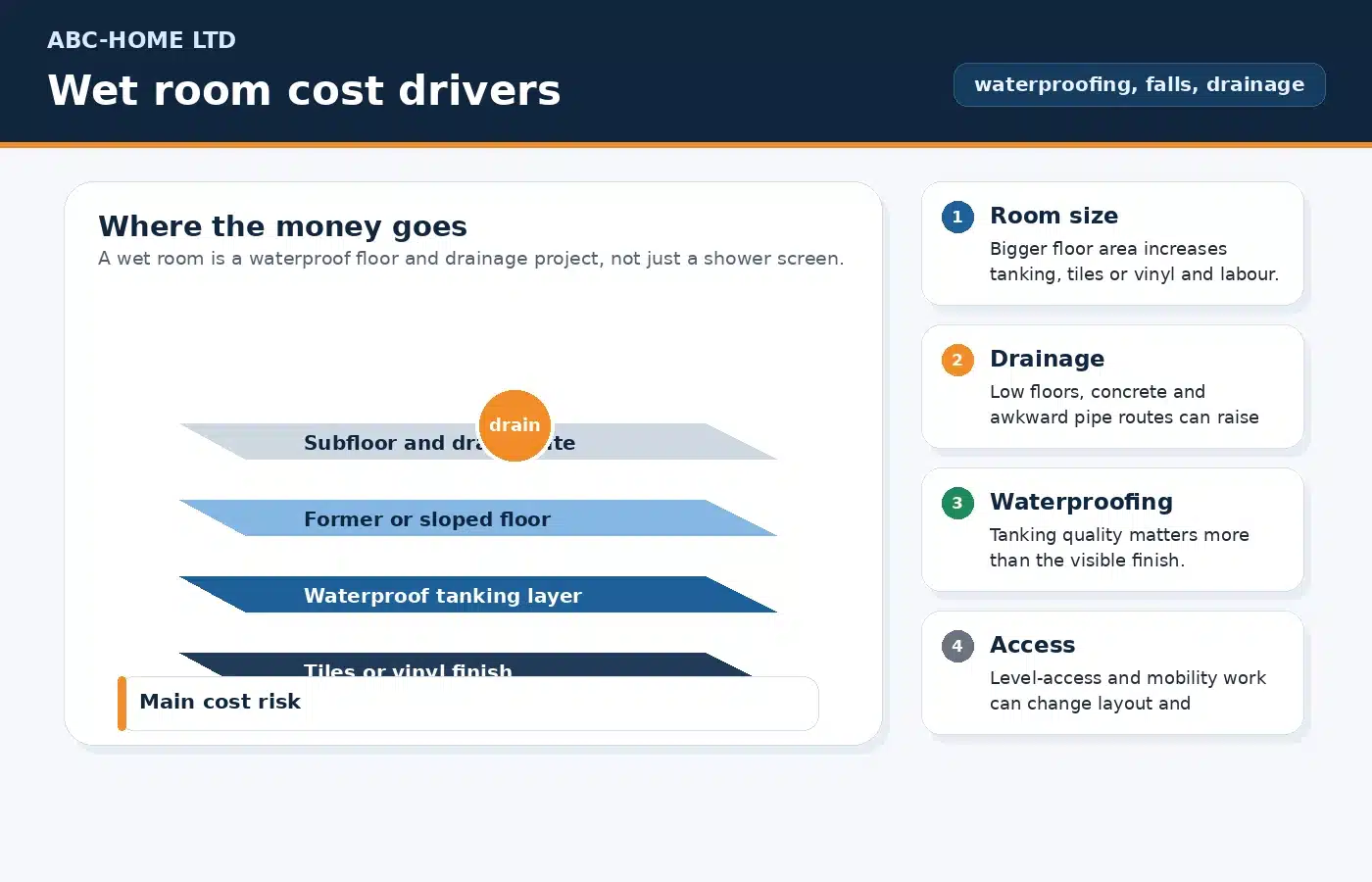
First and foremost, you’ve got your tanking membranes – these are the heavy-duty, impermeable layers that form the backbone of your wet room’s waterproofing system. Popular options include PVC and acrylic-based membranes, as well as more modern solutions like liquid-applied membranes and pre-formed, self-adhesive sheets.
But the fun doesn’t stop there, my friends. You’ll also need to carefully select your tiles, grouts, and sealants to ensure a seamless, watertight finish. Look for tiles with a low water absorption rate, high-quality polymer-modified grouts, and silicone sealants that can withstand the constant exposure to moisture.
And let’s not forget about the ever-important shower tray – this unsung hero of the wet room world needs to be up to the task of containing all that water. Opt for a prefabricated shower tray that’s been tested and approved to the BS EN 14535:2005 standard, and you can rest easy knowing your wet room’s foundation is solid.
But wait, there’s more! You’ll also need to carefully select your waterproofing accessories, such as preformed corners, pipe sleeves, and floor gullies. These seemingly small details can make a big difference in the overall performance and longevity of your wet room’s waterproofing system.
Waterproofing Techniques: Mastering the Art of Dry Bathrooms
Now that we’ve covered the materials, let’s dive into the nitty-gritty of waterproofing techniques. After all, even the best products in the world won’t do you any good if they’re not installed correctly.
One of the most crucial steps in the waterproofing process is the preparation of the substrate. This means ensuring that the walls and floor are clean, dry, and free of any cracks or uneven surfaces. Skimping on this step is a surefire way to invite trouble down the line, so take the time to get it right.
Next up, it’s time to apply that all-important tanking membrane. Whether you’re using a liquid-applied solution or a pre-formed sheet, the key is to follow the manufacturer’s instructions to the letter. Careful overlapping, sealing of edges and corners, and proper drying times are all essential for creating a truly watertight barrier.
But wait, there’s more! Once the tanking membrane is in place, you’ll need to move on to the tiling stage. This is where those British standards we talked about earlier come into play. Make sure you’re using the correct tile adhesive and grout, and don’t forget to seal all the joints and edges with a high-quality silicone sealant.
And let’s not forget about the all-important shower tray. Whether you’re using a prefabricated unit or building one from scratch, it’s crucial to ensure that it’s properly installed, level, and fully integrated with the rest of the waterproofing system.
Finally, don’t forget to test your wet room’s waterproofing before you hand it over to the client. A simple flood test can quickly reveal any weak spots or potential problem areas, allowing you to address them before it’s too late.
Real-Life Wet Room Waterproofing Case Studies
Now that we’ve covered the theory, let’s take a look at some real-life examples of wet room waterproofing in action. These case studies will not only illustrate the importance of proper waterproofing, but also showcase the creativity and problem-solving skills that are essential in this line of work.
Case Study 1: The Leaky Luxury Ensuite
Picture this: a high-end apartment in the heart of Aberdeen, with a beautifully appointed en-suite wet room. The client was thrilled with the end result – or so they thought, until the first heavy rainstorm hit. Suddenly, water was seeping through the tiles and pooling on the bathroom floor, much to the dismay of the homeowners.
After investigating the issue, we discovered that the tanking membrane had been improperly installed, with gaps and overlaps that allowed water to penetrate. The shower tray was also not level, causing water to flow in the wrong direction and overwhelm the drainage system.
To fix the problem, we had to completely strip back the wet room and start from scratch. We carefully removed the tiles, replaced the tanking membrane with a liquid-applied solution, and ensured that the shower tray was perfectly level and integrated with the drainage system. Finally, we re-tiled the wet room using the appropriate adhesive and grout, and sealed all the joints and edges with a high-quality silicone sealant.
The end result? A truly waterproof wet room that has withstood even the heaviest of downpours, much to the delight of the relieved homeowners.
Case Study 2: The Moldy Makeshift Shower
Now, let’s take a look at a slightly different scenario. In this case, the client had decided to convert a small bathroom into a makeshift wet room, using a cheap DIY waterproofing solution. Needless to say, things didn’t go quite as planned.
Within a few months, the walls and floor were covered in unsightly mold, and the client was dealing with a musty, damp smell that just wouldn’t go away. Clearly, their DIY approach had not been up to the task of creating a truly waterproof wet room.
When we arrived on the scene, the damage was already extensive. The walls and floor were in dire need of repair, and the client was understandably frustrated and concerned about the potential health hazards.
To rectify the situation, we had to completely strip the wet room down to the studs and start from scratch. We installed a proper tanking membrane, carefully selected the right tiles and grout, and ensured that the drainage system was up to par. We also took the time to educate the client on the importance of proper ventilation and maintenance in a wet room environment.
The end result? A beautifully waterproofed wet room that has stood the test of time, with nary a speck of mold in sight. The client was over the moon with the transformation, and we were proud to have played a part in creating a safe, comfortable, and fully compliant wet room.
Conclusion: Waterproofing – The Key to a Truly Wet Room
Well, there you have it – a deep dive into the world of wet room waterproofing, complete with all the essential British standards, materials, and techniques you need to know.
Remember, when it comes to creating a truly waterproof wet room, there’s no room for shortcuts or DIY hacks. Proper planning, attention to detail, and adherence to the relevant standards are absolutely crucial. Fail to do so, and you could be facing a whole host of watery woes, from leaks and mold to frustrated clients and legal headaches.
But don’t worry, my friends – with the knowledge and expertise shared in this article, you’ll be well on your way to creating wet rooms that are not only beautiful, but also bone-dry and fully compliant with British standards. And who knows, maybe you’ll even have a few fun stories to share with your clients along the way.
So, what are you waiting for? Grab your waterproofing materials, brush up on those British standards, and get ready to make a real splash in the world of wet room renovation. Your clients, and their bathrooms, will thank you.
And if you’re in the Aberdeen area and in need of a top-notch building and renovation company to handle all your wet room waterproofing needs, be sure to check out ABC Home. With our years of experience and commitment to British standards, we’ll make sure your wet room is a watertight wonder that’ll stand the test of time.