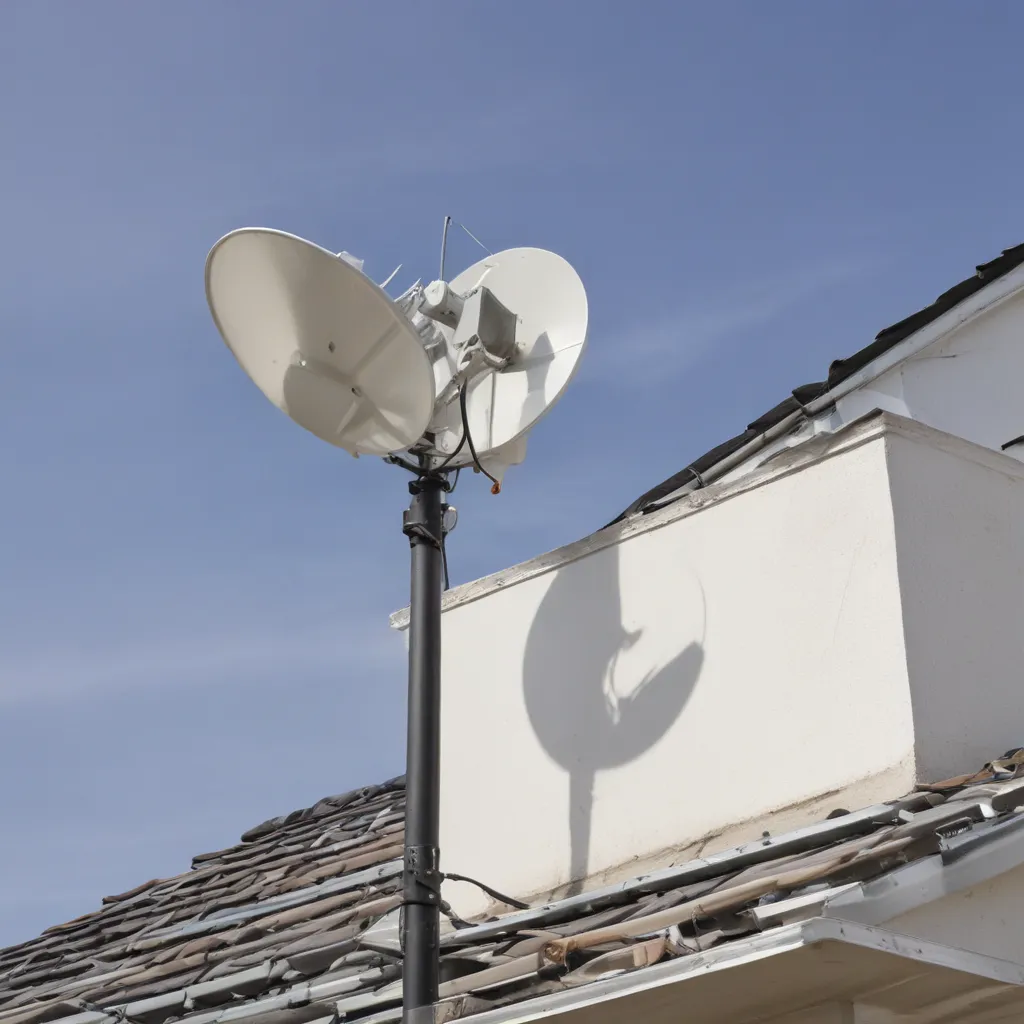
Navigating the Tricky World of Aerial and Satellite Dish Installation
As the owner of a building and renovation company in Aberdeen, UK, I’ve seen my fair share of aerial and satellite dish installations gone awry. From the hapless DIYer scaling the roof with nothing but a prayer and a faulty ladder, to the overly confident “professional” who thinks safety gear is for the weak, it’s a veritable minefield out there. But fear not, my friends – I’m here to guide you through the treacherous terrain, ensuring that your aerial or satellite dish installation is not only up to code, but also won’t result in a trip to the ER (or worse, the undertaker).
Understanding the Risks
Now, I know what you’re thinking – “How hard can it be to slap up a satellite dish? It’s just a few screws and a bit of drilling, right?” Wrong, my dear reader. Oh, so very wrong. The installation of aerials and satellite dishes is fraught with peril, and I’m not just talking about the potential for a nasty fall from a great height. We’re talking electrocution, structural damage, and even the dreaded “aerial missile” scenario, where a poorly secured dish takes flight in high winds, wreaking havoc on the unsuspecting public below.
Let’s start with the obvious one – working at height. Climbing up on roofs, scaling ladders, and balancing precariously on the edge of a building is inherently dangerous. It’s a veritable playground for gravity, just waiting to claim its next victim. And let’s not forget the potential for slips, trips, and falls, which can lead to broken bones, concussions, and a lifetime of regret (not to mention a hefty medical bill).
But the risks don’t end there. Electrical hazards are also a major concern when installing aerials and satellite dishes. These devices need to be properly grounded to prevent the risk of shock or fire, and any damage to the wiring can have catastrophic consequences. I’ve seen more than a few cases of DIYers accidentally severing a live cable, only to be left nursing singed eyebrows and a newfound appreciation for the power of electricity.
And let’s not forget the structural integrity of the building itself. Drilling into walls, roofs, and chimneys without proper care and consideration can compromise the structural soundness of the entire structure. Imagine a scenario where a hastily installed aerial comes crashing down, taking half the roof with it. Not only is that a safety nightmare, but it’s also going to be a financial nightmare for the poor homeowner.
Navigating the Legal Minefield
Of course, it’s not just the physical risks that you need to be aware of when it comes to aerial and satellite dish installation. There’s also a veritable minefield of legal and regulatory requirements to navigate.
In the UK, the installation of aerials and satellite dishes is subject to a range of safety and building regulations, depending on the type of property, the location of the installation, and the size and placement of the equipment. Fail to comply with these regulations, and you could be facing hefty fines, legal action, or even criminal charges.
For example, in some areas, there may be restrictions on the size and placement of satellite dishes, particularly in conservation areas or on listed buildings. Ignoring these rules can result in a nasty letter from the local council, demanding that you remove the offending dish (and good luck getting that deposit back from the installer).
And then there’s the issue of planning permission. Depending on the size and location of your aerial or satellite dish, you may need to obtain prior approval from the local planning authority before you can go ahead with the installation. Failure to do so can result in the dreaded “enforcement notice,” which is about as much fun as a trip to the dentist (and usually a lot more expensive).
Choosing the Right Professionals
Now, I know what you’re thinking – “Surely, I can just hire a professional and let them worry about all this stuff, right?” Well, yes and no.
While it’s true that hiring a qualified and experienced aerial and satellite dish installer can go a long way towards mitigating the risks, it’s not a guarantee of safety and compliance. After all, even the most seasoned pro can make mistakes, cut corners, or simply be unaware of the latest regulations and best practices.
That’s why it’s so important to do your due diligence when choosing an installer. Look for companies or individuals with a proven track record of safe and compliant work, as well as the necessary licenses, certifications, and insurance to protect you in the event of any accidents or issues.
And don’t be afraid to ask questions. Grill them on their safety protocols, their understanding of relevant regulations, and their approach to minimizing the risks associated with aerial and satellite dish installation. After all, you’re trusting them with the safety of your property and the well-being of your family, so you deserve nothing less than the best.
Protecting Yourself and Your Property
Of course, even with the best installer in the business, there’s still an element of risk involved in aerial and satellite dish installation. That’s why it’s crucial to take steps to protect yourself and your property.
First and foremost, make sure you have the right insurance coverage in place. Homeowner’s insurance policies often have specific exclusions for damage caused by improperly installed aerials or satellite dishes, so it’s important to double-check your coverage and consider adding any necessary riders or endorsements.
You should also be prepared for the unexpected. Keep a well-stocked first-aid kit on hand, and make sure you have a plan in place for dealing with any accidents or emergencies that might arise during the installation process. And don’t forget to have a backup plan for your TV and internet in case things go sideways and you find yourself without a working aerial or satellite dish.
Conclusion: Putting Safety First
At the end of the day, the installation of aerials and satellite dishes is no laughing matter. It’s a complex and hazardous task that requires a deep understanding of safety protocols, building regulations, and best practices. And while hiring a qualified professional can certainly help to mitigate the risks, it’s ultimately up to you, the property owner, to take responsibility for the safety and compliance of the work.
So, the next time you’re tempted to try a DIY aerial or satellite dish installation, remember the cautionary tales of the hapless DIYer and the overconfident “professional.” Take the time to do your research, choose your installer wisely, and always put safety first. After all, the last thing you want is to end up as the cautionary tale that the next generation of property owners learns from.
And who knows, with a little bit of care and diligence, you might even be able to brag to your friends about your impressive aerial or satellite dish installation. Just be sure to do it from a safe distance, and maybe invest in a good set of binoculars – you never know when that aerial might take flight again.
So, there you have it, folks – the comprehensive guide to complying with safety rules when installing aerials and satellite dishes. Now go forth, conquer the rooftops, and may the odds be ever in your favor. And if you’re in the Aberdeen area and in need of a trustworthy building and renovation company, be sure to check out ABC Home – we’ll keep your home safe and sound, no matter what challenges come our way.