Cracking Up Over Cracks
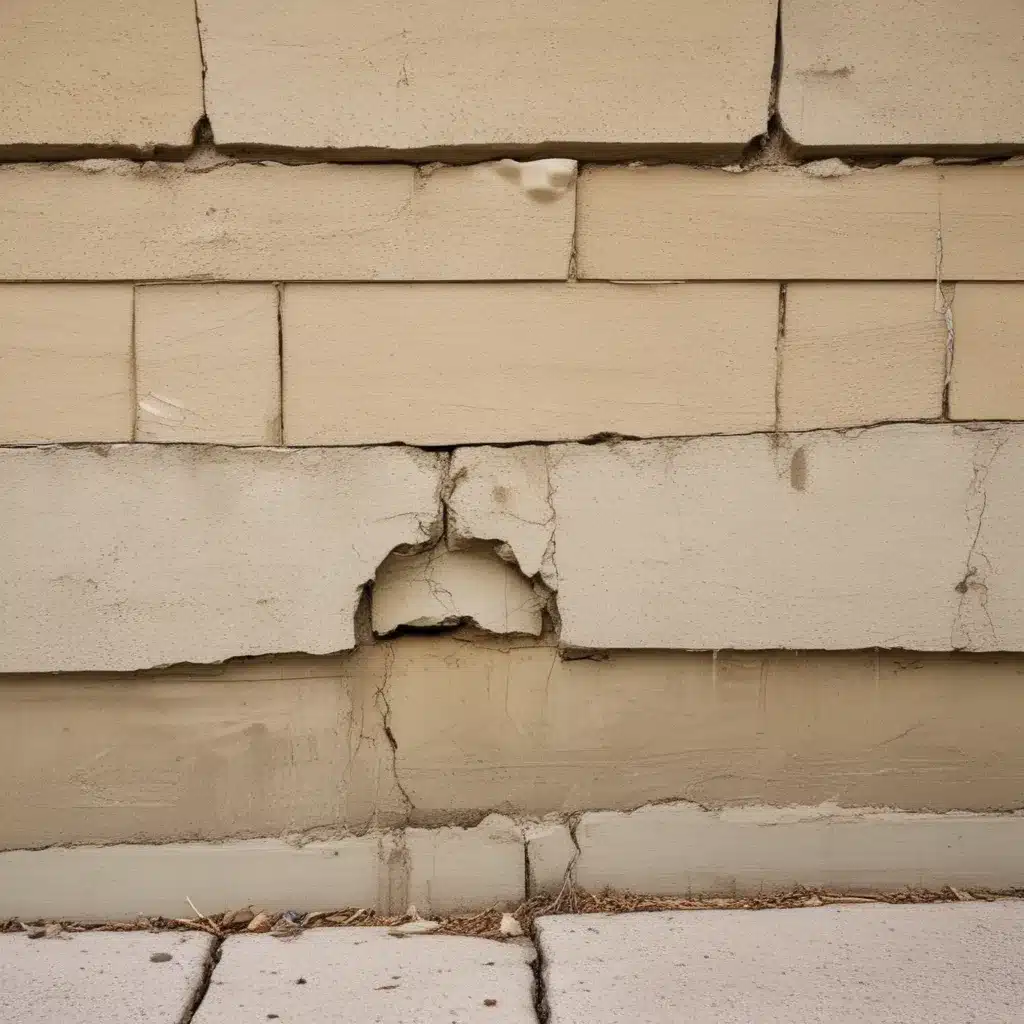
Let me tell you, my friends – when it comes to foundation cracks, I’ve seen it all. From the hairline fractures that make you do a double-take, to the gaping wounds that could swallow a small dog, these little buggers have a way of popping up when you least expect them. And let me tell you, they’re not just a cosmetic issue – those cracks can be a gateway for some serious water woes if you’re not careful.
You see, I’ve got this friend, Rick, whose parents had a brand new house built about a decade ago. Now, his dear old mom noticed this crack radiating from the bottom of a window frame, straight down to the floor. Not exactly the kind of home improvement project you want to find on your to-do list, am I right? But as Rick soon discovered, this crack was just the tip of the iceberg.
The Crack Investigation
Now, Rick’s dad had the builder take a look at those cracks, and they even tried to patch up the leaks. But the problem persisted – those pesky leaks would still show up a few times a year, especially during heavy rain. Now, Rick was left wondering, “Is this normal? Should I be worried? And more importantly, how the heck do I stop this water from turning my basement into an indoor swimming pool?”
Well, my friends, I’ve done a bit of digging (pun intended) and let me tell you, foundation cracks can be a tricky beast to tame. According to the fine folks over at Fine Homebuilding, these types of cracks at window frames or corners are actually quite common. It’s all part of that whole “concrete gets harder and cracks over time” thing.
But here’s the kicker – just because the crack is there doesn’t mean it’s automatically a structural issue. Nope, the real problem lies in that pesky water seeping through. You see, concrete may be tough, but it’s not exactly waterproof. That’s where the whole “dampproofing” vs. “waterproofing” debate comes into play.
Sealing the Deal
Now, if the builder used a proper waterproofing product on the outside of that foundation, there might even be a warranty to explore. But if they just slapped on some good ol’ dampproofing (aka tar), well, that’s where the problems can start. And let’s not forget about the grading and drainage around the house – if that water’s got nowhere to go, it’s going to find the path of least resistance, right through those cracks.
So, what’s the solution, you ask? Well, the experts suggest a few options. First, you can try sealing up the crack from the inside with something like hydraulic cement or an injectable epoxy or polyurethane. But let’s be real, that’s just a temporary band-aid. The real key is tackling the problem from the outside.
Injection repairs can be a game-changer, but they’re best left to the professionals. These guys know how to properly seal those cracks without accidentally clogging up your drainage system. And if the grading and drainage around the house are the culprits, well, it’s time to get those downspouts directing water away from the foundation and make sure that soil is sloping away from the house.
A Crack at Prevention
Look, I know dealing with foundation cracks can be a real headache, but trust me, it’s better to tackle the problem head-on before it turns into a full-blown flooding disaster. And who knows, you might even impress your friends with your newfound knowledge of concrete, dampproofing, and the art of crack sealing.
So, if you’re in the Aberdeen area and your home renovation company is dealing with those pesky foundation cracks, don’t panic. With a little investigation and the right tools, you can keep that water at bay and enjoy a nice, dry basement for years to come. Cheers to cracking the code on crack repair!