Bringing Harmony to Your Sanctuary
As an interior designer, I’ve often been struck by the transformative power of a well-designed bathroom. It’s a space that can elevate the entire feel of a home, seamlessly weaving together function and aesthetics to create a true sanctuary. And when it comes to achieving that elusive sense of cohesion, the secret lies in mastering the elements of design.
You see, in every corner of the visual arts – interior architecture included – these fundamental building blocks act as a guiding light, directing the flow and feel of a space. It’s like having a secret language that allows you to communicate your vision, one carefully curated detail at a time.
As I’ve learned over the years, these design elements – from line and shape to color and texture – are the key to unlocking a truly harmonious and intentional design. And nowhere is this more apparent than in the world of bespoke bathroom design.
Mastering the Elements of Design
So, what exactly are these all-important design elements, and how do they come into play when crafting a cohesive bathroom sanctuary? Let’s dive in, shall we?
Space: This is the fundamental building block, the physical dimensions that define a room or area. As designers, we manipulate space to determine the layout and functionality of a bathroom, balancing form and function to create an inviting oasis.
Line: These define the structure and flow of a space, whether they’re horizontal, vertical, diagonal, or curved. In a bathroom, lines can be found in architectural features like walls and columns, as well as in the sleek silhouettes of fixtures and furnishings.
Shape: Two-dimensional forms that help define objects and spaces, shapes can be geometric or organic. In the bathroom, you might see rectangular vanities, circular mirrors, or even freeform bathtubs.
Form: The three-dimensional structure and mass of objects, form encompasses both shape and volume. It’s what gives depth and dimension to a space, creating a sense of visual interest and balance.
Texture: This refers to the surface quality of materials and objects, both visual and tactile. Thoughtfully incorporating different textures – from smooth tile to rough stone – can add richness and depth to a bathroom design.
Color: Ah, the powerhouse of design! Color influences mood, perception, and ambiance, setting the tone for the entire space. In the bathroom, color choices can range from soothing, spa-like hues to bold, statement-making palettes.
Pattern: Repetitive designs or motifs that add visual interest and rhythm, patterns can be found in textiles, wallpapers, and even tile work. They’re a fantastic way to infuse personality and character into a bathroom.
Light: Both practical and aesthetic, lighting is essential in creating the right atmosphere. Natural daylight, paired with strategic artificial lighting, can transform a bathroom into a truly inviting sanctuary.
Scale: The relative size of objects and elements within a space, scale is crucial for maintaining balance and harmony. Ensuring that fixtures, furnishings, and accessories are proportionate to the room is key.
Proportion: The relationship between different parts of an object or space, proportion helps determine the overall visual balance and coherence of a design.
Balance: The distribution of visual weight within a space, balance can be symmetrical or asymmetrical, formal or informal. It’s what ties everything together, creating a sense of equilibrium.
Unity: The cohesion and overall sense of oneness in a design, unity ensures that all the elements work together seamlessly to create a harmonious and aesthetically pleasing environment.
Bringing It All Together
Now that we’ve explored the foundational design elements, let’s see how they come into play in a real-life bespoke bathroom project. Allow me to introduce you to the Citrus Point Project, a stunning Scandinavian Transitional home that I had the privilege of designing the interior for.
When examining the exterior elevations of this stunning home, designed by the talented architect James Jones of Hebdon Studios, the prominent design elements that immediately caught my eye were the long, vertical lines; the elongated, rectangular shapes; and the narrow, rectangular forms.
Intrigued by this architectural language, I knew I wanted to follow suit with the interior design, creating a seamless flow between the home’s exterior and interior. But I also had a specific request from the clients – they wanted to add some curves to the interior to soften the overall aesthetic.
So, with that in mind, I set out to strategically incorporate curved lines, shapes, and forms into the design, intentionally creating contrast and focal points. The result? A rhythmic, cohesive flow that combined the prominent vertical lines, elongated rectangles, and radiuses, all working together in perfect harmony.
Fixtures, Colors, and Materials
Of course, the magic didn’t stop there. In every space within the home, I approached the design with the same meticulous focus, carefully curating fixtures, colors, and materials to enhance the interplay of straight and curved lines.
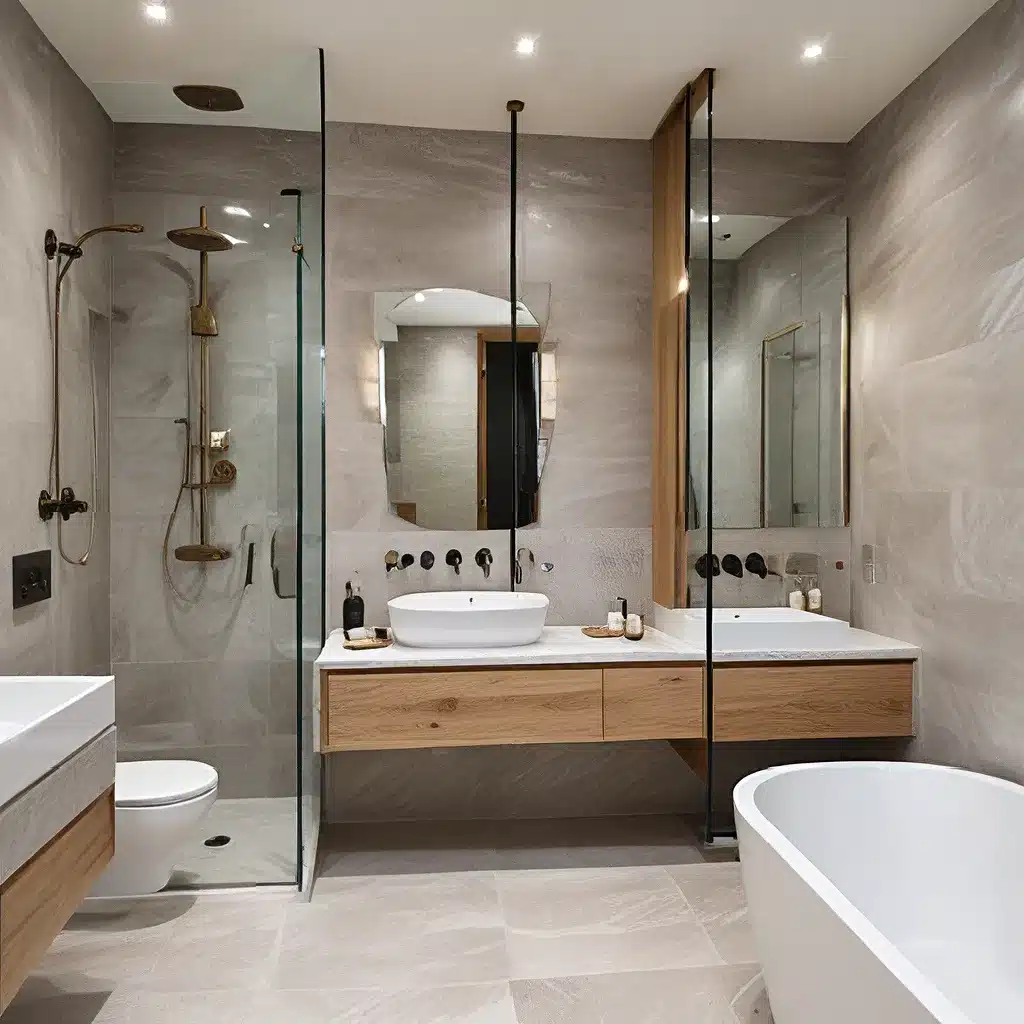
Take, for example, the design board for the workout bathroom. Notice how the carefully selected elements – from the vanity and lighting to the tile and hardware – seamlessly complement the interior architecture, creating a visually striking and cohesive aesthetic.
And as I recently returned from a site visit with the clients, the builder, and the architect, I was thrilled to see the progress of this beautiful project. The curved details in each of the photos are a testament to the power of thoughtful design and the harmonious integration of all the essential elements.
Striking the Right Balance
Now, you might be wondering, “What about the principles of design? Surely they play a role in achieving this cohesive vision.” Well, you’re absolutely right. The principles of design – things like rhythm, contrast, emphasis, and unity – are essential in bringing the elements together in a truly harmonious way.
But to keep this article concise and focused, I’ll save that discussion for another time. For now, let’s focus on the key takeaways:
Underline 1: As exemplified by the Citrus Point Project, the seamless integration of a home’s exterior and interior architecture is crucial for achieving a cohesive and purposeful design.
Underline 2: Engaging an experienced interior designer skilled in spatial design and the strategic use of design elements is crucial for bridging the gap between your custom home’s exterior and interior aesthetics.
Underline 3: Thoughtful attention to detail, from the initial sketches to the final finishing touches, is what yields a visually impressive and unified result that truly elevates the overall design.
So, if you’re embarking on your own bespoke bathroom project, or even a whole-home transformation, remember to let the elements of design be your guiding light. Embrace the power of cohesion, and let your sanctuary shine with intentional, harmonious beauty.
And of course, if you need a little extra help along the way, our team at ABC Home is always here to lend a skilled and creative hand. After all, crafting a cohesive vision is what we do best.