Wet area flooring is not a simple shopping list. For bathroom fitting and renovation work around Aberdeen, the risk is usually underneath the finish. A wet floor fails when water reaches the wrong layer, the base moves, the finish becomes slippery, or the edges are left as an afterthought.

Best wet area flooring options by room type
| Room or zone | Useful options | What to check first |
|---|---|---|
| Family bathroom splash zones | Porcelain tile, quality vinyl, suitable LVT, sealed bathroom flooring systems. | Subfloor stability, bath panel edges, toilet and basin penetrations, ventilation and cleaning. |
| Level access shower or wet room | Wet room former with tile system, sheet safety flooring, specialist waterproof system. | Falls to drain, tanking, door threshold, wall upstand, slip resistance and installer warranty. |
| Utility or laundry room | Vinyl sheet, tile, moisture resistant LVT where approved. | Washing machine leak risk, floor level, service holes and whether water can run under cabinets. |
| Entrance or boot room | Porcelain tile, commercial grade vinyl, water resistant boards in lower risk areas. | Grit, shoes, cleaning chemicals, mat wells and door thresholds. |
Wet floor risk checker
Use this as an early planning check before ordering a floor finish.
Tile, vinyl, LVT and sheet flooring compared
| Floor type | Strength | Weak point | Best fit |
|---|---|---|---|
| Porcelain tile | Hard wearing, water resistant surface, premium bathroom look. | Grout, movement, cold feel and slip rating need attention. | Bathrooms, entrances and high wear rooms with a stable prepared base. |
| Sheet safety flooring | Few joints, practical slip control and possible upstands. | Needs specialist fitting and can look too clinical if specified badly. | Accessible showers, rentals, care led bathrooms and utility spaces. |
| Bathroom vinyl | Cost effective, warm underfoot and quick to install. | Edges, seams and sharp objects can become failure points. | Lower risk bathrooms and utility rooms where standing water is controlled. |
| LVT | Good design range and comfortable feel. | Not every product is suitable for wet rooms or standing water. | Splash areas where warranty, subfloor and sealing details fit the room. |
Installation details that matter more than the brochure
- Subfloor preparation: movement, dips and old adhesive can ruin even an expensive finish.
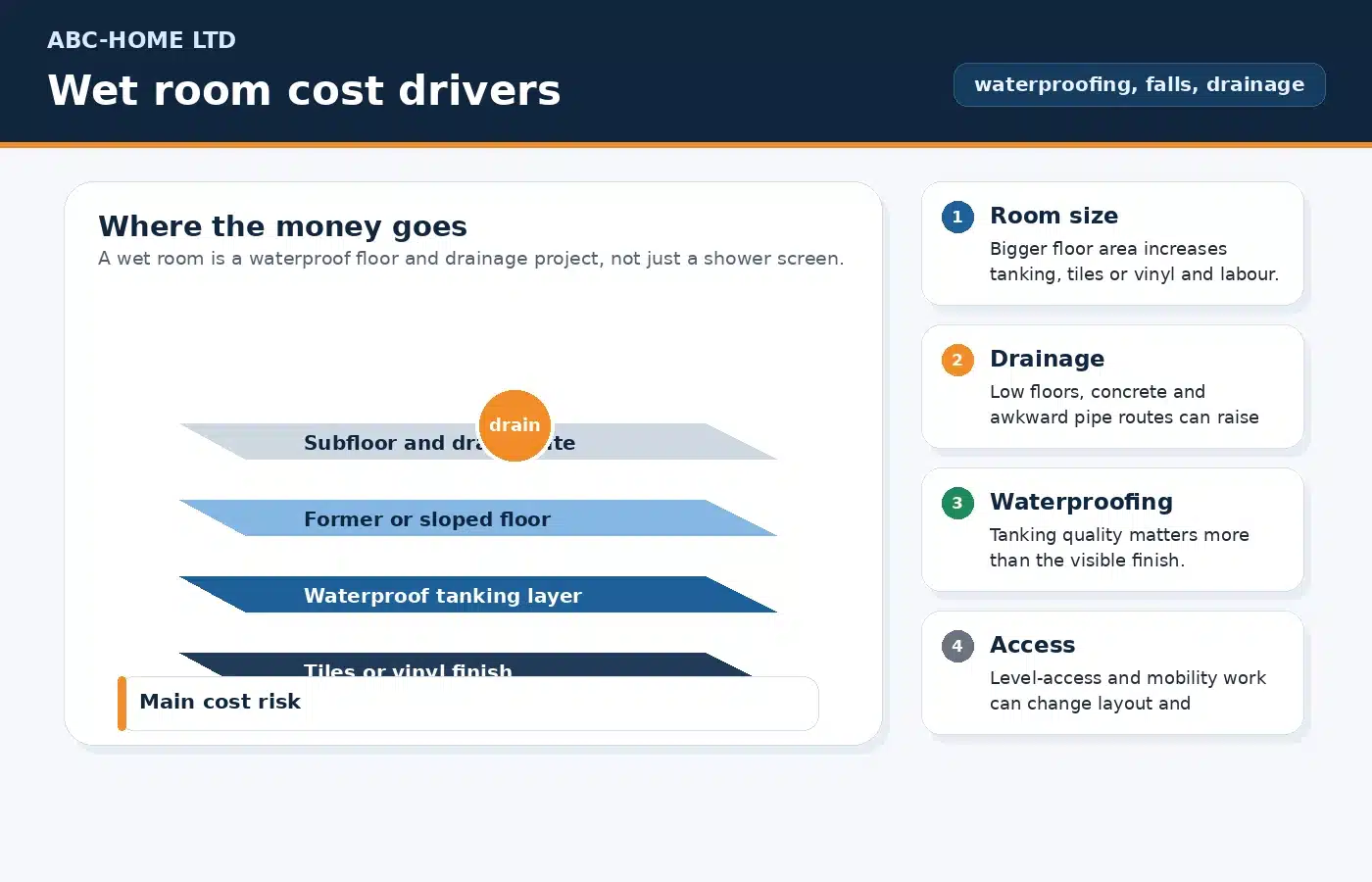
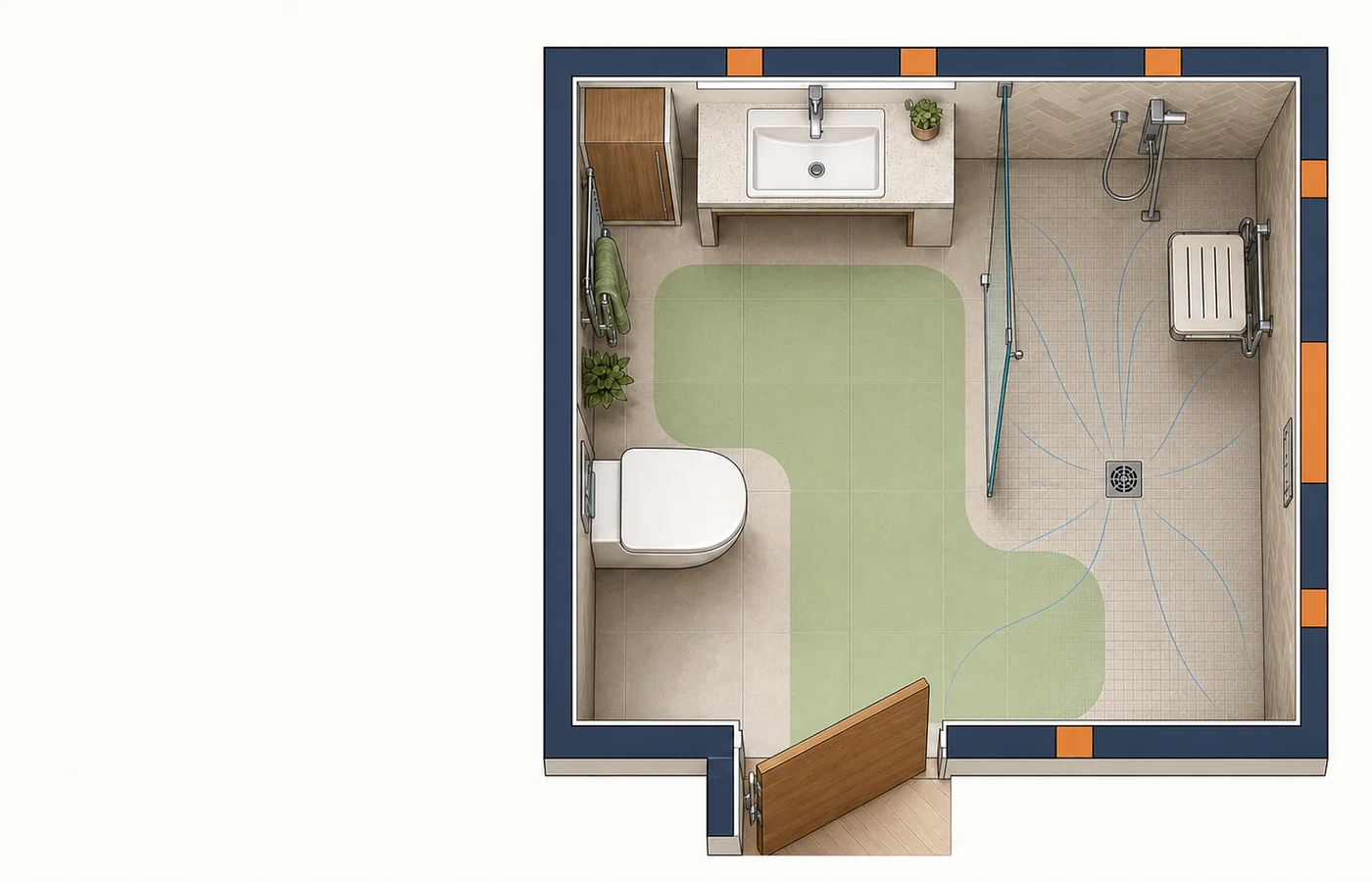
- Falls and drainage: level access shower floors need planned falls, not a flat decorative floor.
- Perimeter sealing: water often fails at wall edges, door thresholds, pipes and bath panels.
- Slip resistance: texture helps, but cleaning method and user mobility change the real risk.
- Maintenance: grout, silicone, upstands and sealants need inspection over time.
Practical Aberdeen renovation notes
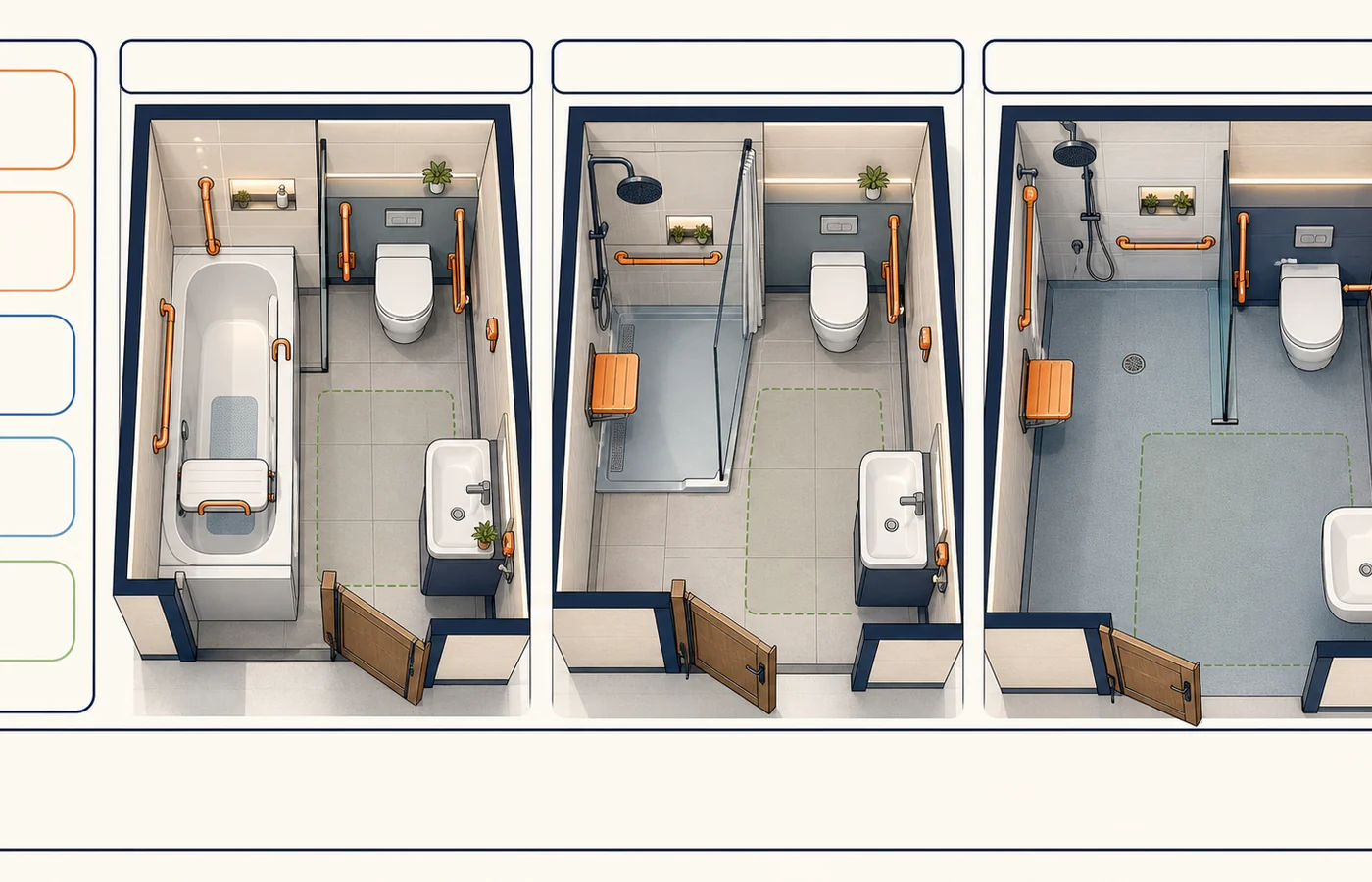
Older homes can have uneven timber floors, old tile layers, cold external walls and tight plumbing routes. If the room is being changed for accessibility, plan rails, shower seat position and helper space before the floor build up is fixed. The floor should support the use of the room, not only the look of the room.
Questions to ask before choosing the floor
- Will water sit on the floor, or is it only occasional splash?
- What is under the visible floor now: timber boards, chipboard, screed, old tile or underfloor heating?
- Where can leaked water travel if a washing machine, shower screen or bath seal fails?
- Will the user need rails, a shower chair or a helper standing in the wet zone?
- Who is responsible for the waterproofing system and warranty?
Sources and checks used
- Scottish Government domestic technical handbook: Scottish building standards context for domestic work.
- HSE flooring and slip guidance: practical slip risk thinking for floors that get wet.
- NHBC water resisting surface guidance: wet area detailing and surface protection context.
Wet-area access, heating and safety references
Wet-area flooring should be chosen around the user, the waterproofing method, the floor build-up and any heating underneath. BS 8300, Part M and the Disabled Living Foundation help frame access and adaptation thinking, while The Tile Association, Energy Saving Trust, BEAMA and Electrical Safety First are useful when tiling, heating controls or electric systems are involved.
- BS 8300 inclusive built environment code of practice: accessibility design reference.
- GOV.UK Approved Document M: useful background for Part M access principles.
- Disabled Living Foundation / Living Made Easy: practical equipment and adaptation reference.
- The Tile Association underfloor heating guide: tiled floor and preparation context.
- Energy Saving Trust underfloor heating advice: system-choice and running-cost context.
- BEAMA: controls and electrical infrastructure context.
- Electrical Safety First bathroom safety: wet-area electrical safety background.
FAQ
What is the best flooring for wet areas?
There is no single best floor for every wet area. Sheet safety flooring, porcelain tile, suitable vinyl, approved LVT and wet room systems can all work when the subfloor, water load, drainage and edge sealing match the room.
Is LVT suitable for a bathroom or utility room?
Some LVT products suit splash areas, but LVT is not automatically a wet room floor. Check the product warranty, joints, perimeter seal, subfloor and standing water exposure.
Should a wet room use tiles or sheet flooring?
Tiles can look more premium. Sheet safety flooring reduces joints and can be practical for accessible showers. The right answer depends on falls, grip, cleaning and user mobility.