Transforming Your Outdoor Oasis with Rainwater
Ah, the joys of a lush, thriving garden – the verdant hues, the fragrant blooms, the gentle rustling of leaves in the breeze. As a homeowner in Aberdeen, UK, I’ve always had a deep appreciation for the great outdoors and the restorative power of nature. But let’s be honest, keeping that picturesque garden alive and well can be a thirsty endeavor, especially during the drier months. That’s where the magic of rainwater harvesting comes into play, and I’m here to share my journey of harnessing this precious resource for a more sustainable landscape.
Uncovering the Benefits of Rainwater Harvesting
Picture this: you step out into your backyard, hose in hand, ready to quench the thirsty roots of your prized plants. But wait, what if I told you there’s a better, more eco-friendly way to keep your garden flourishing? Enter rainwater harvesting – a simple yet ingenious solution that not only conserves precious water resources but also reduces your reliance on costly municipal supplies.
You see, when it rains, Mother Nature provides us with a free, renewable source of water that’s perfect for irrigation and other non-potable uses around the home. By installing a rainwater collection system, you can capture this precious liquid and store it for future use, ultimately reducing your environmental footprint and saving money on your water bills. It’s a win-win situation, my friends!
But the benefits of rainwater harvesting don’t stop there. This sustainable practice also helps to alleviate the burden on our local water treatment facilities, as it reduces the amount of stormwater runoff that would otherwise need to be processed. And let’s not forget the positive impact on your plants – rainwater is naturally soft, free of the minerals and chemicals found in municipal supplies, making it the ideal nourishment for your thriving garden.
Designing Your Rainwater Harvesting System
Now that I’ve piqued your interest, let’s dive into the nitty-gritty of setting up your very own rainwater harvesting system. The process may seem daunting at first, but trust me, it’s a lot simpler than you might think.
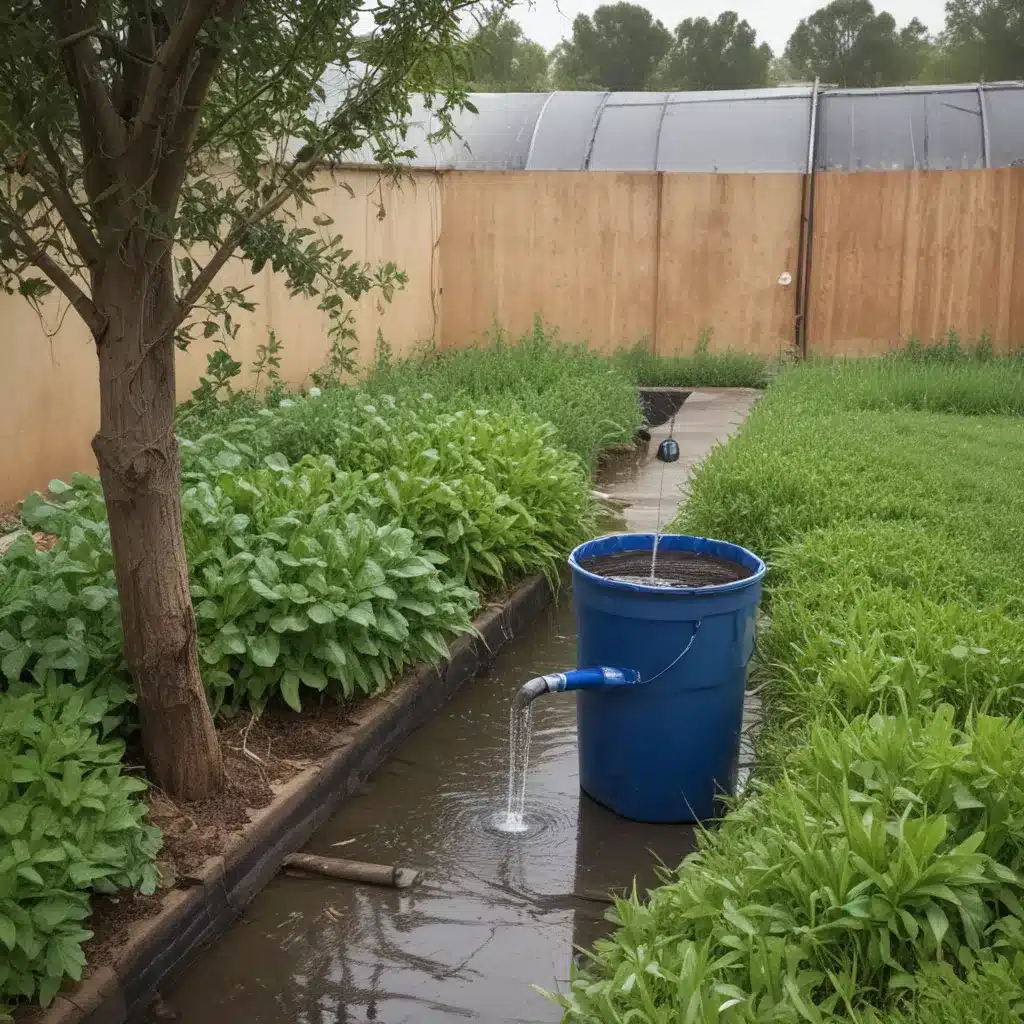
The heart of your system will be a collection tank, or “cistern,” where the harvested rainwater is stored for future use. These come in a variety of shapes, sizes, and materials, so you can easily find one that fits your space and budget. Some popular options include above-ground plastic or metal tanks, as well as buried concrete or fiberglass ones.
Next, you’ll need a way to channel the water from your roof into the collection tank. This is where the gutter system comes into play. By strategically positioning your gutters and downspouts, you can direct the rainwater runoff into your storage tank, ensuring none of that precious liquid goes to waste.
But wait, there’s more! To ensure the water remains clean and free of debris, you’ll also want to incorporate a filter system. This can be as simple as a mesh screen at the tank inlet, or as sophisticated as a multi-stage filtration process. Trust me, you don’t want any pesky leaves or twigs clogging up your irrigation lines.
And let’s not forget about the distribution system – the network of pipes and valves that will carry the harvested rainwater from the storage tank to your garden beds, flower pots, and other outdoor irrigation needs. This part of the setup requires a bit more planning and plumbing know-how, but with the right guidance, you’ll be watering your plants like a pro in no time.
Putting it All Together: A Step-by-Step Guide
Alright, now that you have a better understanding of the key components, let’s walk through the process of setting up your very own rainwater harvesting system. It may seem daunting at first, but I promise, with a little bit of elbow grease and some good old-fashioned problem-solving, you’ll be on your way to a more sustainable outdoor oasis.
First things first, you’ll need to assess your roof and gutters. Take a good look at the square footage of your roof and the positioning of your downspouts – this will help you determine the size and placement of your collection tank. Remember, the larger the roof, the more rainwater you’ll be able to capture.
Next, it’s time to choose your storage solution. As I mentioned earlier, there are plenty of options out there, from above-ground to buried tanks. Consider factors like available space, aesthetic preferences, and of course, your budget. Don’t be afraid to do your research and shop around – the perfect fit is out there, I just know it.
With the tank sorted, it’s time to turn your attention to the filtration system. Here, you’ll want to strike a balance between functionality and simplicity. A basic mesh screen at the tank inlet can be an effective and low-maintenance solution, but if you’re looking for a more robust system, explore options like sediment filters or first-flush diverters.
Now for the fun part – the distribution network! This is where you’ll get to put your plumbing skills to the test (or, you know, call in the experts – no judgement here). Carefully plan out the layout of your pipes and valves, making sure to position them in a way that maximizes efficiency and convenience. And don’t forget to incorporate easy-to-access outlets for your garden hoses and irrigation systems.
Finally, the moment of truth – it’s time to commission your brand-new rainwater harvesting system! Start by thoroughly inspecting all the connections and fittings, ensuring there are no leaks or blockages. Then, let the heavens open and watch as your collection tank fills up with that precious, life-giving liquid.
Real-World Success Stories: Rainwater Harvesting in Action
Of course, no journey of sustainability would be complete without a few inspiring real-world examples, now would it? As I’ve been navigating the world of rainwater harvesting, I’ve had the privilege of connecting with some truly remarkable homeowners in the Aberdeen area who have embraced this eco-friendly practice with open arms.
Take, for instance, the Smiths, a family of avid gardeners who have been harnessing the power of rainwater for years. Their meticulously maintained backyard oasis is a testament to the benefits of this sustainable approach. “We’ve seen a significant reduction in our water bills since installing the system,” Mrs. Smith enthuses. “And the plants just seem to thrive on the natural rainwater – it’s like they’ve got an extra spring in their step!”
Then there’s the Johnsons, who took rainwater harvesting to the next level by incorporating it into their home’s overall water management strategy. “We use the collected rainwater not just for irrigation, but also for washing our cars, topping up the fish pond, and even flushing the toilets,” Mr. Johnson explains. “It’s really helped us cut down on our consumption of precious municipal water resources.”
And let’s not forget the Greens, a family of eco-warriors who have built their dream home with sustainability at its core. “Rainwater harvesting was an absolute must-have for us,” Mrs. Green shares. “It’s just one of the many ways we’re trying to reduce our carbon footprint and live in harmony with the natural world.”
These are just a few of the inspiring stories I’ve come across, each one a testament to the power of rainwater harvesting and the positive impact it can have on both the environment and your bottom line. So, what are you waiting for? It’s time to join the ranks of these rainwater champions and transform your outdoor oasis into a verdant, water-wise wonder.
Embracing the Future: Rainwater Harvesting and Beyond
As I look to the future, I can’t help but feel a sense of excitement and optimism about the role of rainwater harvesting in the broader landscape of sustainable living. This innovative practice is just the tip of the iceberg when it comes to the countless ways we can harness the power of nature to reduce our environmental impact and create more self-sufficient, resilient homes.
Just imagine a world where every new building and renovation project in Aberdeen incorporates rainwater harvesting systems as a standard feature. Where lush, vibrant gardens flourish without draining our precious municipal water supplies. Where homeowners take pride in their ability to be good stewards of the land, and where the next generation grows up with a deep appreciation for the wonders of the natural world.
It’s a future that’s well within our grasp, my friends. And with the help of forward-thinking companies like ABC Home Renovations, who are committed to integrating sustainable solutions into their projects, we can make this vision a reality.
So, as you embark on your own journey of transforming your outdoor space, I encourage you to embrace the power of rainwater harvesting. Let it be the first step in a broader exploration of eco-friendly living, where every choice you make contributes to a greener, more resilient future. After all, the health of our planet and the wellbeing of our communities depend on it.
Who knows, maybe one day we’ll look back on this moment as the start of a true “green revolution” in Aberdeen – a time when the city’s residents banded together to redefine the way we interact with our natural resources. It’s an exciting prospect, and one that I’m proud to be a part of. Now, let’s get out there and start harvesting some rainwater, shall we?