“What watt bulb for a bathroom?” is the wrong first question. A modern LED can use far fewer watts than an old lamp while giving similar light output. For bathrooms, brightness is only half the answer because water, steam, zones and product ratings affect what can safely be installed.

Bathroom bulb watts and lumens table
| Bathroom lighting question | Better measure | Practical note |
|---|---|---|
| How bright is it? | Lumens | Compare output, not only power use. Old wattage equivalents are only a rough guide. |
| How much electricity does it use? | Watts | Lower watt LEDs can produce useful light with much less energy than old lamps. |
| Is it suitable near a shower? | Bathroom zone and IP rating | The location near bath/shower controls the product type and installation route. |
| Will it look harsh? | Colour temperature and glare | Bathrooms need good face light and shower light, not one dazzling ceiling point. |
| Is it safe to change? | Fitting type and circuit work | Replacing a bulb is different from changing fittings, zones or wiring. |
Bathroom lighting watt checker
Use this to decide whether the job is a simple lumen choice or a safety-first fitting check.
How to think about bathroom brightness
Use a comfortable ceiling layer that fills the room without glare or harsh shadows.
Face-level light on both sides or above the mirror is usually better than relying on a ceiling lamp behind you.
Wet areas need product suitability and access-for-maintenance thinking.
A softer secondary light can avoid the harsh “stadium bathroom” feel late at night.
Bathroom zones and IP rating checks
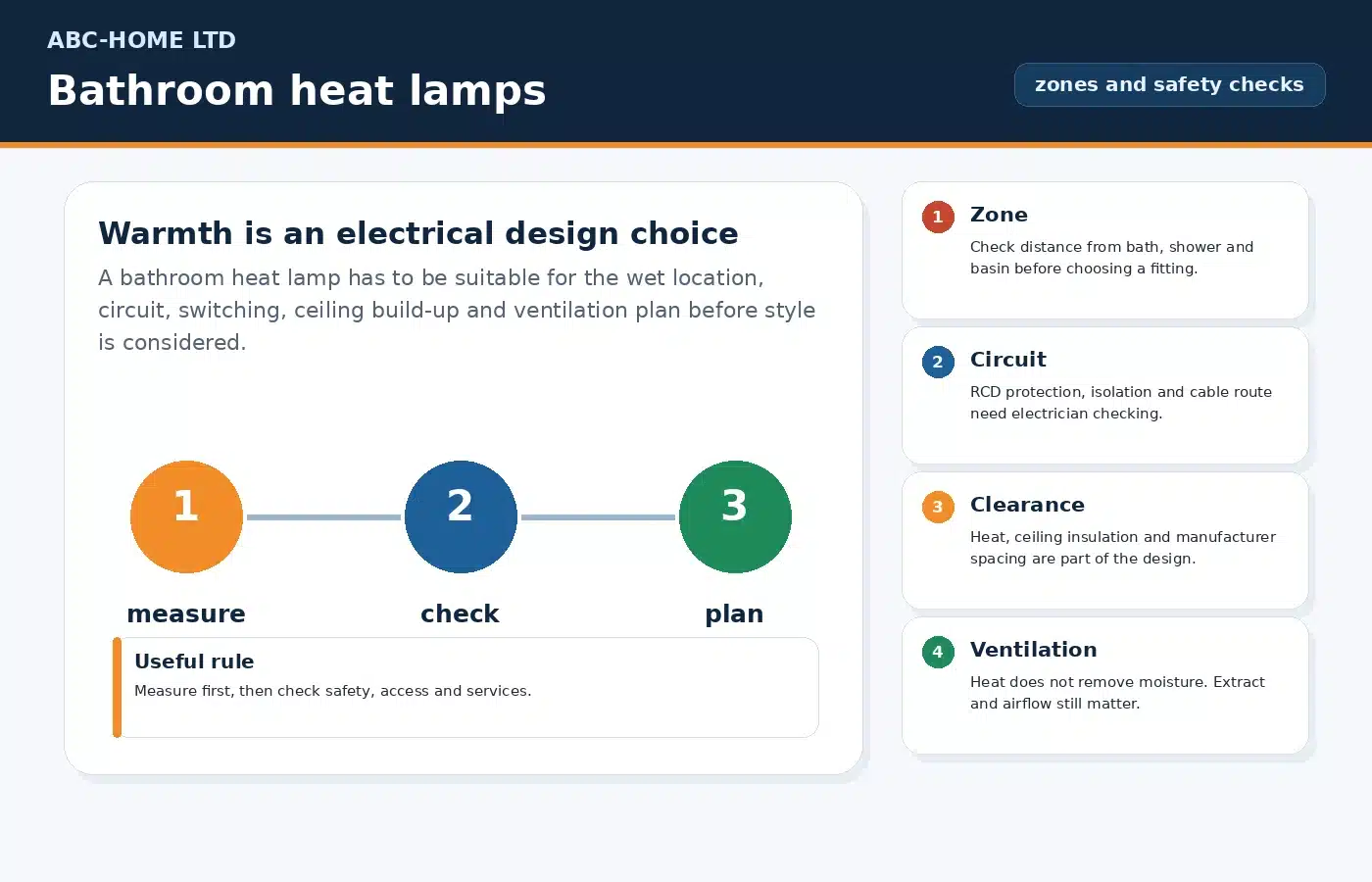
Bathroom zones are used because water and electricity create a higher-risk room. The IET notes that BS 7671 includes minimum IP rating requirements for equipment in bathroom zones 1 and 2, and NICEIC explains the zone concept for householders. The practical takeaway is simple: decide where the fitting sits before buying it.
Is the fitting above or close to a bath, shower or basin splash area?
Does the product state a suitable IP rating for that location?
Some bathroom areas have extra restrictions on what equipment can be used.
Steam shortens the life of poor fittings and makes glare worse.
Can the fitting be cleaned or changed safely later?
Changing circuits, fittings or zones is not the same as swapping a lamp.
Old watts to LED thinking
Energy Saving Trust advises looking at lumens because energy-saving bulbs use fewer watts. That means an old “60 watt bathroom bulb” question should become: what lumen output, colour, beam angle and fitting type suits this bathroom?
- Use lumens to compare brightness between LED products.
- Use watts to estimate energy consumption, not room brightness.
- Check whether the lamp is replaceable or the whole fitting must be changed.
- Choose warmer, lower-glare light near mirrors and baths unless task work needs brighter light.
- Confirm IP rating and bathroom zone before ordering downlights, mirror cabinets or shower lights.
Electrical work in Aberdeen
Bathroom fan and ventilation checks
Bathroom bulb watts guide
Sources and practical checks used
- Energy Saving Trust lighting guide: lumens-versus-watts framing for energy-saving bulbs
- Electrical Safety First bathroom safety: bathroom electrical safety context
- NICEIC bathrooms and electrics guide: bathroom zones, IP ratings and householder safety notes
- IET BS 7671 general FAQs: BS 7671 bathroom zone and IP rating references
FAQ
How many watts should a bathroom light bulb be?
For LEDs, choose by lumens first. Watts show energy use, while lumens show brightness. The fitting location and IP rating matter in bathrooms.
Can I put any LED bulb in a bathroom?
No. The bulb or fitting must be suitable for the fitting and bathroom location. Near baths and showers, zone and IP rating checks matter.
Is IP44 enough for bathroom lights?
It depends where the fitting is installed and what the manufacturer states. Bathroom zones and water exposure control the safe choice.
Why does my bathroom look dim even with a bright bulb?
The issue may be beam angle, shade, mirror shadows, dark tiles or relying on one ceiling light. Layered lighting usually works better.