It is easy to jump straight to generic room sizes. In a real Aberdeen renovation or extension, the harder question is how someone moves from parking or pavement to the door, through the hall, into the bathroom, kitchen and bedroom without awkward turns, steps or blocked appliance corners.

Accessible floor plan decision table
| Design area | What to check | Why it matters |
|---|---|---|
| Entrance route | Steps, gradient, threshold, drainage, lighting and landing space | A good internal layout is undermined if the outside route is unsafe or too steep. |
| Hall and doors | Door clear openings, swing direction, handles and corridor pinch points | The route fails where door leaves, radiators or storage reduce usable width. |
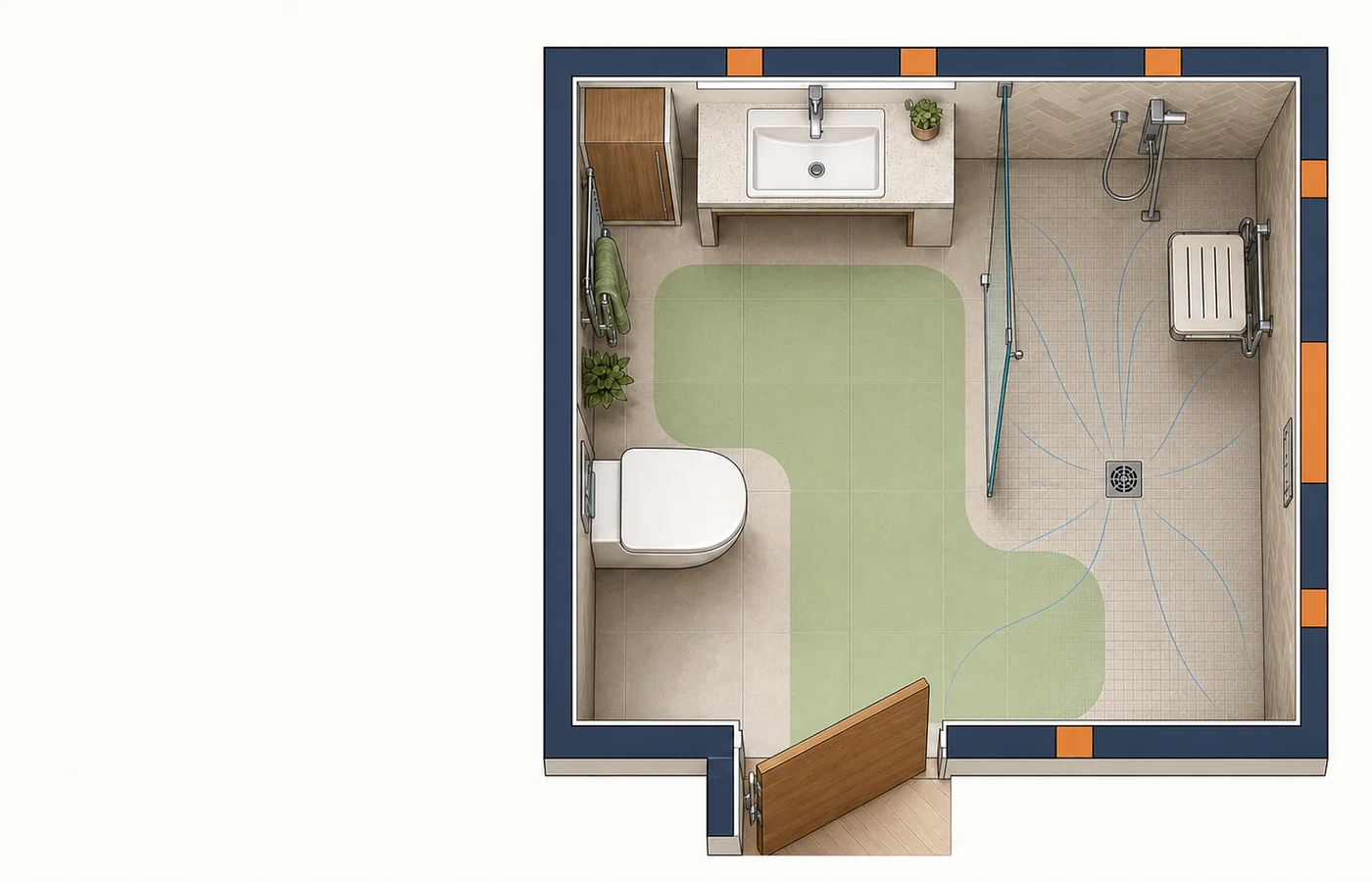
| Turning space | Hall, bedroom, WC, shower room and kitchen manoeuvring zones | Turning space must be where people actually change direction, not only in the biggest room. |
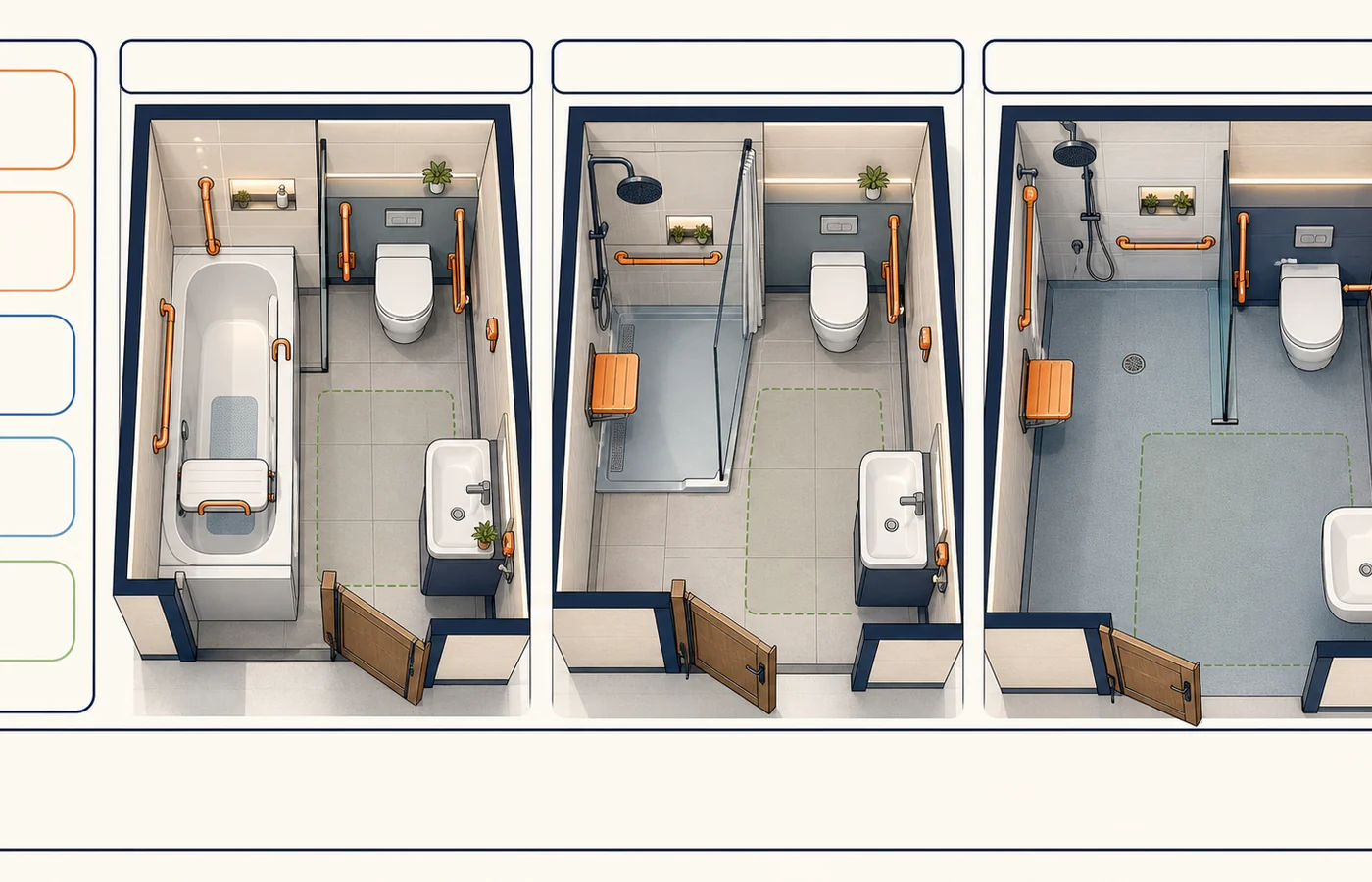
| Bathroom adaptation | Ground-floor WC, future shower drain, wall strength and grab-rail zones | Wetroom provision is much cheaper to plan before floors and walls are finished. |
| Kitchen use | Appliance corners, drawer access, worktop reach and island clearance | A kitchen can look accessible on plan but fail when fridge, oven and dishwasher doors open. |
| Future care | Bedroom position, hoist route, parking, ramping and storage for equipment | Adaptable homes need space for changing needs without a second major rebuild. |
Accessible floor plan checker
Use this to find the biggest design risks before drawings are priced.
Where accessible layouts usually fail
Level access is often blocked by steps, steep paths, narrow gates or rainwater falls.
The clear opening may look fine until the door leaf, radiator or furniture blocks the movement route.
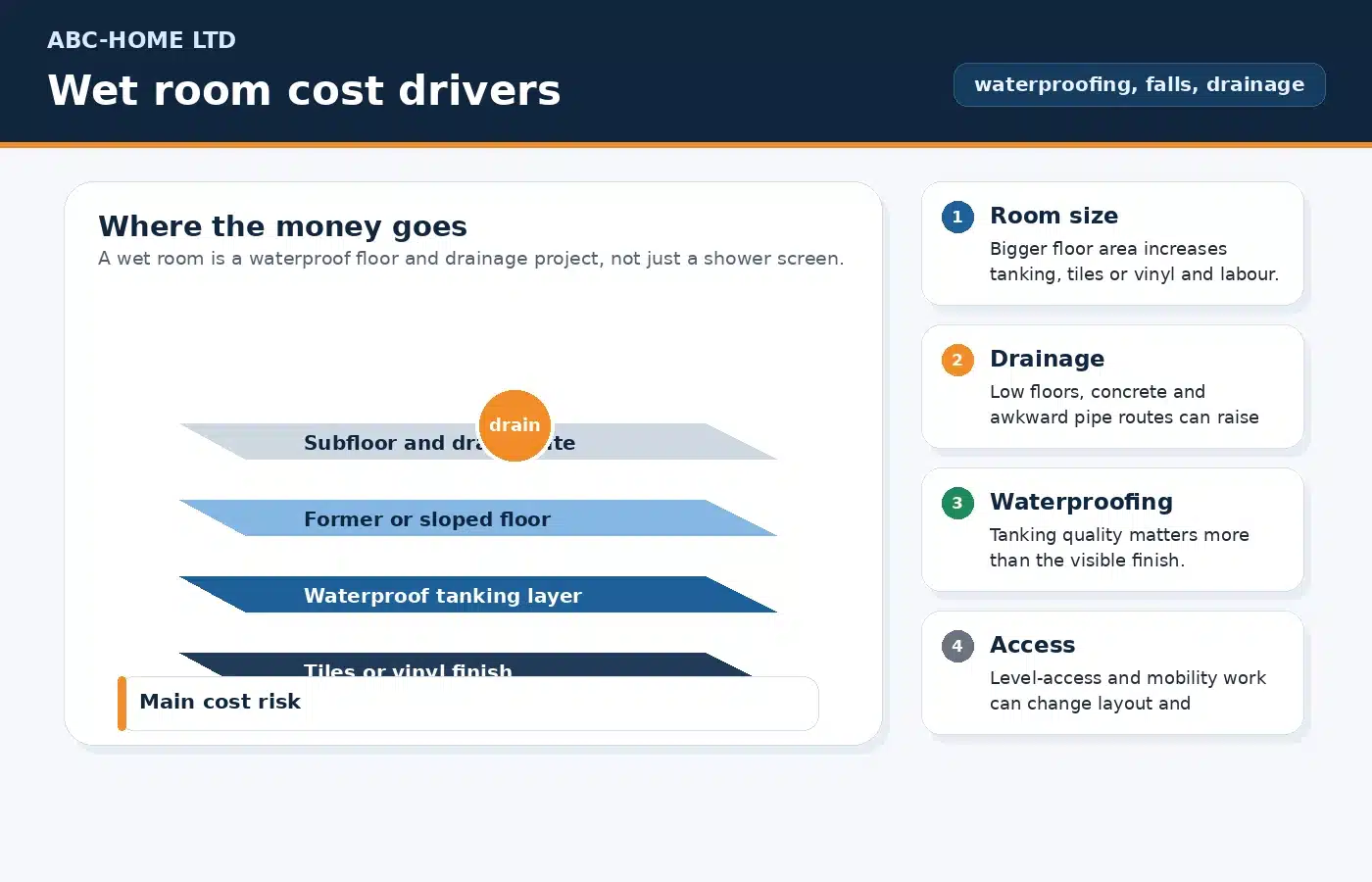
Drainage, falls, wall support and shower screens are hard to retrofit once the floor is finished.
Open oven, fridge and dishwasher doors can remove the turning space shown on the plan.
Design notes by room
Think threshold, weather cover, lighting, landing space and door hardware.
Keep the main route straight where possible and avoid storage that narrows the turn.
Leave flexible furniture zones rather than building every wall into fixed units.
Check reach, knee space, appliance swings, drawer weight and worktop choices.
Plan a shower route, drainage and strong walls even if grab rails are not fitted yet.
Allow side transfer, wardrobe access and route to an accessible bathroom.
Future-proofing without making the home clinical
Accessible design does not need to look institutional. Wider movement routes, better lighting, level thresholds, simple handles and sensible storage make a house easier for children, visitors, trades and older relatives too. The difference is that the structure and services are ready for adaptation if mobility needs change.
- Map the everyday route from parking or pavement to kitchen, WC, bedroom and sitting area.
- Mark every door swing, radiator, appliance door and furniture pinch point.
- Decide whether a ground-floor shower is needed now or only future-ready drainage and wall strength.
- Check whether the extension can remove a step between old and new floor levels.
- Ask a designer, occupational therapist or access specialist to review the plan before tender.
Home renovation in Aberdeen
Bathroom fitting in Aberdeen
Kitchen fitting in Aberdeen
Sources and practical checks used
- Scottish Government consultation on Housing for Varying Needs updates: accessible, adaptable and wheelchair-user framing
- Scottish Technical Handbook 4.1 access to buildings: level-access and approach-route checks
- Scottish Technical Handbook 4.2 access within buildings: internal access, dwelling and room-route checks
- Scottish domestic technical handbook January 2025: current Scottish building standards reference point
Access standards to check alongside the floor plan
A wheelchair-friendly floor plan should be checked as a whole route, not as isolated doorway measurements. BS 8300 is a useful inclusive-design reference, while the Disabled Living Foundation / Living Made Easy resource is helpful for real equipment and daily-use constraints. Use these alongside the Scottish handbook so turning space, reach, transfers and future adaptations are considered together.
- BS 8300 inclusive built environment code of practice: accessibility design reference.
- Disabled Living Foundation / Living Made Easy: practical equipment and home-adaptation reference for daily use.
- Scottish Building Standards Technical Handbook: Scottish domestic building standards reference point.
FAQ
What makes a home wheelchair friendly?
A wheelchair-friendly home needs a workable route through the property: level access, usable door openings, turning space, accessible bathroom provision and kitchen clearances.
Should accessibility be designed before or after planning permission?
It should be designed early. Door positions, drainage, floor levels and structure are difficult to fix after drawings, warrant work or construction have moved on.
Can an existing house be made accessible without a full rebuild?
Often yes, but the best route depends on floor levels, hall width, bathroom position, drainage and whether an extension can solve several problems at once.
Does accessible design make a house look institutional?
No. Good adaptable design can look like normal high-quality renovation while leaving space and structure ready for future needs.