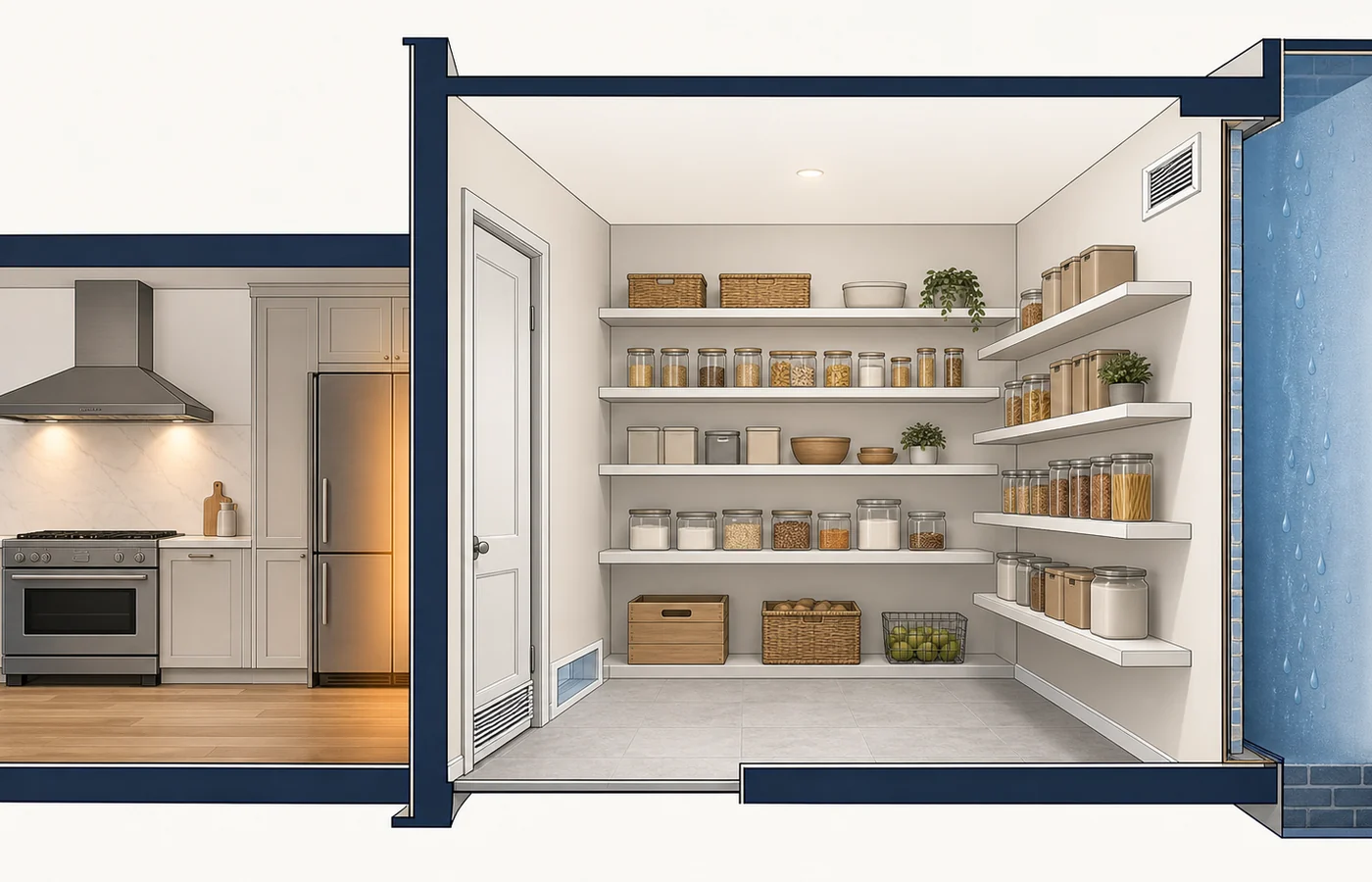
Deep shelves look useful in photos. In a real kitchen, they can block light, crowd prep space and hide items at the back. The fitter has to balance storage with safe fixings and everyday reach.

Kitchen shelf depth checker
Use this for open shelves, pantry shelves or wall-unit style storage before choosing brackets and board sizes.
Useful shelf depth ranges
| Depth | Good for | Watch out for |
|---|---|---|
| 120 to 180 mm | Spices, mugs, small jars, display pieces. | Too shallow for dinner plates and many appliances. |
| 200 to 260 mm | Everyday open shelves, bowls, glasses and lighter storage. | Needs sensible bracket spacing if long or loaded. |
| 290 to 300 mm | Wall-unit style storage and many kitchen items. | Can crowd worktops if set too low or over prep areas. |
| 350 mm plus | Pantry shelves, tall cupboards and deeper dry-goods zones. | Items get lost at the back unless the shelf is low and accessible. |
Depth is only half the fitting decision
The same shelf can be safe on one wall and a problem on another. Heavy plates on a long shelf need a different fixing plan from lightweight mugs on a short masonry wall. Before ordering a deep board, check where the brackets land, what the wall is made from, how the shelf will be loaded and whether the depth blocks useful worktop space.
Keep it slimmer. Make the shelf easy to clean and avoid crowding the hob or sink zone.
Use deeper shelves lower down and keep high shelves for lighter occasional items.
Match the carcass depth, door swing, lighting and extractor clearances before fitting.
Where ABC Home fits
ABC Home can help with kitchen fitting details that make shelves and units work in use: wall-unit positions, open shelving, pantry storage, fixing to old walls, lighting, sockets, extraction clearances and making good around existing cabinets.
Sources and practical checks used
- Howdens kitchen installation manual planning dimensions: shows standard cabinet planning dimensions including 290 mm wall cabinet and 575 mm base cabinet references.
- DIY Doctor fitting kitchen wall units: practical wall unit setting-out and fixing considerations.
- HSE manual handling at work: useful background for avoiding awkward heavy storage and lifting positions.
- ABC Home kitchen fitting: kitchen fitting and storage adjustments in Aberdeen homes.
Shelf hardware and wall-board checks
Kitchen shelf depth only works if the wall, bracket, cabinet system and door/front clearances are all checked together. Kitchen Door Workshop, Blum and Hettich are useful references for fronts, hinges and movement, while Knauf, Gyproc and Building Standards thinking matter when open shelves or wall units rely on plasterboard or altered partitions.
- Kitchen Door Workshop kitchen doors: front sizing and replacement-door context.
- Blum hinge systems: hinge movement and clearance context near shelves and fronts.
- Hettich hinges: hinge family and adjustment reference.
- Knauf gypsum and plasterboard systems: wall-board system background.
- Gyproc / British Gypsum: plasterboard and drylining system reference.
- Scottish Government Building Standards: reference route where wall structure, services or safety assumptions change.
FAQ
What is a normal kitchen shelf depth?
Many kitchen wall-unit style depths sit around the 290 to 300 mm area, but open shelves can be shallower or deeper depending on plates, jars, mugs, appliances and reach.
Are deeper kitchen shelves always better?
No. Deep shelves store more, but high deep shelves are awkward and often hide items at the back. Depth should match the stored item and the person using the kitchen.
What matters more than shelf depth?
The wall type, fixing method, bracket spacing, shelf material, expected load and whether the shelf crowds worktops, sockets, hobs or extraction.