Navigating the Accessible Bathroom Journey
As a homeowner, I’ve always been passionate about creating spaces that are not only beautiful, but also accessible and inclusive. And when it came time to renovate my bathroom, making it wheelchair-friendly was an absolute must. You see, my dear friend, Sarah, is a wheelchair user, and I wanted to ensure that she felt comfortable and at home whenever she visited.
Now, I know what you might be thinking – “Wheelchair-friendly bathroom? Sounds like a major hassle.” But let me tell you, with the right planning and design, creating an accessible bathroom can be a transformative experience. It’s not just about ticking boxes or following regulations; it’s about crafting a space that empowers and uplifts those with diverse abilities.
Assessing Your Bathroom’s Needs
The first step in this journey is to take a good, hard look at your current bathroom setup. What are the pain points? Where are the obstacles? I remember when Sarah first came over, and she had to navigate a narrow doorway, a high-mounted vanity, and a shower that was practically inaccessible. It was a clear sign that some major changes were in order.
But fret not, my friend! With a little creativity and some expert guidance, these challenges can be overcome. The key is to approach the design process with an open mind and a genuine desire to create a space that caters to all. Think about it – when we design for accessibility, we’re not just helping those in wheelchairs; we’re making life easier for everyone, from the elderly to the temporarily injured.
Prioritizing Accessibility Features
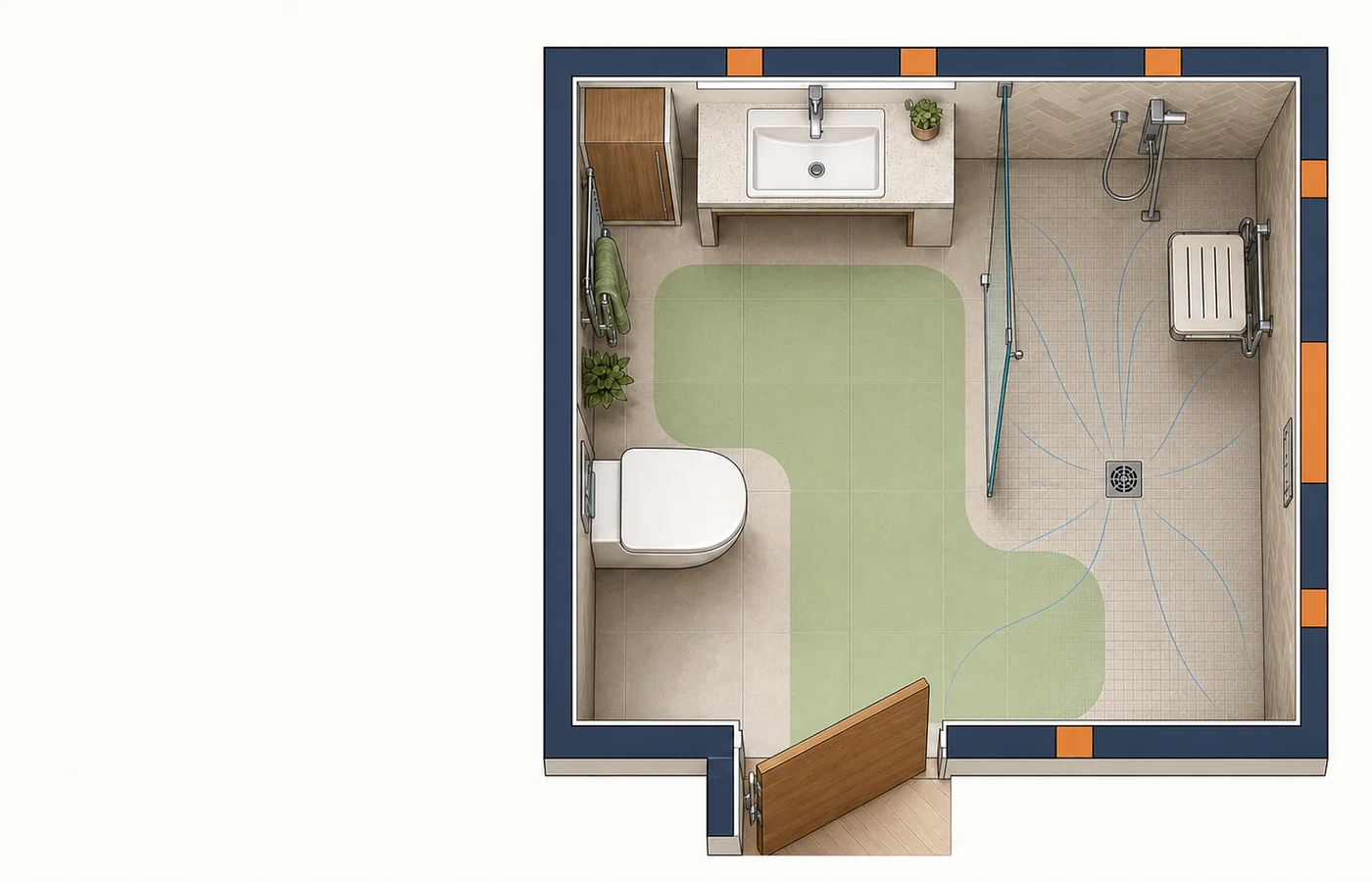
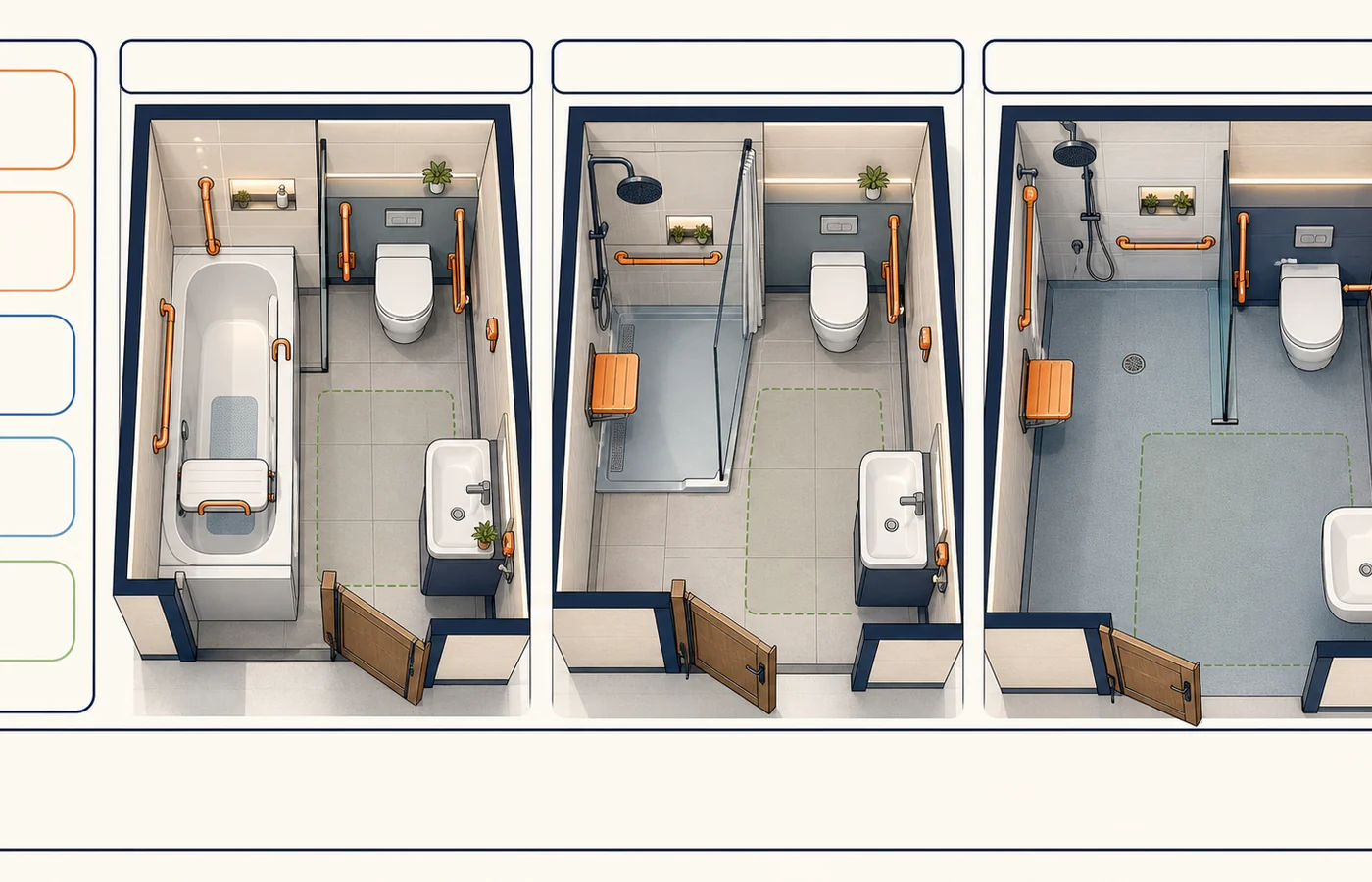
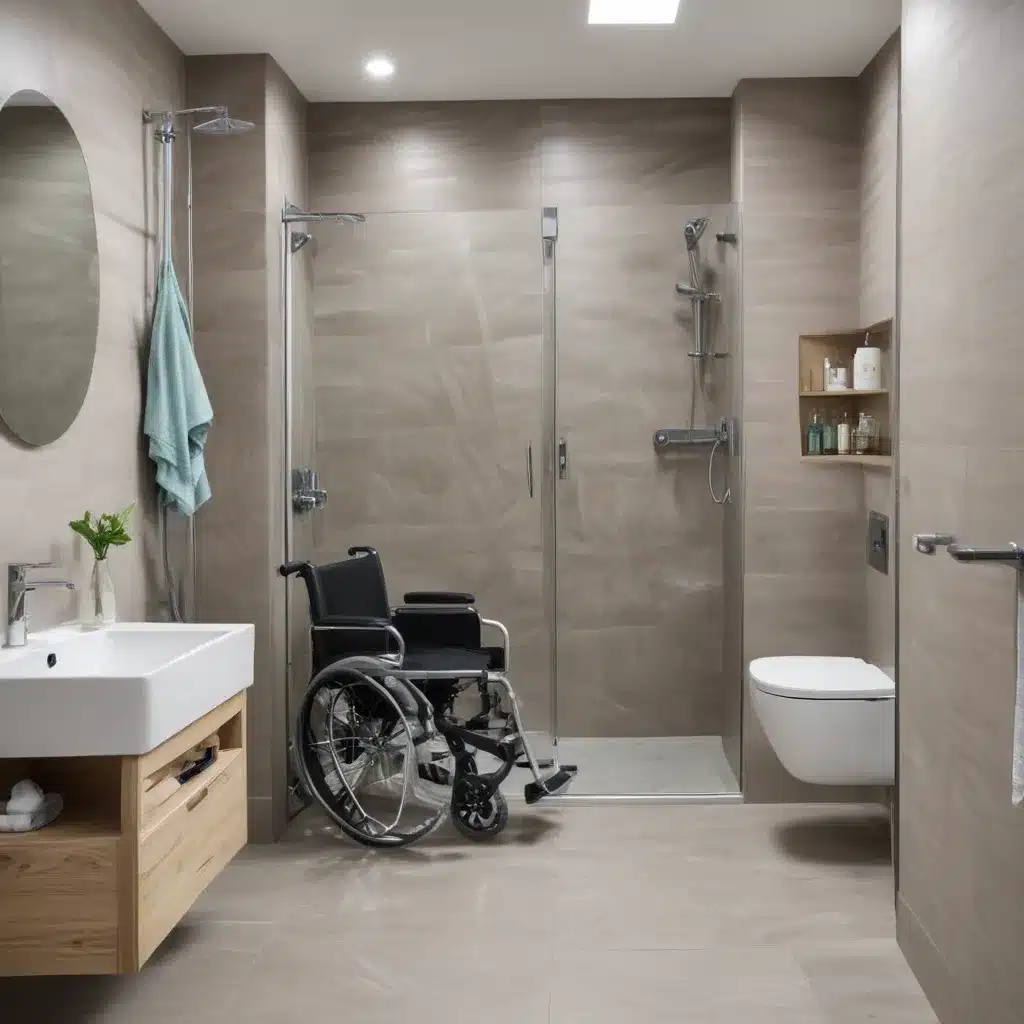
Now, let’s dive into the nitty-gritty of designing a wheelchair-friendly bathroom. One of the most important aspects is ensuring ample maneuvering space. A bathroom needs to be wide enough for a wheelchair to turn comfortably, with a clear path to the toilet, sink, and shower. And speaking of the shower, we’ll want to opt for a curbless or low-threshold design, making it easy for those in wheelchairs to roll right in.
Another key feature is the height and placement of fixtures. The vanity should be mounted at a lower level, allowing wheelchair users to access the sink with ease. And the toilet? Well, we’ll want to install a taller model, so that transitioning from the chair is a breeze. Oh, and don’t forget about grab bars – these sturdy, strategically placed aids can make all the difference in boosting confidence and independence.
Incorporating Stylish Design Elements
But here’s the best part, my friends: creating an accessible bathroom doesn’t mean sacrificing style. In fact, it’s an opportunity to showcase your design prowess and create a space that’s both functional and fabulous.
Think about incorporating sleek, minimalist lines, warm lighting, and luxurious materials like natural stone or high-quality tiles. And don’t be afraid to get creative with color – a bold, vibrant palette can truly elevate the space and make it feel like a true sanctuary.
And let’s not forget about the little details that can make a big difference. Lever-style faucets, adjustable showerheads, and motion-activated lighting – these are the kinds of thoughtful touches that can transform a bathroom from merely functional to downright delightful.
Collaborating with Experts
Of course, embarking on a bathroom renovation of this magnitude can feel a bit daunting. But fear not, my fellow design enthusiasts – you don’t have to go it alone. Partnering with experienced contractors and designers who specialize in accessible design can be a game-changer.
These experts will not only help you navigate the technical requirements and building codes, but they’ll also bring a wealth of creative ideas to the table. They’ll be able to guide you through the process, from selecting the right materials to ensuring that every inch of the space is optimized for accessibility.
And who knows, they might even introduce you to some inspiring case studies or real-life testimonials that’ll get your creative juices flowing. Imagine the joy of hearing how a well-designed bathroom has transformed someone’s daily life, empowering them to live with greater independence and dignity.
A Transformative Experience
As I reflect on my own bathroom renovation journey, I can’t help but feel a sense of pride and accomplishment. Sure, there were a few hiccups along the way, but the end result is a true testament to the power of inclusive design.
Now, whenever Sarah comes to visit, she beams with delight as she effortlessly maneuvers through the space, enjoying the luxurious shower and the convenience of the well-placed fixtures. And seeing the smile on her face makes all the effort more than worthwhile.
So, my friends, if you’re embarking on a bathroom renovation, I urge you to consider the needs of those with diverse abilities. It’s not just about ticking boxes – it’s about creating a space that celebrates our shared humanity and empowers everyone who enters. Trust me, the rewards will be more than just practical – they’ll be profoundly transformative.
Conclusion
In the end, designing a wheelchair-friendly bathroom is not about compromise or sacrifice; it’s about celebrating the richness and diversity of the human experience. It’s about creating spaces that bring people together, fostering a sense of belonging and empowerment for all.
So, what are you waiting for? Dive in, get creative, and let’s design a bathroom that’s not just functional, but truly life-changing. After all, isn’t that what great design is all about?