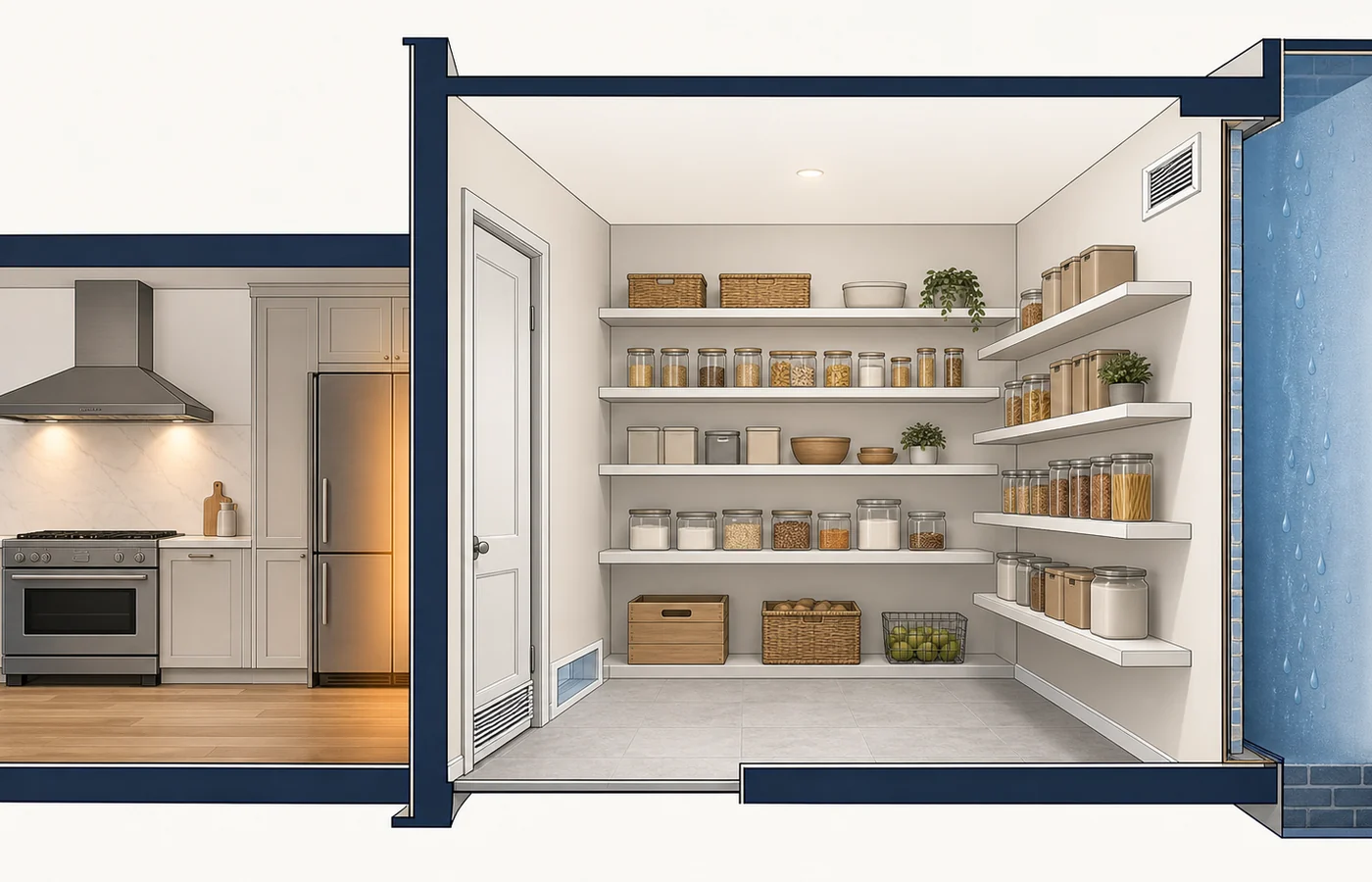
There is no useful one-line kitchen size law for every home. A kitchen can be small and workable, large and awkward, or average-sized but unsafe once doors, drawers, appliances and people are moving through it.

Kitchen size law checker
Use this as an early layout check before units, islands or appliance positions are fixed.
What actually matters in a kitchen layout
| Check | Why size alone is not enough | Practical question |
|---|---|---|
| Clear route | Floor area is less useful if the narrowest gap is beside an open dishwasher, oven or fridge. | Can someone pass, cook and clean when appliance doors are open? |
| Worktop run | A bigger room can still have poor prep space if tall units and sinks take the wrong wall. | Is there a usable landing area beside the hob, sink and fridge? |
| Ventilation | Cooking moisture and odours need a route out or a designed ventilation approach. | Where does the extract duct or ventilation path actually go? |
| Water and waste | Sink, dishwasher and washing machine positions depend on supply, waste fall and access. | Can pipes be routed and maintained without boxed-in surprises? |
| Electrical load | Ovens, hobs, sockets and appliances need suitable circuits and safe positions. | Has an electrician checked the real load and route? |
| Access and cleaning | Tight corners, plinths, bins and handles change daily use. | Can the user open, reach, clean and move without awkward twists? |
Average kitchen size: useful context, not a rule
Homeowners often want one simple minimum kitchen size. The number can help compare options, but it does not answer the legal or practical question. A 6 square metre galley can be usable if it has clean routes and good extract. A 14 square metre kitchen can still feel wrong if the island blocks appliance doors or the sink run has no landing space.
Prioritise one clean working route, full-height storage, good extract and appliances that do not fight each other when open.
Separate cooking route from seating route so chairs, children and open oven doors do not share the same pinch point.
Measure around the island with drawer handles, stools and appliance doors open, not only cabinet carcasses.
Check the actual user, reach, turning, controls, sockets and future support needs. Standard averages do not solve this.
Building regulations and Scottish standards notes
ABC Home works from Aberdeen, so Scottish building standards may be the route for local projects. For general UK searches, homeowners also see England guidance such as Approved Document F for ventilation. The practical point is the same: changing a kitchen is not just a cabinet order. Ventilation, structure, drainage, electrics, fire safety, access and any warrant or sign-off route should be checked for the actual property.
| Project type | Extra checks | Why it matters |
|---|---|---|
| Like-for-like kitchen refit | Electrical alterations, plumbing, ventilation and appliance clearances. | Even a cosmetic refit can expose unsafe old wiring or poor extract. |
| Wall removal or extension | Structure, fire route, insulation, ventilation and service routes. | The new room size changes how the whole space works. |
| New kitchen in another room | Drainage fall, water supply, extract route, electrics and building standards advice. | Moving a kitchen is more than moving cupboards. |
| Accessible or future-use kitchen | Door openings, clearances, seated worktop options, reachable storage and controls. | The named user decides the useful size, not an average number. |
Kitchen fitting sequence
- Measure the finished room and mark the narrowest route after cabinets and appliance doors open.
- Place sink, hob, fridge and dishwasher before decorative storage decisions.
- Check extract, water, waste and electrical routes before confirming cabinet positions.
- Decide whether the project is like-for-like, a layout change, a new kitchen position or part of a larger extension.
- Review access, cleaning, bins and everyday storage with the person who actually uses the kitchen.
Sources and practical checks
- Scottish Government domestic technical handbook: the Scottish reference route for domestic building standards such as ventilation, safety and access context.
- Approved Document F ventilation: the England dwelling ventilation guidance often used in UK kitchen ventilation research.
- GOV.UK Approved Document M: useful when access, approach and use of rooms affects the kitchen design.
- Electrical Safety First kitchen safety: homeowner guidance for electrical risks in kitchens and around appliances.
FAQ
Is there a legal minimum kitchen size in the UK?
There is not one simple minimum kitchen size that applies to every existing UK home. New work and altered layouts still need safe access, ventilation, drainage, electrical planning and local building standards checks.
What is a practical minimum route through a kitchen?
A common practical target is to avoid tight pinch points below about 900 mm where people need to pass, open appliances and work. Some layouts need more, especially around islands, accessible use or two-cook kitchens.
Does an average kitchen size prove my layout is legal?
No. Average size figures are only context. A smaller kitchen can work if the route, appliances, extract, storage and services are planned well, while a larger kitchen can still fail if door swings and service positions are wrong.