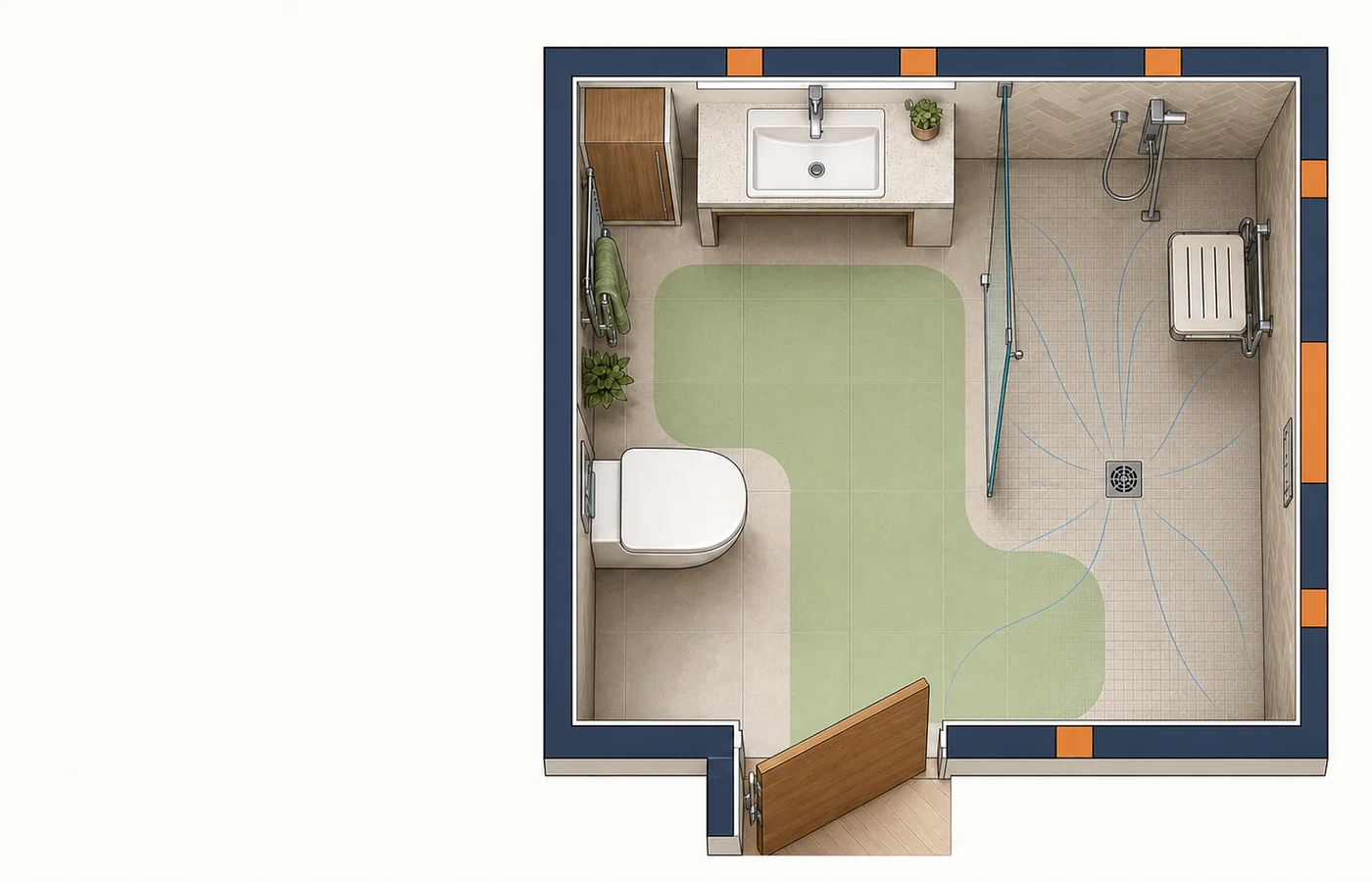
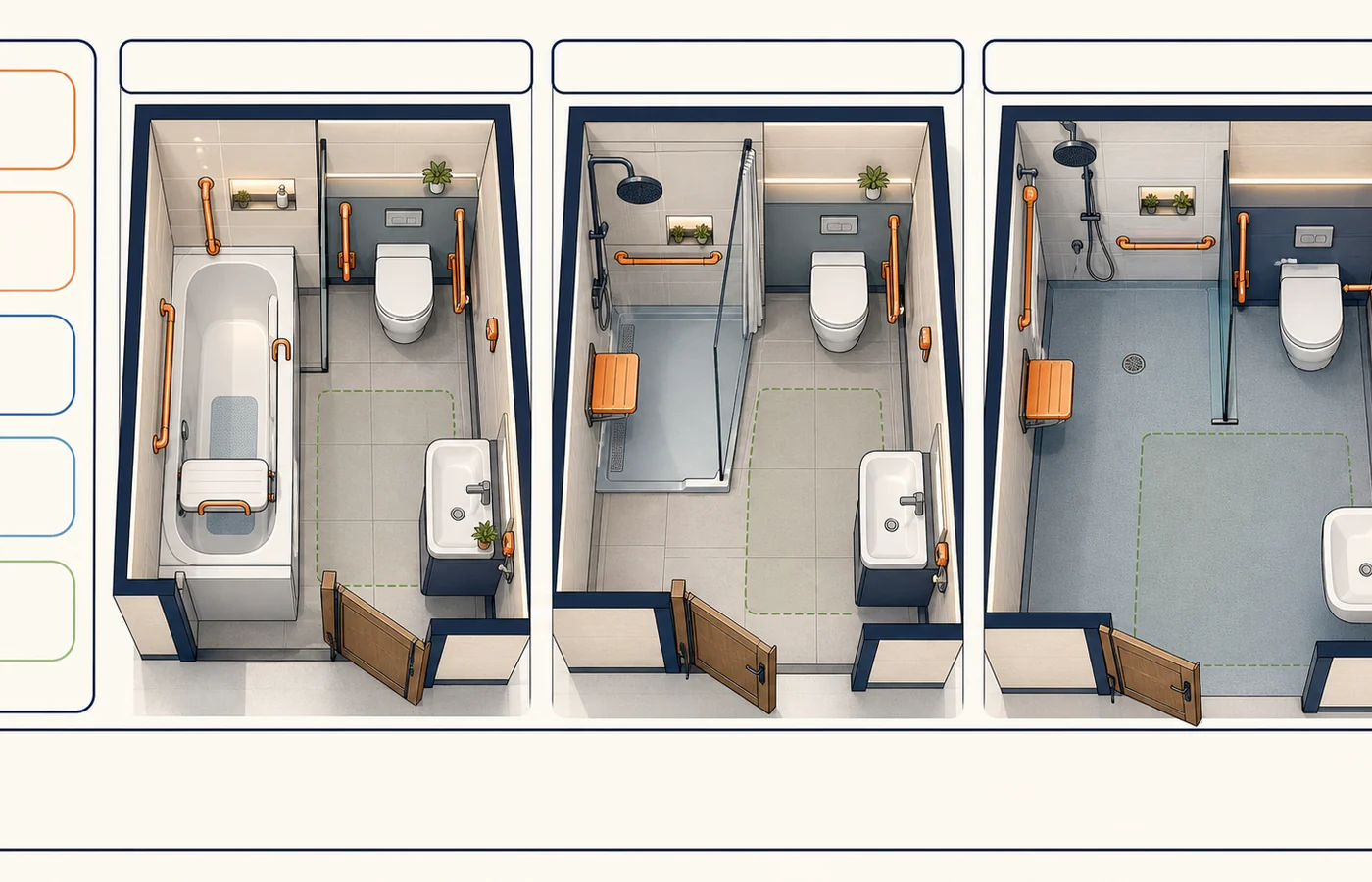
In a small bathroom, a door stop is a tiny fitting with a real job: stop damage without making the room harder to use. A badly placed stop can miss the handle, crack a tile, block cleaning, mark a vinyl floor or catch bare feet.

Bathroom door stop types
| Type | When it works | Main risk |
|---|---|---|
| Wall-mounted stop | The handle or door edge hits a solid wall or skirting area. | Weak plaster, cracked tile or a stop that does not meet the handle. |
| Floor-mounted stop | The door needs stopping before it reaches glass, radiator or furniture. | Trip point, toe-stub point or poor fixing into tile or vinyl. |
| Hinge pin stop | Wall and floor fixings are awkward and the door is light enough. | Can stress the hinge or trim if used as a hard stop for a heavy door. |
| Magnetic catch stop | The door needs to stay open as well as stop. | Can be bulky and may not suit tight wet rooms or accessible routes. |
| Soft bumper | Light impact where the main aim is noise and mark reduction. | Adhesive can fail in steam or on poor paint. |
Bathroom door stop selector
Use this before drilling the floor, tile or skirting. The aim is to stop impact without creating a new problem.
Placement checks before fitting
- Open the door slowly and mark the real impact point of the handle, latch edge and door face.
- Check whether the stop should meet the handle, the door edge or the bottom rail.
- Look for hidden pipes, cables or weak tile backing before drilling.
- Stand in the doorway with bare feet and check whether a floor stop would sit in the natural route.
- Check the bath screen, towel rail, radiator and vanity door movement at the same time.
What to use in common bathroom situations
| Situation | Likely option | Extra check |
|---|---|---|
| Door handle marks painted wall | Wall stop or soft bumper. | Place it at the handle contact point, not at a random height. |
| Door could hit glass screen | Floor stop before the glass line or a controlled hinge solution. | Keep it out of the wet stepping route. |
| Door opens against radiator | Floor stop or wall stop before contact. | Check heat, cleaning and whether the radiator valve is still reachable. |
| Tile wall at impact point | Careful wall stop into suitable backing, or avoid drilling tile if backing is weak. | Do not rely on a tiny plug in brittle tile. |
| Accessible or future-use bathroom | Low trip-risk solution, often wall-based if it actually meets the door. | Check walking aids, wheelchair footplates and cleaning route. |
Sources and practical checks
- GOV.UK Approved Document M: useful when a small fitting could affect access, reach or movement through a bathroom.
- HSE slips and trips guidance: a general safety reference for keeping routes clear and avoiding unnecessary trip points.
- Scottish Government domestic technical handbook: the wider domestic building standards reference route for bathroom alteration context.
FAQ
What type of door stop is best for a bathroom?
The best type depends on what the door will hit. A wall stop protects a wall or tile, a floor stop can protect glass or radiators, and a hinge stop can help where floor or wall fixings are poor. Placement matters more than the label.
Are floor door stops safe in bathrooms?
They can be safe when placed out of the walking route, but they can also become trip points, cleaning traps or toe-stub points on wet floors. Use them carefully in small bathrooms.
Can a bathroom door stop be fitted to tile?
It can, but tile can crack if the fixing is poor or the backing is weak. Check the fixing surface and avoid drilling near hidden pipes or cables.