Bathroom door frame fit is a small joinery detail that affects daily use. A frame can look tidy on day one and still cause problems if the floor finish lifts the door, the towel rail blocks the swing, the clear opening is too narrow, or steam makes unsealed timber swell.

Bathroom door frame fit checklist
| Check | Why it matters | What to decide before fitting |
|---|---|---|
| Rough opening | The lining, packers and adjustment need space. A tight old opening can force a poor fit. | Measure width, height and squareness before ordering a door set. |
| Finished floor level | Tile, board, underlay and thresholds can lift the floor line and rub the door. | Confirm the final floor build-up before cutting the door bottom. |
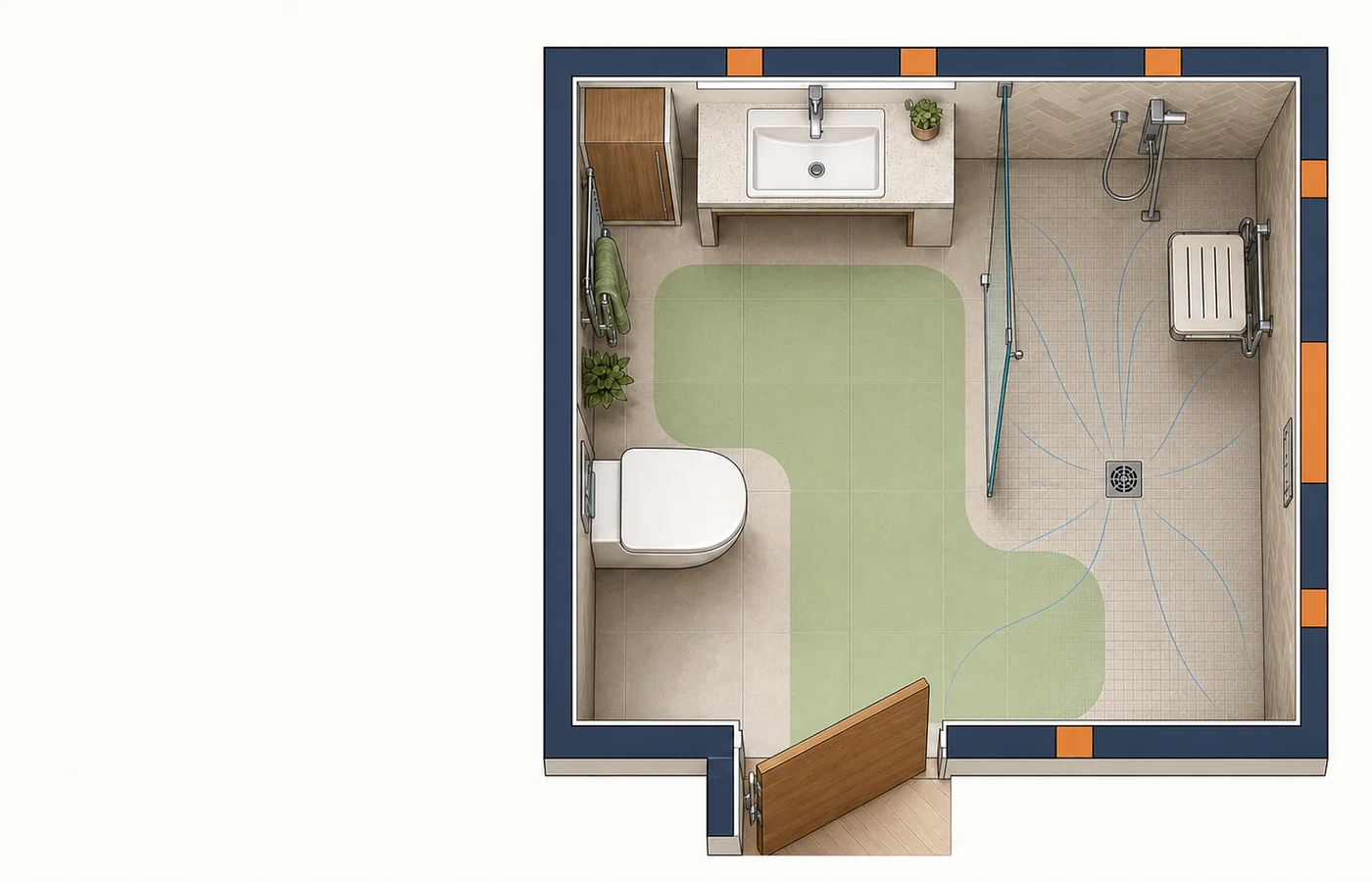
| Door swing | A door can hit the basin, WC, towel rail, radiator or shower screen. | Mark the real arc on the floor or wall before final layout. |
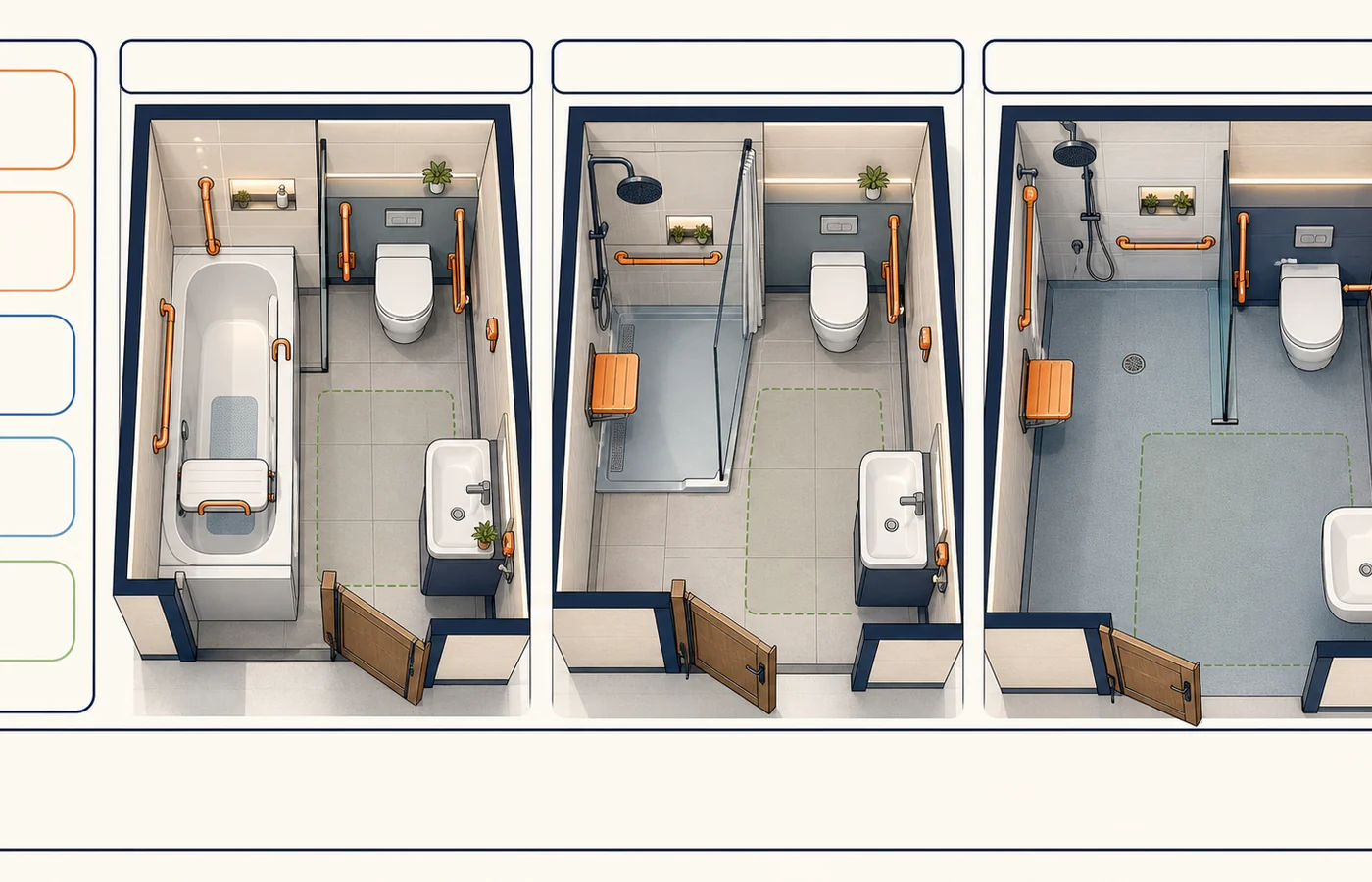
| Clear opening | The usable walk-through gap is smaller than the slab size. | Use the clear-opening check if access or future mobility matters. |
| Moisture protection | Steam and spills can swell MDF, softwood and unsealed cut edges. | Seal cut edges, improve extraction and avoid trapping damp around the frame. |
Door frame fit checker
Use this as an early joinery and layout check. It does not replace measuring the actual opening on site.
How to measure before ordering
- Remove guesswork by measuring the top, middle and bottom of the opening.
- Check whether the sides are plumb and whether the head is level.
- Write down the intended finished floor height, including tile, board, underlay or threshold.
- Mark the swing and handle position against the basin, WC, radiator and shower screen.
- If you need better access, compare this page with the bathroom door size guide before committing to the same old opening.
Common bathroom frame problems
| Problem | Likely cause | Better fix |
|---|---|---|
| Door sticks after showers | Moisture, weak extraction or unsealed timber edge. | Improve ventilation, dry the room properly and seal or replace swollen parts. |
| Uneven gap around the door | Out-of-square lining, movement or poor hinge packing. | Check the frame before repeatedly trimming the door. |
| Door hits new floor | Tile or underlay build-up was not allowed for. | Set final floor height before cutting and hanging. |
| Handle hits wall or rail | Swing was not tested with bathroom fittings installed. | Move obstruction, change stop position, use a different swing or review layout. |
Sources and checks used
- Scottish Government domestic technical handbook: Scottish building standards context for domestic work and access routes.
- LABC door and access homeowner guidance: homeowner route for checking building control topics where layout or access changes.
FAQ
How much gap should there be around a bathroom door frame?
The visible gap around the finished door is normally small and even, but the rough opening needs extra allowance for the lining, packers and adjustment. Measure the opening and the chosen lining, not only the door leaf.
Should a bathroom door open in or out?
Many existing bathrooms open inward, but the best answer depends on room size, basin position, radiator or towel rail position, landing safety and access needs.
Can a swollen bathroom door frame be repaired?
Sometimes. Minor swelling can be eased and sealed, but repeated swelling usually means moisture, poor ventilation, unsealed timber or a leak needs fixing first.