A practical bathroom refit needs measurements tied to the actual fixtures: shower, bath, WC, basin, mirror, cabinet, towel rail, lighting, extractor, door and any sloped ceiling. Those details decide whether the room feels comfortable and safe.

Bathroom height checker
Use this before ordering shower screens, wall panels, tall cabinets or large mirrors.
Bathroom wall-height planning table
| Area | What to measure | Why it matters |
|---|---|---|
| Shower standing area | Floor to ceiling at the actual place someone stands, including slopes and lights. | This decides whether a shower tray, screen, riser rail and head can be used comfortably. |
| Bath splash zone | Height of bath edge, screen, wall finish and any shower-over-bath fitting. | Splash protection often needs to rise higher where a shower is used over the bath. |
| Basin and mirror | Basin height, tap splash, mirror/cabinet height and user eye line. | A mirror can look centred but still be wrong for daily use. |
| WC and storage wall | Cistern, boxing, shelves, towel rail and door swing clearance. | Storage and boxing can steal headroom and shoulder space in a small bathroom. |
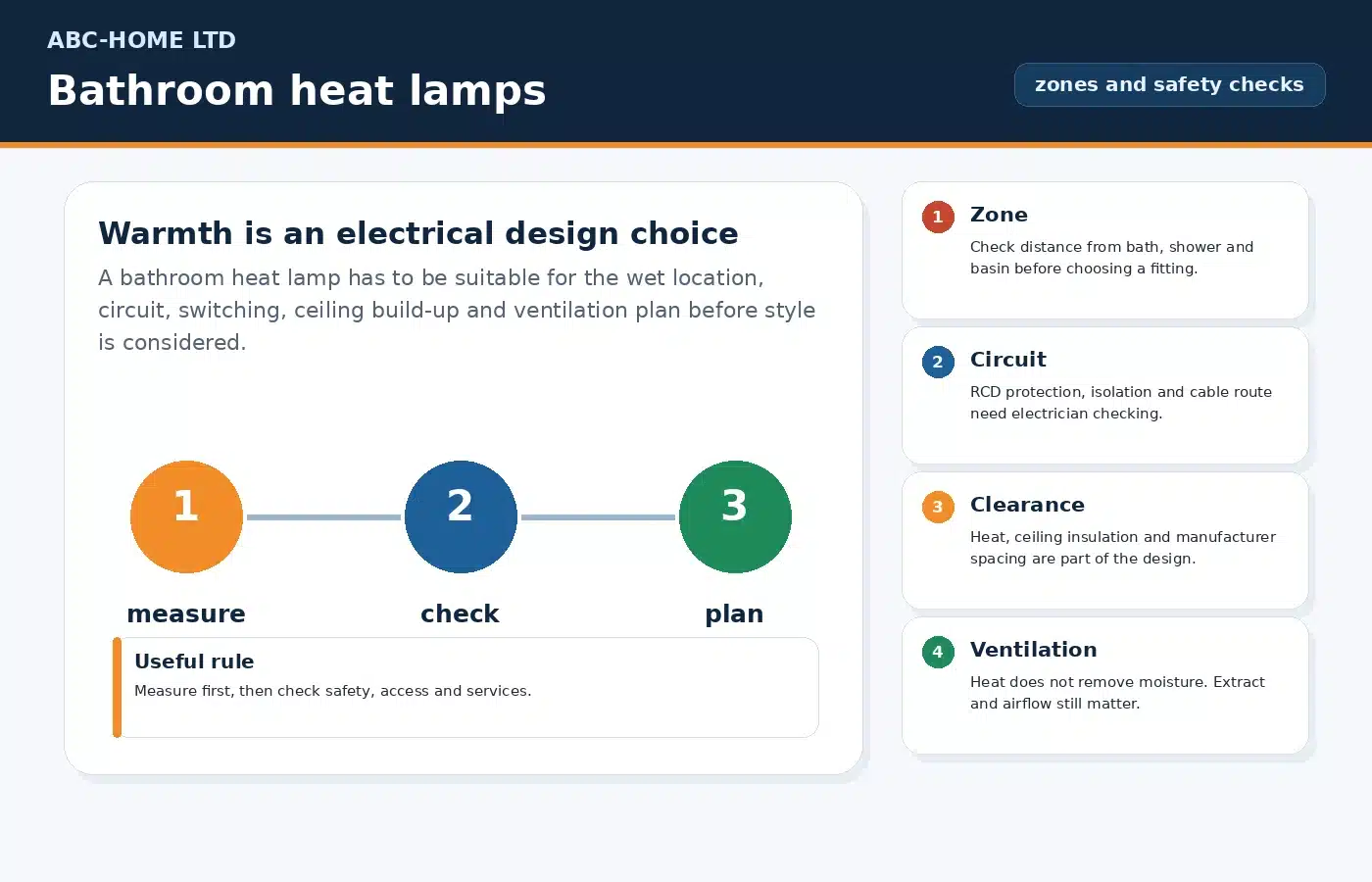
| Ventilation and lighting | Fan, duct route, light positions, zones and ceiling void depth. | Low or sloped ceilings leave less room for safe, tidy services. |
| Door and access route | Door height, threshold, floor build-up and clear route to fixtures. | Raised floors and underfloor heating can reduce useful height and access. |
There is no useful wall-height answer without the layout
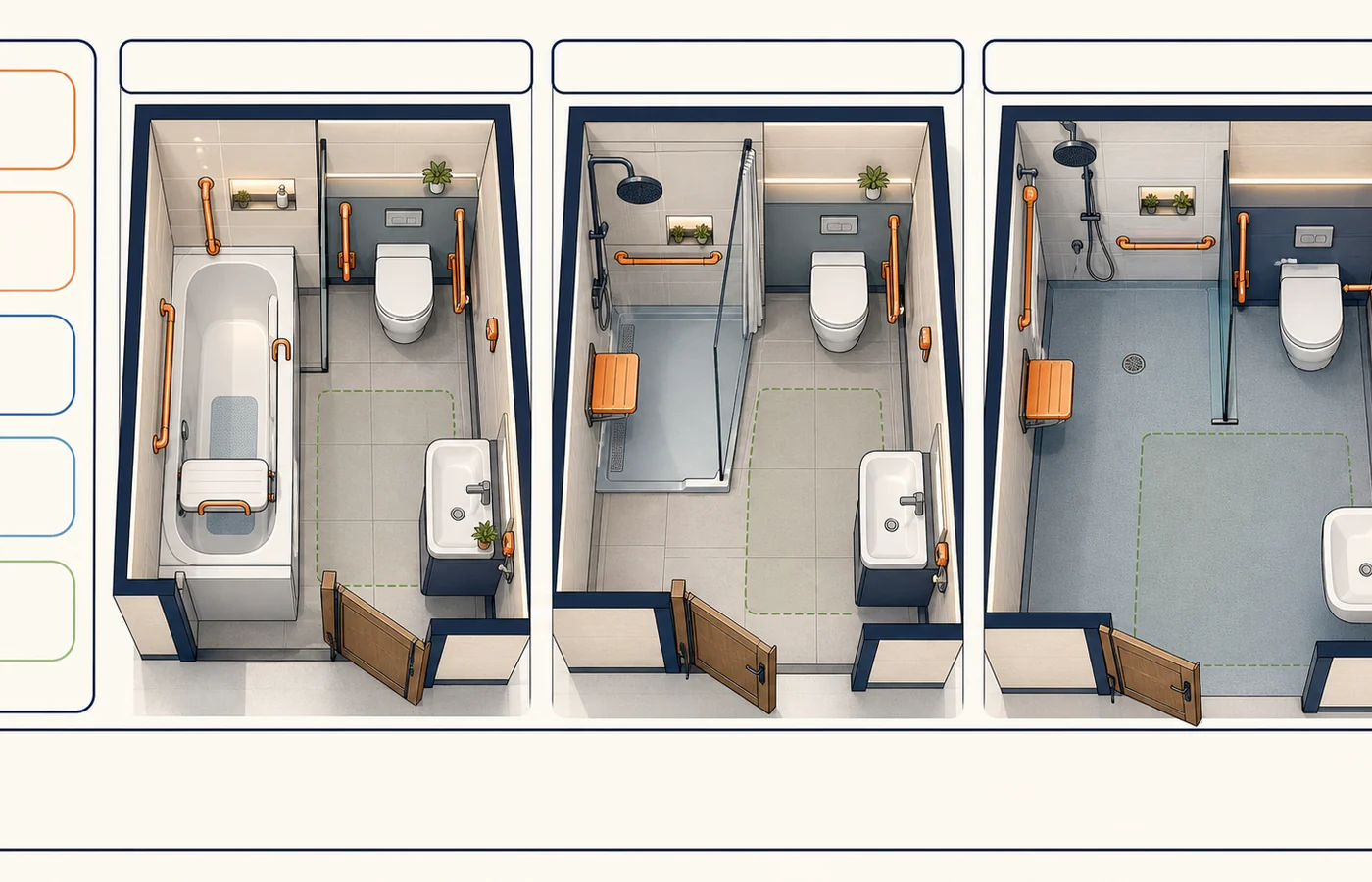
A bathroom can have a generous ceiling but a poor shower position under a beam. Another room can have a lower ceiling but work well if the bath, WC and storage sit in the low area while the shower uses the tallest part. That is why layout and section drawings matter for loft bathrooms, dormers and compact en-suites.
Confirm standing height, shower head height, screen height, door swing, fan/light position and splash line before ordering.
Tiles, panels and trims need a planned top height. Avoid random halfway lines that leave wet plasterboard exposed.
Set eye line, cabinet door swing, cable exit and lighting before final fixing or tiling.
A low ceiling may limit fan location, duct space and lighting choice. Plan services with the wall finish.
Tiles, panels and painted walls
The wettest parts of the bathroom need full wet-area protection. A shower enclosure or wet room wall normally needs full-height or deliberately specified wet-wall protection. A dry wall behind a towel rail may be fine with bathroom-grade paint. Around a basin, the splashback height should suit the tap and user behaviour, not just a neat visual line.
Good height plan
- Wet zones protected before decoration.
- Mirror and cabinet set to user eye line.
- Fan and lights planned around zones and ceiling void.
- Shower screen fits below ceiling and clearances.
Weak height plan
- Tiles stop where splash still hits paint.
- Screen ordered before measuring sloped ceiling.
- Mirror cabinet clashes with light or shaver point.
- Raised floor steals height after the design is chosen.
Loft and sloped-ceiling bathrooms
In a loft bathroom, the plan view is only half the story. Draw the room in section. Mark the highest point, the slope line, roof window, beam, radiator, shower head, fan and any cabinet doors. Put the shower where standing height is strongest. Use low areas for bath ends, WC boxing or storage only where access remains sensible.
Accessibility and future-proofing
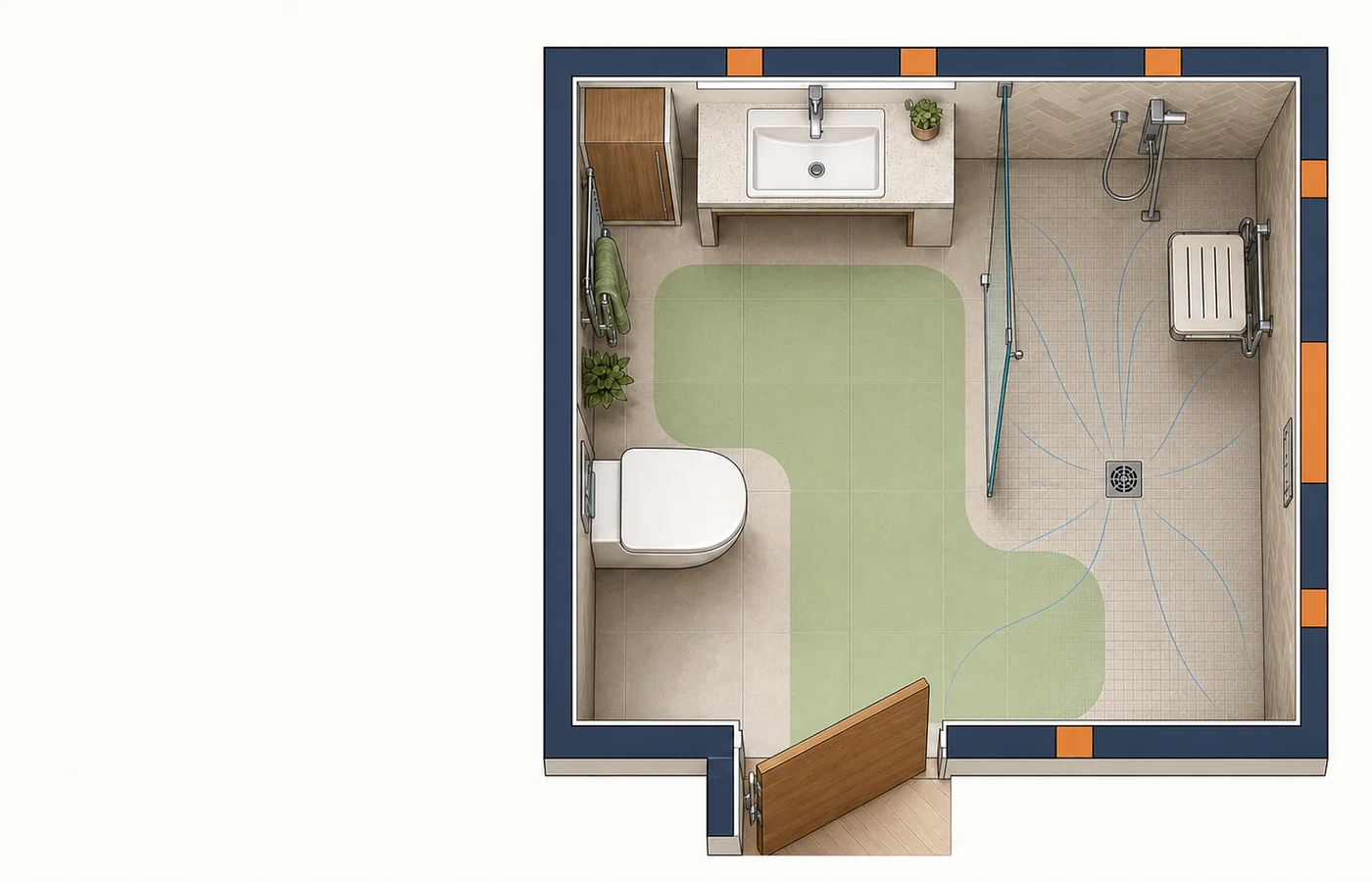
If the bathroom is being planned for safer future use, height decisions should include reachable controls, grab-rail backing, mirror position, shelf height, shower controls and whether a seat or helper space may be needed later. A beautiful high shelf is not useful if it cannot be reached safely.
What to check before ordering materials
- Measure finished floor to ceiling after allowing for floor build-up.
- Mark shower tray, bath, WC, basin, mirror and cabinet positions on the wall.
- Check fan, light and electrical zones before fixing wall finish heights.
- Decide which areas are wet zones and which are dry decorative walls.
- Check screen, door swing, towel rail, niche and shelf clashes.
- Confirm the finish system instructions for boards, tiles, trims and sealants.
Where ABC Home fits
ABC Home can survey the actual room and turn height into a practical bathroom fitting plan: fixture positions, wall finish heights, fan location, mirror/cabinet setting, lighting, storage and making good. The aim is a bathroom that works for the people using it, not just a tidy elevation drawing.
Sources and practical checks
- Scottish Government domestic technical handbook January 2025: Scottish domestic building standards reference for environment, safety, ventilation and building work context.
- Scottish Government technical handbook ventilation guidance: practical reference for bathroom and shower room ventilation guidance used when planning fan and duct routes.
- Electrical Safety First bathroom safety: background on why bathroom electrical positions and sockets need special care.
FAQ
Is there one standard bathroom wall height in the UK?
No. Existing homes vary, and the practical issue is usable height at the bath, shower, basin, WC, door, screen, fan, lighting and storage. A survey should measure each fixture area, not only quote an empty-room ceiling height.
How high should bathroom wall tiles go?
Wet areas normally need higher protection than dry walls. Showers, bath splash zones and basins need different treatment from a painted wall behind a towel rail. The right height depends on enclosure type, splash risk and finish system.
Can a low ceiling still work for a bathroom?
Sometimes, especially for WCs, baths or dry areas. Showers and wet rooms need more care because the user must have comfortable standing height, safe lighting/fan positions and room for screens or rails.